Blog
Page 6 of 6 — guides 91–108 of 108 in the library.
When the light gets brighter, heavy winter pictures start holding a room down. A couple of pale, green swaps — not a redecoration — fix that.
Bright light forgives bold color and washes out pale art. Summer is the season to hang the saturated coastal or garden piece you held back.
Office walls are read down corridors, through glass, and on video calls. Plan them as one scheme, not as leftover decoration for each room.
Guests notice a room's walls in seconds, then live with steam, luggage, and cleaning. Local images on hard-wearing formats are what hold up.
A staged room has to let strangers picture their own mornings there. That means calm, roomy art in the photographs - and personal pieces packed away.
Heights stop being a guess once you measure to the middle of the piece instead of its top — and know when the furniture, not the floor, sets the line.
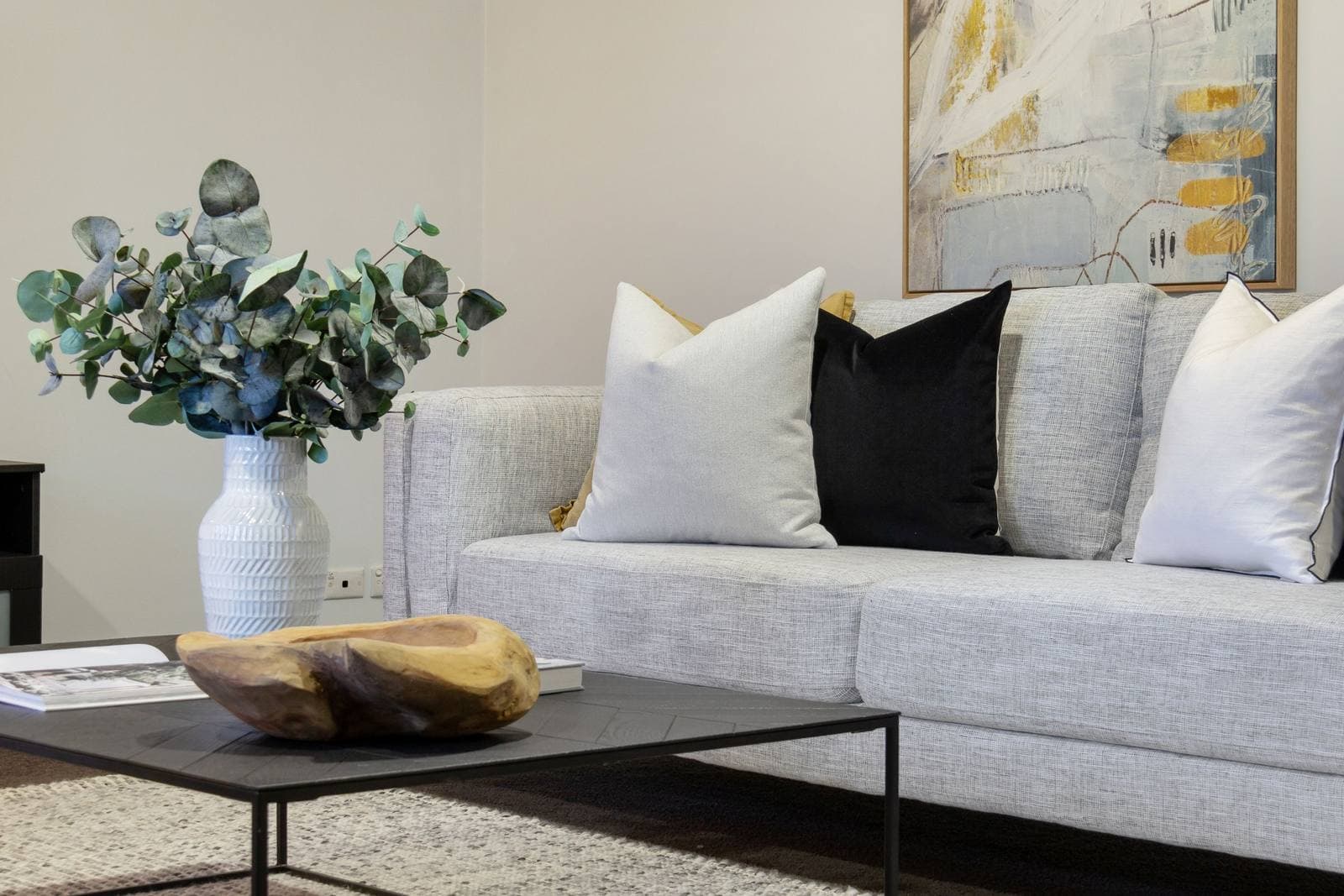
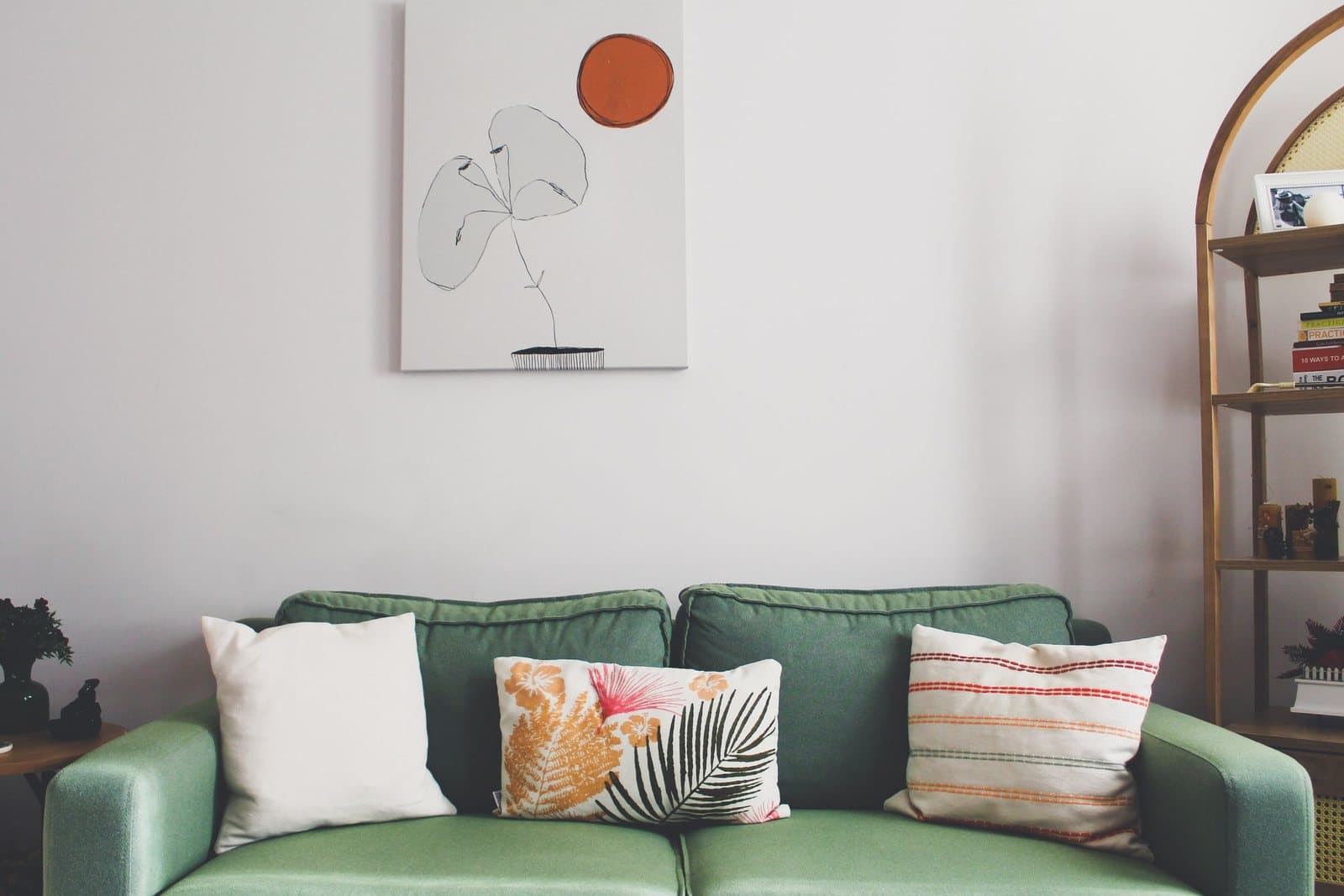
That one wall is judged from the seat, not the doorway. Measure the sofa itself, leave the right gap above its back, and let the total footprint do the work.
Fifteen unhurried minutes with a tape beats ordering from memory. Measure what the art can actually occupy, tape it, photograph it, and write the numbers down.
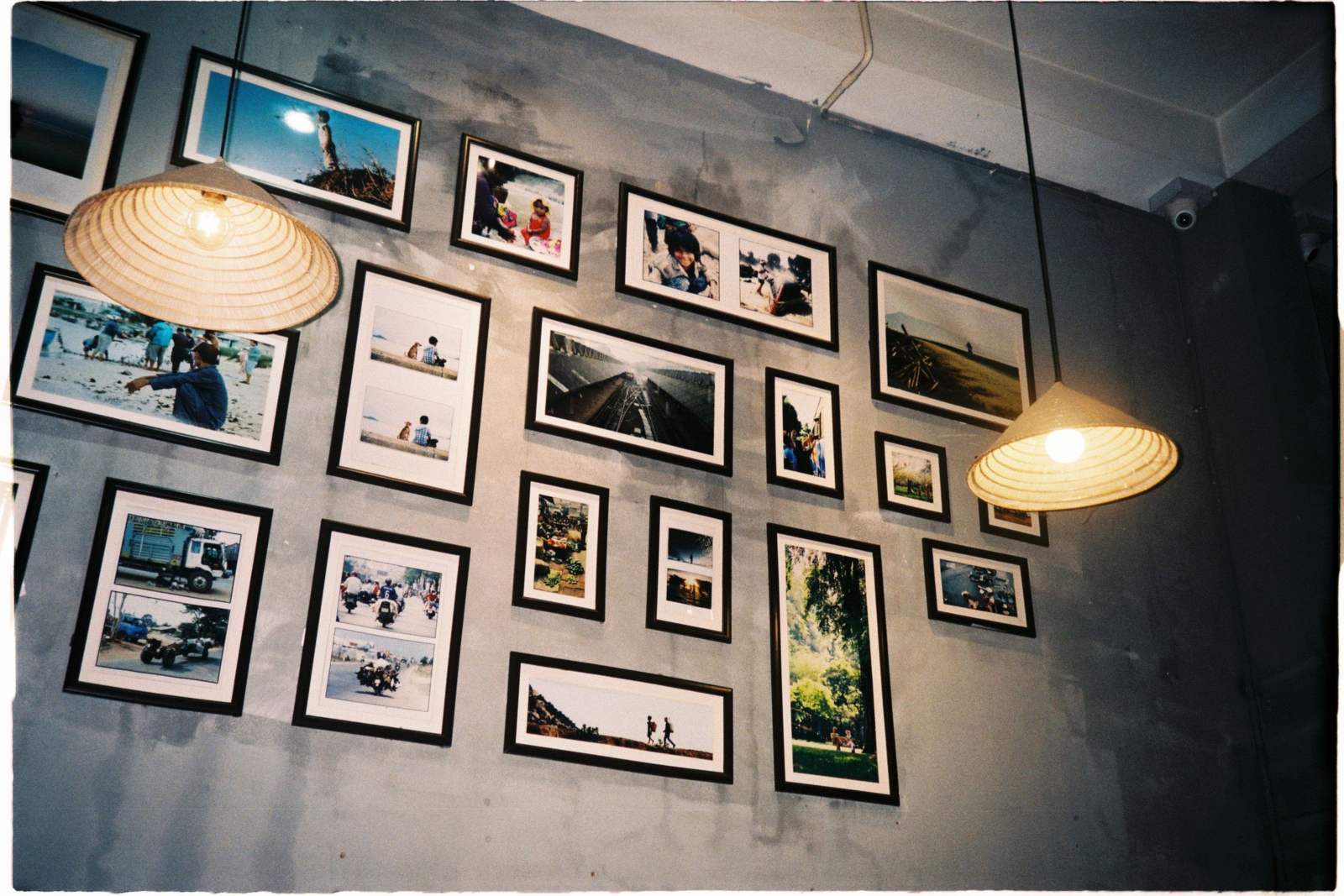
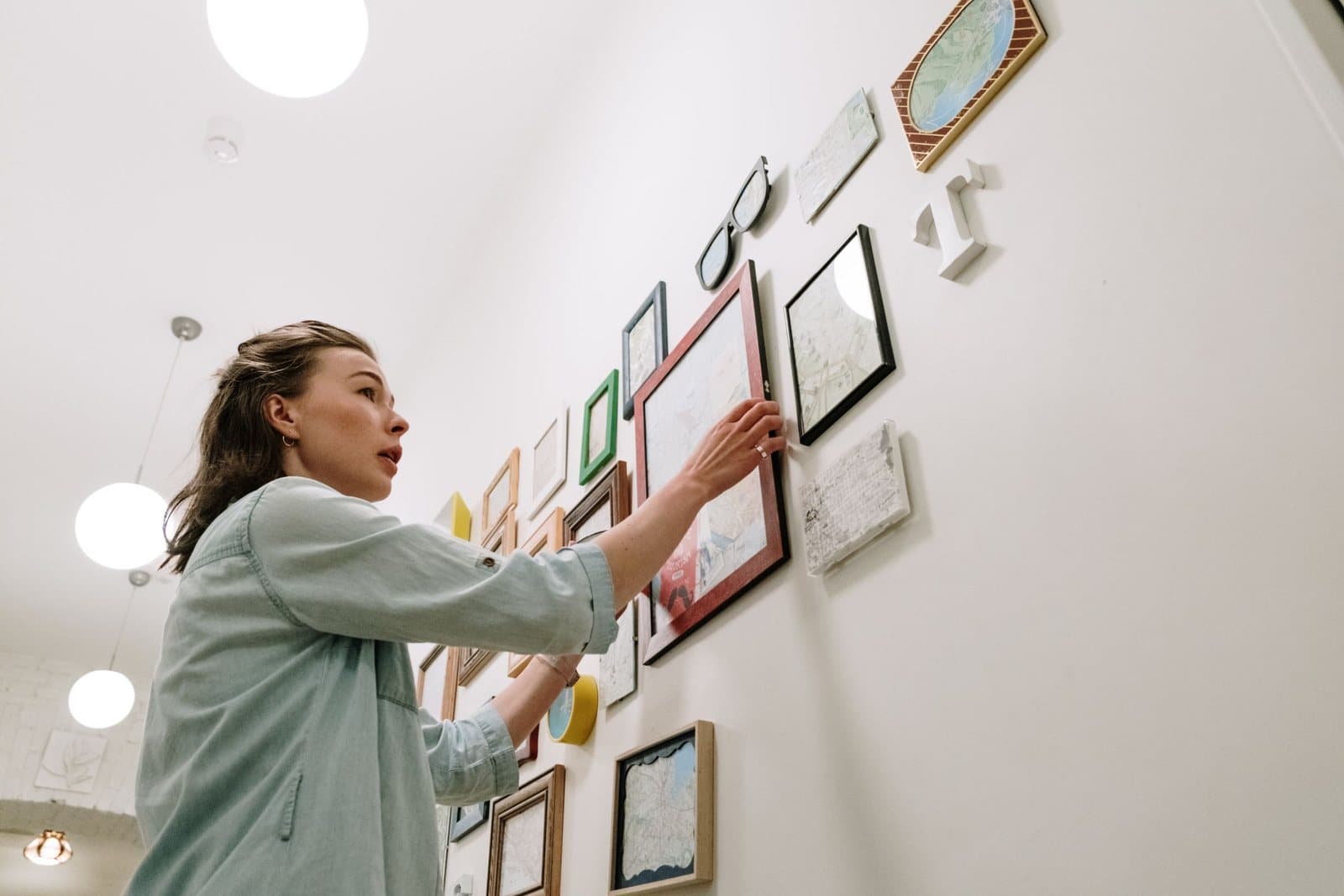
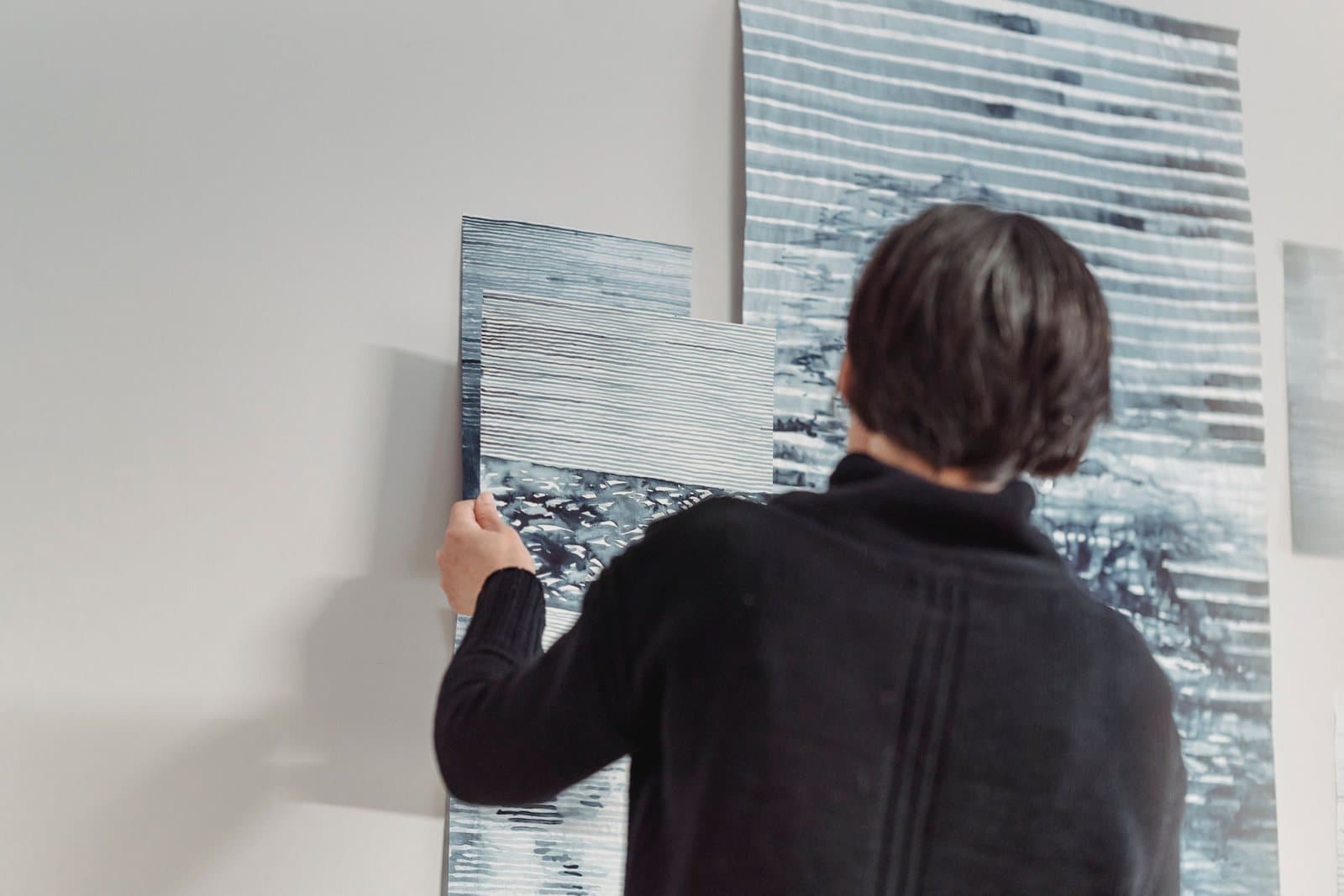
A collection holds together because something repeats across it, not because the pieces match. Pick that thread first, then let a grid, salon, or shared line organize the rest.
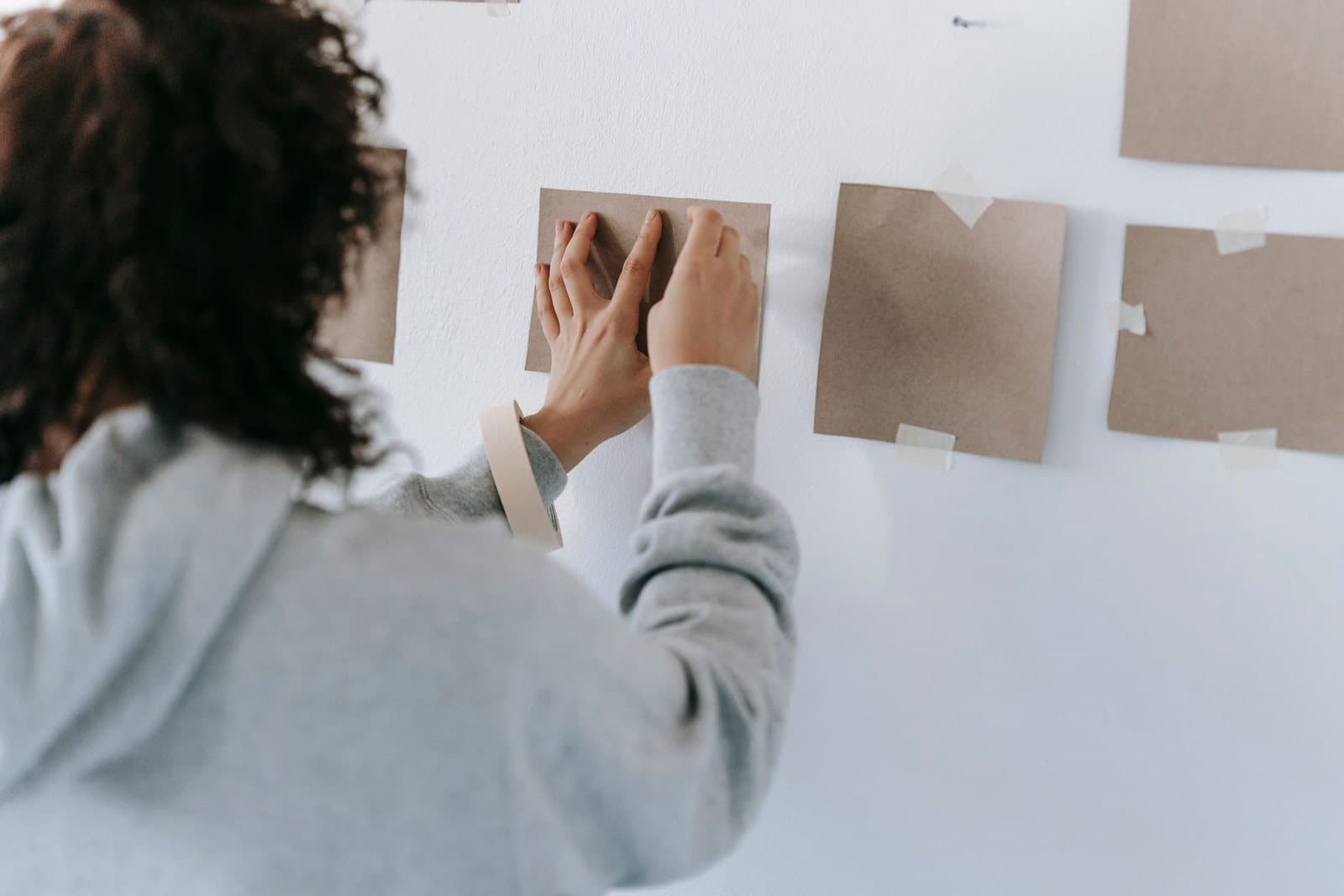
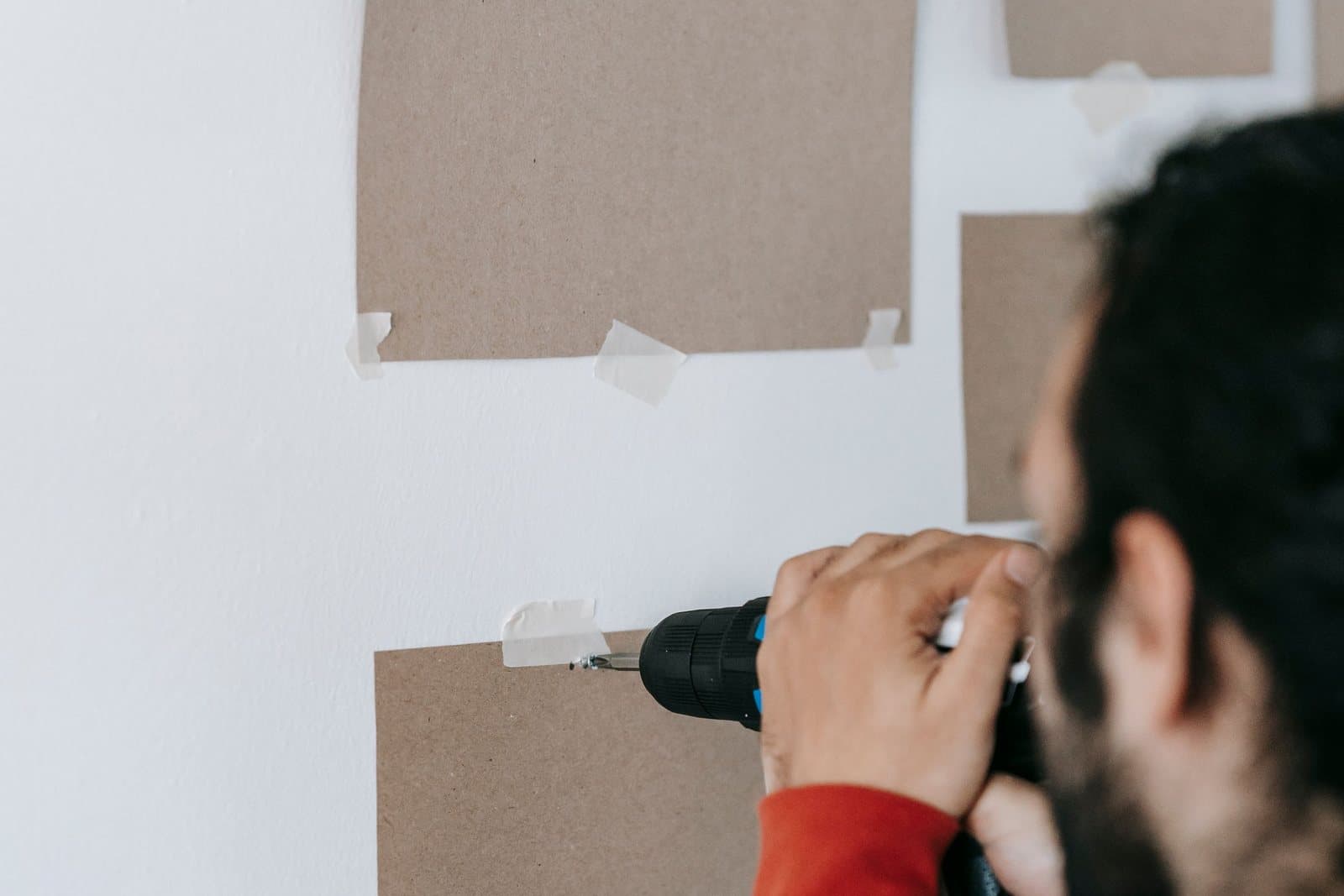
Treat ten frames as one hanging, not ten separate ones. Paper templates that know where each hook lands let you fix every mistake while it is still only tape.
Nail-free methods really do hold — on the right surface, at the right weight, with margin. The honest limits matter more than the headline ratings on the packet.
Every fallen frame traces back to a small metal part asked to do more than it was rated for. Learn what sits on the back, what sits in the wall, and how they pair up.
Heavy pieces pull outward as well as down, for years at a time. Weigh the piece, find what the wall is made of, and spread the load instead of trusting one fixing.
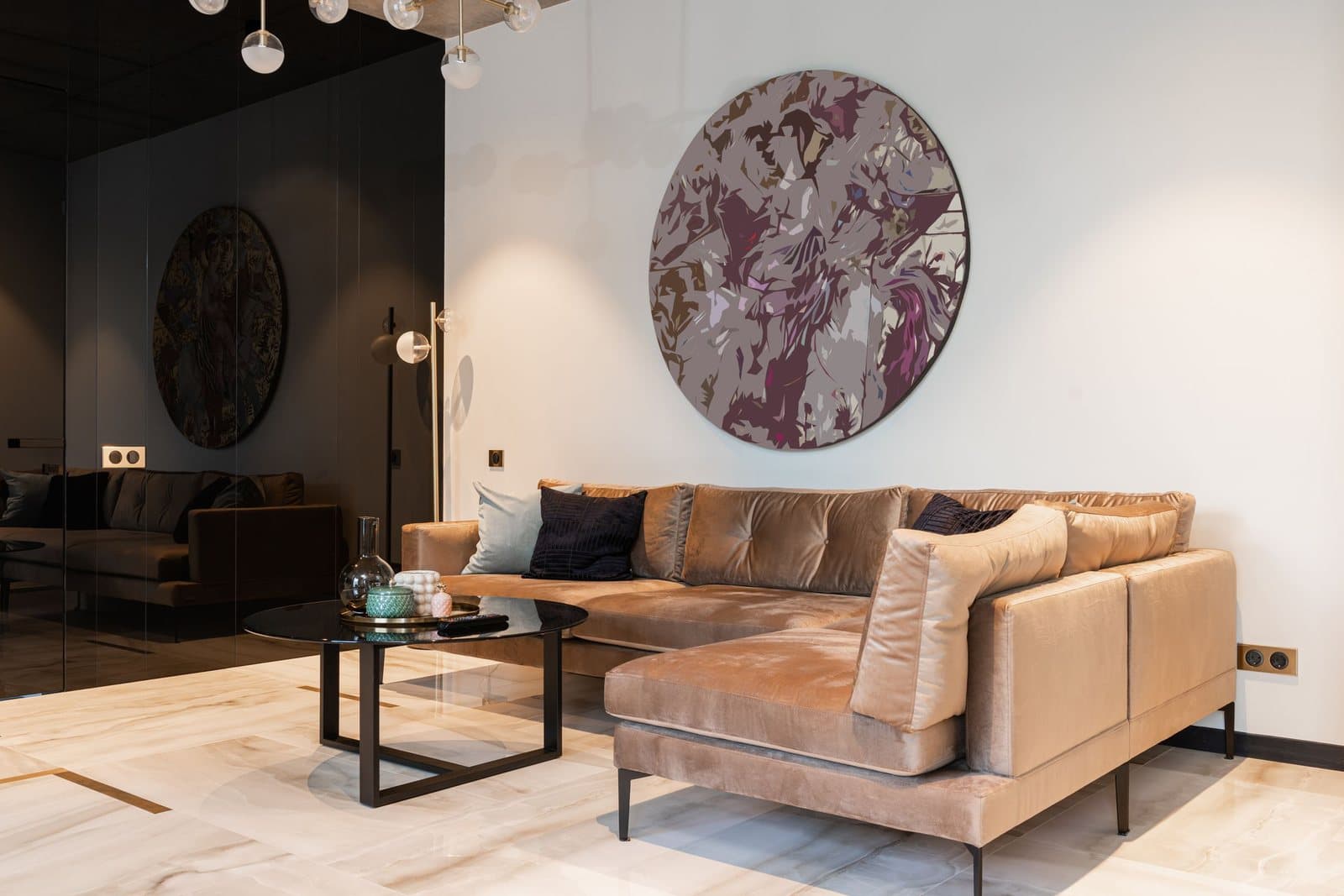
Big walls go wrong when decent pieces are spread thin across them. Think in one footprint — a single anchor or a group composed to act like one — and leave calm around it.
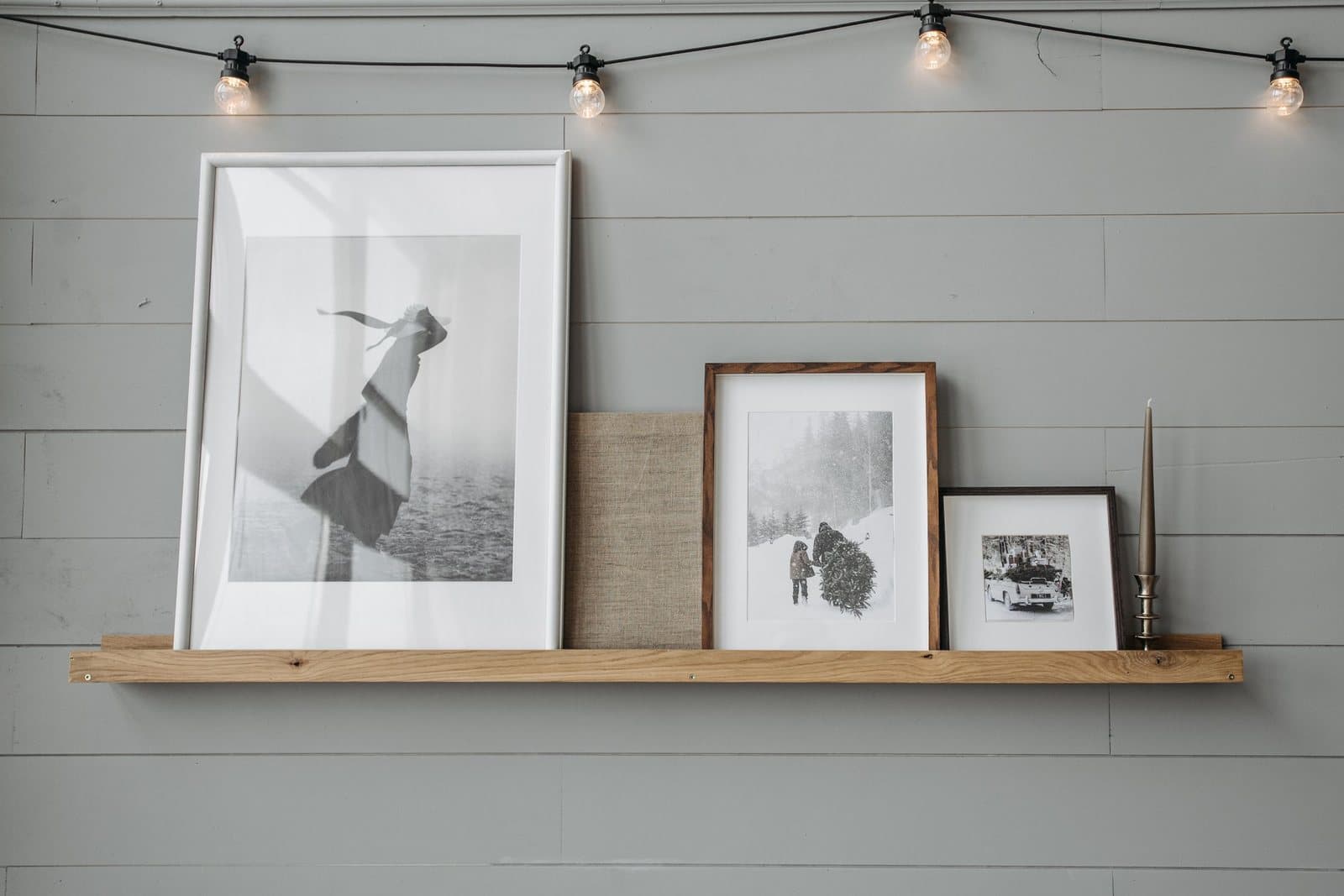
A ledge lets you rearrange in seconds, which is both its charm and its trap. A little layering discipline keeps it looking composed instead of stored.
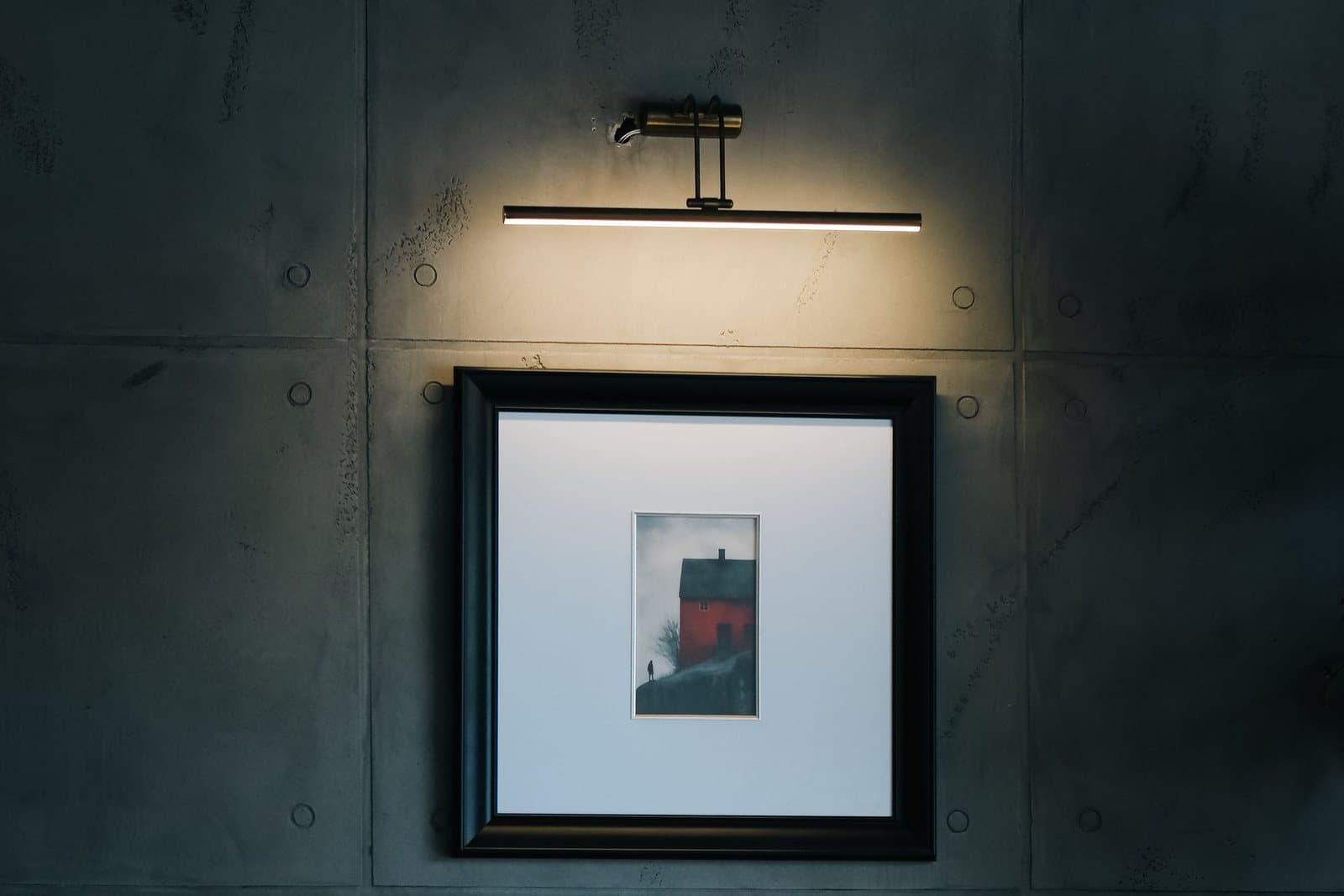
A picture with light aimed at it on purpose looks quietly luminous; one left to the ceiling fixture looks like an afterthought. Angle, width, and color do most of the work.
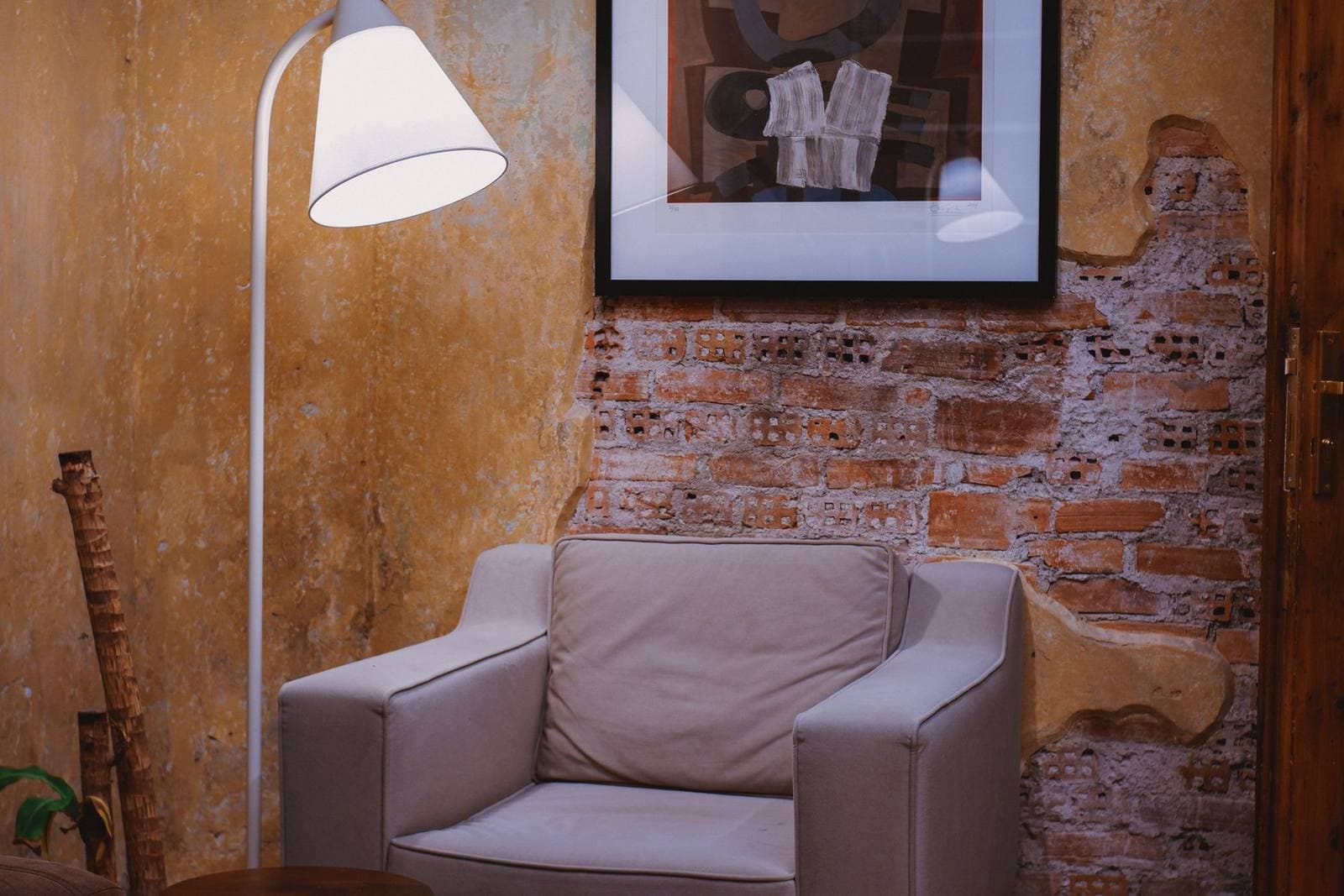
Brick, plaster, concrete, and tile can all hold art well — each just insists on its own fixing. Identify the material first and let the wall, never habit, decide the hardware.
Most disappointing rooms are not a taste or budget problem — they are two fixable placement errors. Run the audit from the doorway and fix the two worst offenders first.