

Summer Wall Art: Coast, Color, Open Windows
Bright light forgives bold color and washes out pale art. Summer is the season to hang the saturated coastal or garden piece you held back.

Key Takeaways
- Make the coast the anchor, but let the picture be a place — water, light, and weather, from misty morning shores to deep-water blues — rather than shells, anchors, and ropes as motifs, which date in one summer instead of lasting five.
- Summer inverts the winter rule: pale art can wash out to nothing by mid-afternoon in bright rooms, while saturated color holds its own, so if a loved piece always felt slightly too much, this is its season.
- Deep blues do two jobs no other color family does both halves of the day: they cool a bright room at noon by contrast and deepen beautifully at dusk, when evening harbors, fields, and lamp-lit streets come into their own.
- Mind format in the humid rooms: in the bathroom choose pieces made to tolerate steam, keep paper behind glass or choose a sealed surface, and hang away from the direct splash zone; on porches and sunrooms, hang out of direct rain and hardest sun and bring pieces in when the season turns.
- Sunlight is the bill for summer's light: direct sun through glass will fade any print, saturated colors first, so hang prized pieces where sun reaches only indirectly and ask about the surface and protective coating before you fall for an image for a bright room.
Summer light is the strongest a house ever gets, and it changes what art should do. In winter a picture is a light source by proxy, something warm to gather around. In summer the windows are doing that work, and summer wall art can afford to be cooler, brighter, and a little braver. The summer refresh is the most enjoyable of the year because the season’s subjects — coast, garden, saturated color — are the ones people daydream about in February.
Summer wall art as coastal scenes: the season’s anchor
The coast is summer’s defining view, and coastal and beach subjects carry the season into any room, inland or not. The range is wider than the postcard: misty early-morning shores, working harbors, dune grass, deep-water blues, the almost-abstract meeting of sand and surf. Choose the register that suits the room. A soft, pale shoreline calms a bedroom; a saturated, high-noon seascape can hold a living room all by itself.
One caution about the literal end of the family: shells, anchors, and ropes as decoration have been done to death. The sea itself — water, light, weather — never has. Let the picture be a place rather than a motif and it will still look right in five summers, not just this one, which is the restraint at the heart of our coastal wall art guide and its muted seascapes and harbor scenes.
Saturated color, because the light can take it
Winter rooms reward muted art because muted art survives dim light. Summer inverts the rule: in bright rooms, pale art can wash out to nothing by mid-afternoon, while saturated color — Mediterranean blues, garden reds and pinks, the deep green of July — holds its own against the sun. If there is a piece you love that always felt slightly too much, summer is its season. Hang the boldest thing you own now, while the light is on its side.
Garden subjects deliver that saturation honestly: borders at full stretch, roses, hydrangeas, vegetables on the vine. A single garden piece in a kitchen or sunroom connects the house to what is happening outside the window without a word of explanation.
The bathroom is a summer room
No room changes register in summer like the bathroom: showers after the beach, windows steamed less, light lasting into the evening routine. It is also the room where format discipline matters most, because humidity is hard on art. Choose pieces made to tolerate a steamy room, keep paper behind glass or choose a sealed surface, and hang away from the direct splash zone. Within those rules, the bathroom takes summer subjects beautifully — a coastal print above the towels is the season in miniature, and it costs one small wall.
Evening light: the blue hour pictures
Summer days have a second act. When the heat breaks and the house moves outside or to open windows, the light in the rooms turns blue and gold at once, and a certain kind of picture comes into its own: evening harbors, dusk over fields, city streets at the moment the lamps take over, lakes in last light. If your summer evenings are the social hours — dinner late, people lingering — art chosen for dusk register will be seen at its best precisely when guests are looking. It is the one season when choosing a picture for the light of 8 p.m. is not a compromise but the main event.
This is also why deep blues are summer’s hardest workers. They cool a bright room at noon by contrast and deepen beautifully at dusk, the two jobs no other color family does in both halves of the day.
Porches, sunrooms, and the almost-outdoors
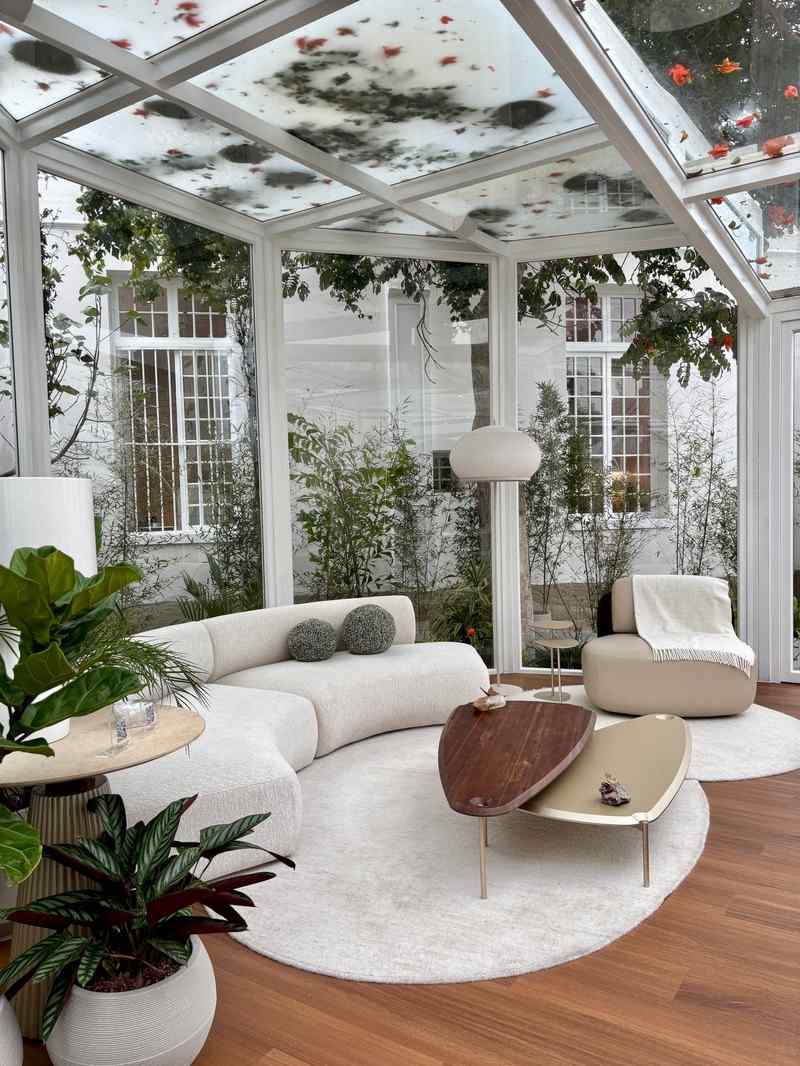
Summer moves life to the edges of the house — the porch, the sunroom, the shaded patio wall — and those spaces usually get the art nobody planned. Give them the same discipline as indoors, adjusted for weather. Choose formats that tolerate humidity and temperature swings, hang them out of direct rain and the hardest sun, and favor subjects that rhyme with what is actually outside: the garden itself, fields, water. A porch with one well-chosen landscape is a room; a porch with six leftovers is a corridor with chairs. And bring the pieces in when the season turns — the almost-outdoors is a summer posting, not a year-round sentence.
The kitchen’s summer subject
If the bathroom is summer’s surprise room, the kitchen is its headquarters. This is the season the kitchen actually lives on what the garden and market are doing, and its art can say so: vegetable and orchard studies, market scenes, herbs at full stretch. A single saturated still life in the kitchen in July does the work of a bowl of tomatoes that never needs replacing. Keep it at modest scale — kitchens are close rooms — and let the color be as ripe as the produce.
What rotates out
Every summer arrival is a winter resident’s holiday. The pieces that rest now are the pale, quiet ones summer light would wash out anyway — many of them the spring wall art that carried the house out of winter — and anything snowbound that has been up since January earning its keep. Wrap them face-protected, store them upright in the dry and the temperate, and label the wrapping. The wheel turns: the picture resting in a cool closet in August is the one that will feel like a homecoming in November, and your walls will have had two honest seasons instead of one long blur — the payoff of keeping a seasonal swap system going rather than redecorating from scratch each year.
Guest rooms and small rooms earn summer wall art too
Summer is when the spare room stops being storage and becomes a guest room again, and its walls are usually a season behind the rest of the house. One coastal or garden piece, swapped in when the bed is made up for the first visitor, tells a guest the room was prepared rather than merely cleared. Choose the welcoming end of the summer range — morning shores, green shade, nothing stormy — because a guest sleeps inside your choice.
Small rooms, meanwhile, are where saturated summer color does its most surprising work. A jewel-bright piece in a tiny bathroom, hall, or study reads as deliberate luxury rather than excess, because the wall is small and the commitment is contained. If a bold candidate feels risky for the living room, audition it in the smallest room you have. Summer is the low-stakes season for experiments: the rotation will forgive anything by September.
Keeping the sun off your prints
The trade summer makes with you is this: it lends your art the best light of the year and charges for it in ultraviolet. Direct sun through glass will fade any print eventually, saturated summer colors first and fastest. The defenses are simple. Hang the pieces you care most about on walls the sun reaches only indirectly; rotate a vulnerable piece to a shaded wall for the brightest months; and if a picture lives in a sun trap, accept the rotation as part of owning it. When you are choosing summer wall art for a bright room, ask about the surface and any protective coating before you fall for the image — the bright room is exactly where that question matters.
Rotate a coastal anchor in, let the bold piece have its season, give the bathroom its miniature of the shore, and keep the sun’s bill in mind. Summer art should feel like the windows are open — because, finally, they are.
More in Seasonal


Continue exploring: Seasonal guides · All guides