

Seasonal Wall Art Rotation That Sticks
Most rotations die from friction, not lack of taste. Fewer swap spots, same sizes, same hooks, and a date you already notice keep it alive.
Key Takeaways
- The system that sticks is anchors and swaps: leave most of your walls as year-round anchors that never move, and rotate only a deliberately small set of two to four designated swap positions, in standardized sizes on identical hardware.
- Do not build four themed sets: each season needs a temperature, not a wardrobe, and versatile pieces that span two seasons — a green landscape for spring and summer, a warm abstract for fall and winter — mean a dozen pieces can run four swap spots all year.
- Standardizing is what makes a swap a two-minute lift-off, lift-on: one or two sizes for every swap piece, the same hanger type and position, and one consistent frame style — or unframed canvas at the same depth — across the set.
- Tie swaps to dates you already notice, such as the solstices and equinoxes or the day the clocks change, put them in the calendar as recurring events, and swap the whole set on the day so the room reads as intention, not indecision.
- Storage is where rotations die: store pieces upright, never flat-stacked or face to face, protect the corners, keep them cool, dry, and dark in an interior closet rather than an attic or garage, and label each one with its season and room.
There is a particular pleasure in a home that notices the year turning — and a particular staleness in one that looks identical in January and July. A seasonal wall art rotation is the cheapest version of redecorating there is: the walls stay, the furniture stays, and a handful of images change, and somehow the whole room feels newly considered.
Most people who try it abandon it within a year, not because the idea is wrong but because they relied on enthusiasm instead of a system. Pieces end up in the wrong sizes, stored badly, or too numerous to face swapping. This guide is the system version: a small set of decisions, made once, that make seasonal rotation nearly effortless to keep.
Seasonal wall art rotation: anchors and swaps
A workable rotation never touches most of your walls. Divide your art into two families. Anchors are the pieces that suit the house all year — the big landscape over the sofa, the portraits in the hallway, anything large, personal, or hard-won. Swaps are a deliberately small set of designated positions — typically two to four — where seasonal pieces come and go. The entryway, the wall above a sideboard or mantel, one dining room piece, perhaps a kitchen print: spots where a change is noticed daily but the room does not depend on them for its identity.
Keeping the swap count small is the entire discipline. Four positions with four seasons each is a collection of sixteen pieces at most — and in practice, as the next section shows, you need far fewer than that.
Build a small seasonal collection, not four of everything
The mistake is imagining each season needs a complete, themed set. What each season needs is a temperature:
- Winter wants depth and warmth or serene cold: deep-toned landscapes, snowy scenes, rich still life, anything that holds its own against early darkness and lamplight.
- Spring wants air: florals, fresh greens, gardens, light landscapes — images that feel like a window opened. The spring wall art refresh covers those light swaps room by room.
- Summer wants brightness and openness: coastal scenes, saturated color, market and garden subjects, the most extroverted art you own. The summer wall art guide picks up the coastal and saturated end of that range.
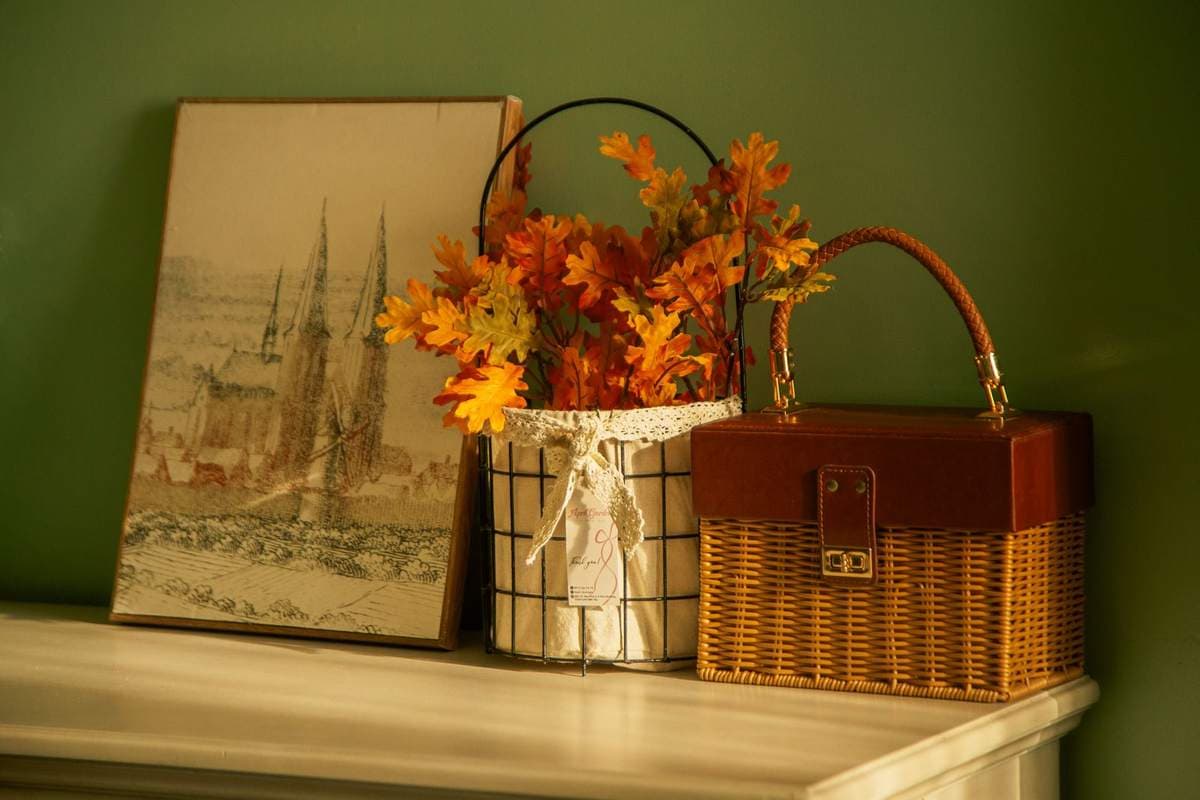
- Fall wants the turn: amber and russet landscapes, harvest still life, moody abstracts — summer's energy with the warmth dialed up and the light dialed down. Our fall wall art ideas show how to carry that warmth without a single plastic leaf.
Notice how many pieces span two seasons. A green landscape works spring and summer; a warm-toned abstract works fall and winter. Versatile pieces are the backbone of the system: aim for a core that covers the shoulder seasons and a few unmistakable pieces — the snowy scene, the blossom print — that mark the extremes. A dozen pieces, thoughtfully chosen, can run four swap spots all year.
Choosing subjects season by season: a starter pattern
If building the collection feels abstract, here is a pattern that works in most homes — one hero piece and one supporting piece per swap spot, chosen from these families:
- Entryway: winter — a snow-quiet landscape or a deep-toned still life; spring — blossom or garden botanical; summer — a coastal or market scene at its brightest; fall — an amber woodland or harvest image. The entryway is the house's handshake, and it earns the most seasonal piece you own.
- Living areas: one larger piece above a sideboard or in the secondary position (never the anchor over the sofa). Landscapes do the heavy lifting here — the same valley in four lights is a cliché because it works.
- Dining room: still life rotates beautifully — citrus and brightness for summer, orchard and game tones for fall, candlelit depth for winter, first greens for spring.
- Kitchen: the forgiving spot. Botanicals, typography, and market subjects rotate with the cooking seasons and tolerate small sizes and humor better than any other room.
Buy the seasons slightly out of phase with your enthusiasm: the pieces you will live with longest are acquired when you are planning them, not when a holiday is three days away.
Standardize sizes and hardware, and swaps become trivial
The friction that kills rotation is physical: a new piece that needs a new nail position, a different hook, fifteen minutes with a level. Remove the friction at setup. Choose one or two sizes for all your swap positions and collect pieces in those sizes only, so every seasonal piece fits the same footprint on the wall. Keep the hanging hardware identical across the set — same hanger type, same position on the frame — and a swap becomes a two-minute lift-off, lift-on that never touches a drill or leaves a orphaned hole.
Frames deserve the same thinking. One consistent frame style across the swap set makes mismatched subjects look like a curated collection rather than a jumble sale; or, for canvas, keep everything unframed at the same depth so the rhythm of the wall never changes. Either way, consistency in the container is what lets the contents vary freely.
A seasonal wall art rotation calendar you will actually keep
Tie swaps to dates you already notice. The classic anchors are the turns of the year — the solstices and equinoxes — but any memorable rhythm works: the first weekend of each season's month, the day the clocks change, a birthday or holiday you always mark. Put the four dates in your calendar as recurring events, with the storage location in the note. The swap itself should take under half an hour for the whole house; if it takes longer, the system — not your motivation — needs adjusting.
Swap the whole set on the day, not piece by piece across a month. A room half in winter and half in spring reads as indecision; a room that changes overnight reads as intention.
Storage: where rotations go to die
More seasonal art is ruined in storage than on walls. The rules are few and absolute:
- Store upright, never stacked flat in a pile. Prints stored vertically, like books on a shelf, avoid the pressure marks and sticking that flat stacks cause. Never store two printed faces touching; interleave with clean cardboard or acid-free board.
- Protect the corners. Corners are the most vulnerable part of any framed or wrapped piece. Simple cardboard corner protectors — or folded card taped loosely — prevent the dings that happen in closets and under beds.
- Choose the room like you would for a book. Cool, dry, and dark beats hot, damp, or sunlit. Attics and garages with big temperature swings and any damp-prone spot are the enemy of canvas, paper, and wood alike; an interior closet or under-bed space in a lived-in room is nearly ideal.
- Label everything. A strip of painter's tape on the back — "Winter — entryway" — turns next season's swap into a grab-and-go instead of an unwrapping ceremony.
The general care principles behind these rules — what light, heat, and humidity do to prints over time — are the same ones this guide and our print-craft guides work by, and they apply to the art on your walls just as much as to the art in the closet. The ordering questions those rules raise are collected in our frequently asked questions.
Rotating a gallery wall without rebuilding it
Gallery walls look like the exception to rotation — too many pieces, too much arrangement. In practice they rotate in layers. Keep the arrangement and the majority of pieces fixed as the anchor layer, and designate two or three frames within it as the seasonal layer: the small print by the door end, the square at the center bottom, the one your eye lands on first. Swapping only those keeps the wall's architecture intact while its accent changes — like keeping the furniture and changing the cushions. The same-size rule matters doubly here: seasonal pieces cut for those exact frames will drop in, and anything else will not, no matter how perfect the image.
What rotation teaches you about buying art
A season or two of rotating changes how you shop. You stop buying the single dramatic piece that matches nothing you own and start buying for the collection: pieces tested against two seasons, sizes that fit your swap spots, subjects that talk to the anchors instead of competing with them. Fewer, better-chosen pieces do more work — a rotating household of twelve versatile prints feels richer than forty static ones, because the walls keep presenting it afresh. Rotation also exposes your genuine taste quickly: the piece you never quite get around to rehanging is telling you something, and the piece you reach for early every year is the truest art you own.
Beyond the seasons
Once the system exists, it invites other uses: a festive piece or two for the holidays (see the Christmas wall art guide for keeping that swap festive without overload), a brighter set when guests come to stay, a rotation of children's art in a family hallway, even a "shop your own closet" rearrangement when a room feels tired mid-season. The calendar is a floor, not a ceiling — the point is that changing your walls is now cheap enough to do on a whim.
Small homes rotate too
Rotation is sometimes mistaken for a big-house luxury — spare walls, spare closets. In a small home it is arguably more valuable, not less: when you cannot add furniture or change a layout, changing the art is one of the only real transformations available to you, and a single swap spot above a sofa or bed does the whole job. Storage is the honest constraint, and flat, standardized pieces answer it — a year's worth of seasonal prints in one size stores in the footprint of a single large book, under a bed or behind a wardrobe. Small-space rotators also get the system's purest lesson fastest: with so few pieces, every one of them has to earn its season.
Starting from zero
Do not buy sixteen pieces this weekend. Start your seasonal wall art rotation with two swap spots and one change of season: pick the two positions, standardize their sizes, and acquire the incoming season's pieces with the versatility test in mind — "which two seasons could this serve?" Add a season's worth at a time, and within a year you will own a working collection and, more importantly, the habit. Browse with seasons in mind and pieces start sorting themselves into the calendar on their own.
A house that changes with the year feels attended to. With anchors holding the walls, a small versatile collection, standardized sizes, four dates in the calendar, and storage that respects the art, rotation stops being a project and becomes what it should have been all along: a pleasant ten minutes, four times a year. For more seasonal starting points, browse the rest of our guides.
More in Seasonal




Continue exploring: Seasonal guides · All guides