

Wall Art for Small Apartments: Big Impact
Tiny art does not make a small room feel bigger — it makes it feel tentative. Fewer pieces, sized to the furniture, are what modest walls actually ask for.
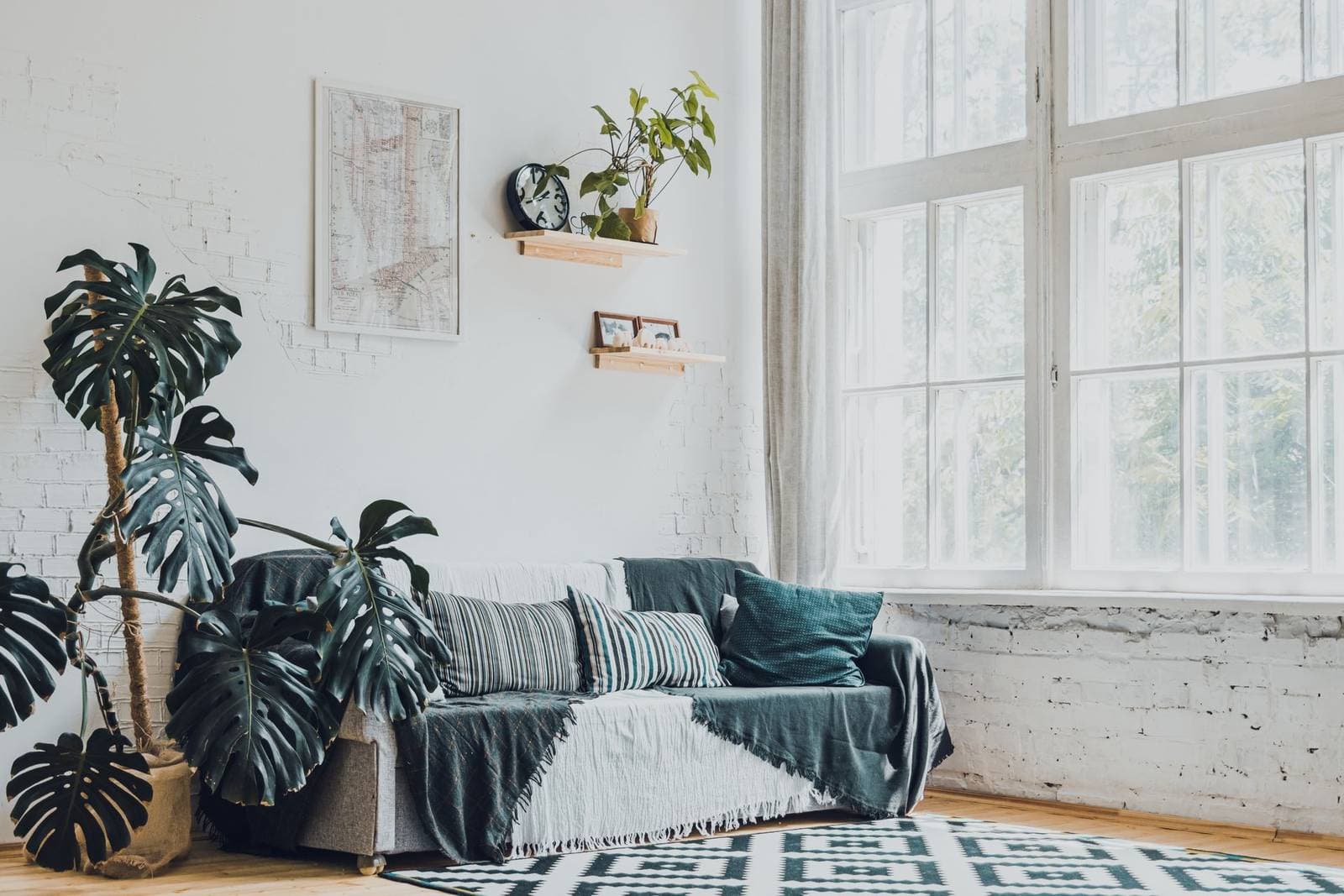
Key Takeaways
- Scale art to the furniture, not the square footage: above a sofa it should still span roughly two-thirds of the sofa's width, even when the sofa itself is compact.
- Choose one wall to lead with the strongest, largest piece you love and let other walls hold one quiet piece each or stay empty, so the focal point can land.
- Use verticals to lift ceilings and fill narrow wall strips, and squares above chairs or small sideboards; save wide panoramas for a long sofa.
- Hang art relative to the furniture beneath it rather than floating it in the gap to the ceiling, and tape the full outline up for a day before committing.
- Test every piece by living with it a day and asking whether the room looks better with it than without it; pieces that stay have to earn their wall twice over.
Small apartments get one piece of decorating advice more than any other, and it is wrong: keep everything small. Tiny art on modest walls does not make a room feel bigger — it makes it feel tentative, like a place nobody has committed to. The truth runs the other way. A small space can carry genuinely substantial wall art for small apartments, and usually looks better for it, provided the art is scaled to the furniture and given room to breathe.
What modest walls actually demand is not smaller art but better-edited art: fewer pieces, each the right size, hung with space around it. This guide covers the scaling rules that make that work.
Scaling wall art for small apartments to the furniture
The reliable rule for art above furniture applies in small rooms exactly as in large ones: the piece, or the arrangement, should span roughly two-thirds of the width of what sits beneath it. A compact apartment sofa is still five or six feet wide, which calls for art three and a half to four feet across — far bigger than most small-space dwellers first reach for. The mistake to avoid is sizing down twice: small room, small sofa, therefore postage-stamp art. Each step of that logic shrinks the piece further from what the wall in front of you actually needs.
Where a large single piece is not practical — budget, weight, or a wall broken by doors and windows — a tight arrangement of two or three related pieces can cover the same footprint. Count the total width including gaps, keep the gaps consistent, and treat the group as one picture for every sizing decision. A picture ledge makes that group easy to rearrange — leaning art on a picture ledge shows how.
One strong focal point beats five small ones
In a compact living area — the living room wall art hub covers its full range — every wall is visible from every seat, which means art competes in a way it never does in a big house. Five unrelated pieces do not read as five pleasures; they read as noise. Choose one wall to lead and give it the strong piece: the boldest color, the largest scale, the image you actually love. Let the remaining walls hold one quiet piece each, or stay empty. Empty wall is not unfinished wall in a small apartment — it is the rest that lets the focal point land, a balance the full guide to living room wall art and its main wall works through at house scale.
This discipline has a practical payoff too: one good decision is cheaper and easier to hang than five tentative ones, and when you move — apartment dwellers move — one beloved piece is simpler to place in the next home than a scattered set tuned to walls you no longer have — moving is also where rental-friendly wall art that protects your deposit earns its keep.
Shape does quiet work: verticals and squares
Format shape is the small apartment’s secret tool. Vertical pieces draw the eye upward and make ceilings feel taller than they are, and they fit the narrow strips of wall small homes have in surplus — between windows, beside a door, above a desk. A tall piece on a short wall run does more for the room’s sense of space than a wide piece cropped by the corners it nearly touches.
Square formats earn their keep too. A square hangs happily above a chair, a small sideboard, or a reading nook without demanding the long horizontal run of wall apartments rarely offer, and squares stack and pair neatly when one piece grows into two. What to use sparingly is the wide panoramic shape: glorious over a long sofa, awkward almost everywhere else in a compact plan.
Light, color, and the walls you have
Small rooms amplify color decisions because you are always close to the art. A piece with a light, airy palette and some genuine depth in the image — a landscape with a horizon, a street that recedes — lends the wall a sense of opening. Dark, dense pieces can absolutely work as the single focal point, but surround one with quiet walls; two heavy pieces in a small room start to close it in.
Glare deserves a thought in apartments, where windows are often close and opposite the only art wall. Matte, unglazed formats — canvas first among them — stay readable in bright small rooms where glass and gloss finishes mirror the window back at you. And keep frames slim: in a small space a deep, heavy frame is furniture, and the room has no spare room for furniture on the wall.
Height matters more in a small room
The commonest small-apartment art fault is not size but height: pieces hung at standing eye level over low furniture, floating in the gap between the sofa back and the ceiling. In a large room that gap absorbs the error; in a small one the art visibly hovers, disconnected from everything. Hang art relative to what sits beneath it — the bottom edge a hand or two above a sofa back, a sideboard, a desk — so the piece and the furniture read as one arrangement. On a bare wall section, the gallery standard of centering around 57 to 60 inches from the floor applies as usual; it simply has fewer chances to apply in a home where most walls carry furniture.
Tape the outline before you commit. In a compact room you can mock up a candidate’s exact footprint in painter’s tape in two minutes and live with it through a day of ordinary use — cooking, sitting, passing with laundry — which tells you more about the size than any measurement. If the taped rectangle feels shy at sofa distance, it is shy, whatever the tape measure said.
Wall art for small apartments in rooms that do two jobs
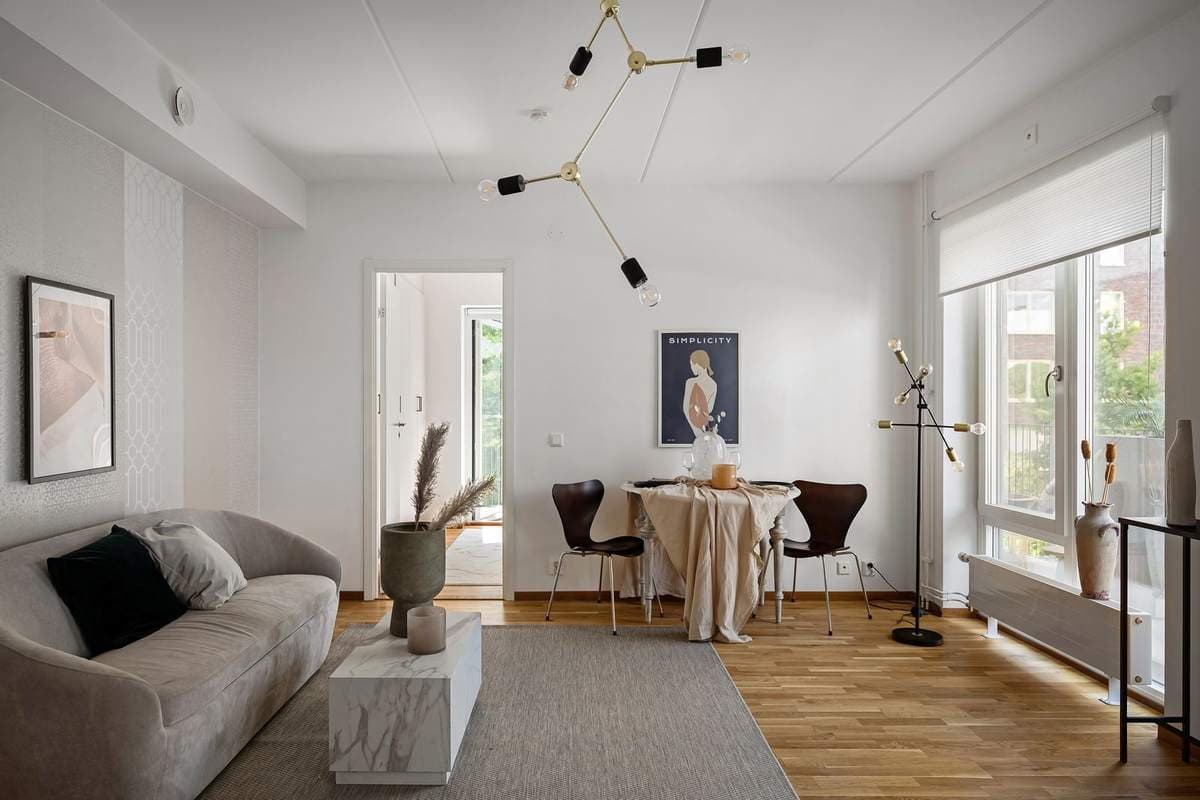
Apartment living areas are rarely only living areas: the same walls serve the desk, the dining table, and the sofa in rotation. Art can mark those shifts without building anything. Give the work corner its own smaller, calmer piece — something that reads as a window or a pause rather than a distraction — and keep the focal wall’s strong piece for the sitting area. The two zones stay visually separate because their art differs in scale and energy, and the room feels organized rather than partitioned.
Resist matching the zones. Identical pieces repeated across a small multi-use room underline how small it is by giving the eye the same landmark twice; varied art, loosely related in palette, lets each corner hold its own identity.
What to do with the bedroom end
Apartments put the bed in the same visual field as everything else more often than houses do — in a studio, literally the same field. The wall above a bed follows the over-furniture rule at its gentlest: art spanning a good share of the headboard’s width, hung low enough to belong to the bed, in the calmest palette in the home. This is the one wall where a serene, even quiet piece outperforms a statement, because it is the last thing seen at night and the first in the morning. Keep fixings secure and the piece light; over a bed is the one place in a small home where weight discipline is a safety rule, not a preference.
In a studio, the bed wall and the sofa wall are often the same wall read from two directions — all the more reason the focal-point discipline matters: one strong arrangement serves both seats, and a second competing arrangement would leave nowhere restful for the eye to land.
Editing: the skill that matters most
Every piece of wall art for small apartments should pass one test: does the room look better with it than without it? Hang a candidate, live with it a day, and judge honestly. The pieces that stay earn their wall twice over — once for what they show, once for the clutter they are not. When you are ready to look, browse art by room, subject, and format with your measurements in hand; in a small home, knowing your two or three wall sizes turns an overwhelming catalog into a short list fast.
More in Room Guides
Continue exploring: Room Guides guides · All guides