

Staircase Wall Art Ideas: The Diagonal Wall
Nobody stands still in front of this wall — art here is met mid-step, at an angle, in dim light, so the arrangement has to climb at the same rhythm as the stairs.
Key Takeaways
- Build a stepped gallery by keeping two things constant as it climbs: the gap between each piece's bottom edge and the stair slope, and the even 2- to 3-inch spacing between neighbours.
- Hang each piece at eye level for someone standing on the step directly in front of it; save ordinary standing eye level, and the piece that needs a still look, for the landing.
- Plan on paper first — lay the set out on the floor, tape templates up for a day of trips, hang in pairs, and bring in a professional for a tall two-story wall rather than leaning from a ladder.
- Keep one frame finish and one mat style across the set, with wipeable, unglazed surfaces such as canvas or paper behind acrylic where shoulders and furniture pass close.
- Choose subjects that read in a stride and reward sequence — a series unfolding as you climb, or family photographs — and put intricate work on the landing instead.
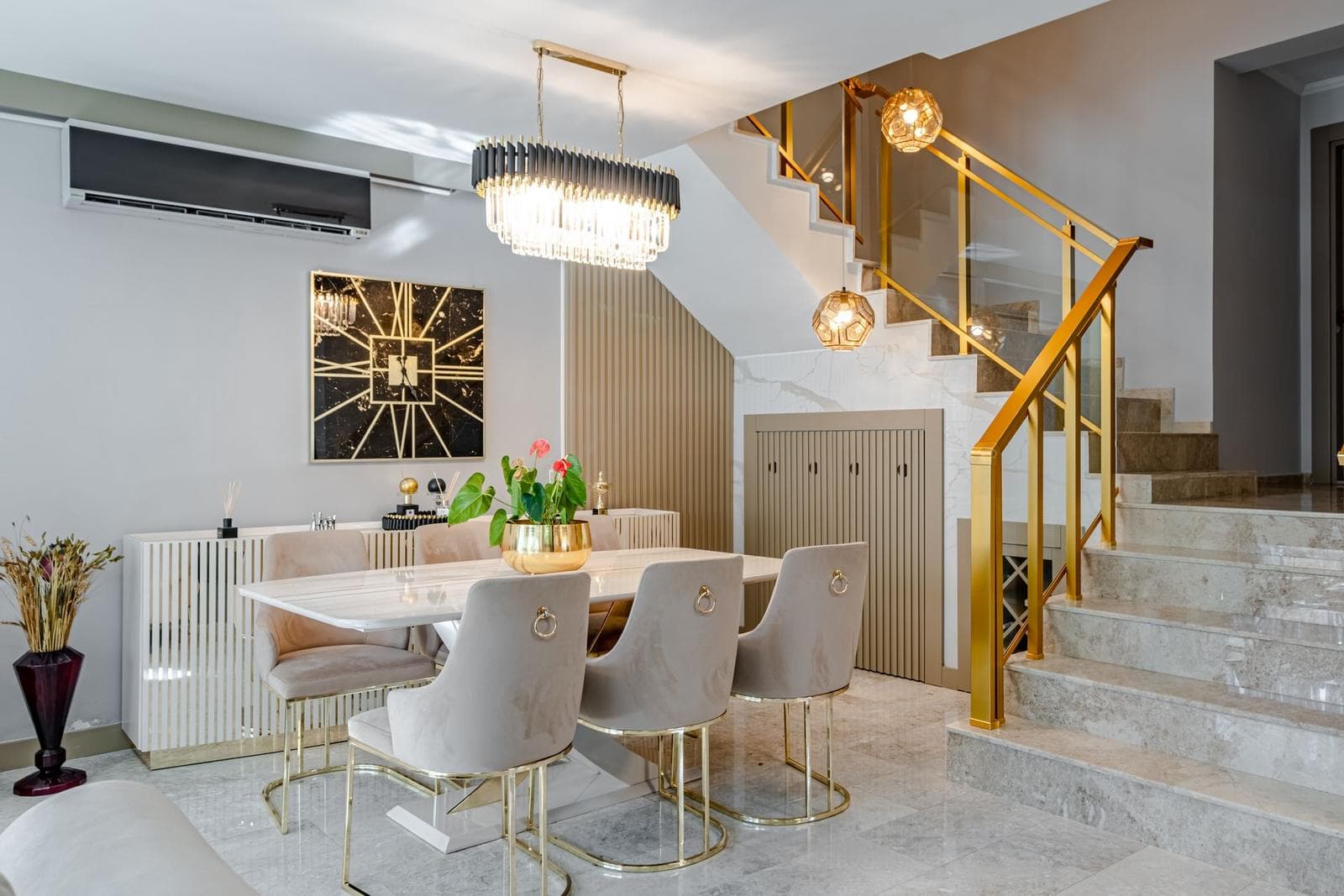
The stairwell is the most-traveled wall in the house and the one most often left blank — a tall diagonal expanse that defeats the usual rules, because almost nothing about it is level, square, or viewed standing still. That is a shame. Dressed well with staircase wall art ideas, a stairwell is the one gallery every household member and guest passes several times a day, and its diagonal is an opportunity no ordinary wall can offer: art arranged along a climb, seen in sequence.
The work breaks into three problems — the arrangement, the heights, and the plain logistics of hanging art safely over stairs — and each has a settled way through.
Staircase wall art ideas: the stepped arrangement
The classic stairwell arrangement is a gallery that climbs: a series of pieces whose arrangement steps up the wall in rhythm with the stairs. The governing idea is that the whole arrangement is one composition tilted to the diagonal. In practice that means two things stay constant. The gap between each piece’s bottom edge and the slope of the stairs — measured against the line of the handrail or the stair noses — stays consistent as the arrangement climbs, and the spacing between neighboring pieces stays even. Hold those two constants and almost any set of frames reads as deliberate; let either wander and even good art looks spilled.
Keep the set itself disciplined: one frame finish, mats in one style, and images from one family. A stairwell is seen in motion, a piece at a time, so coherence has to come from the frames and the thread, not from standing back and taking it all in — layouts from grids to salons are mapped in gallery wall layouts.
Heights for a moving viewer
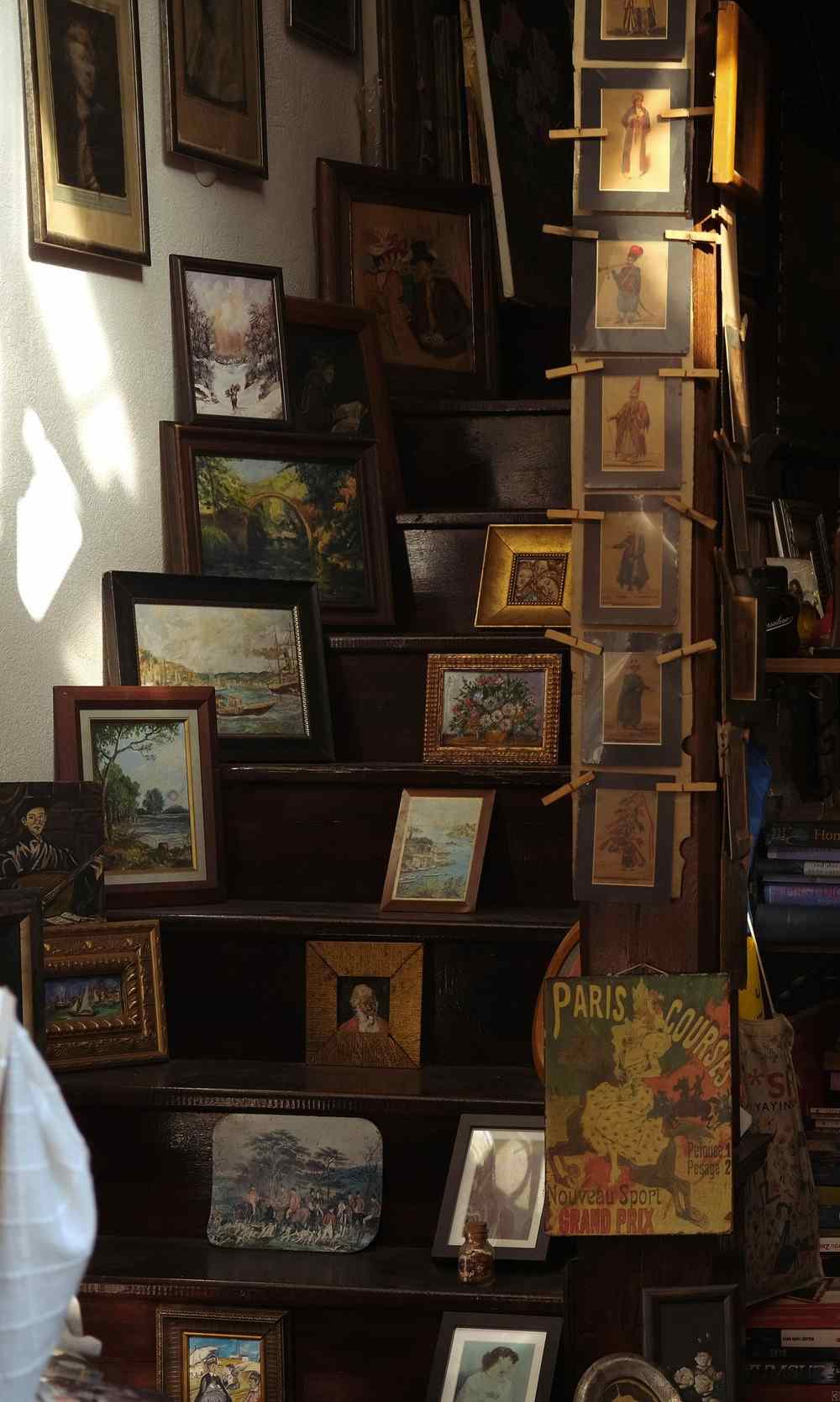
Forget the bare-wall eye-level rule — nobody views stair art standing on flat ground in front of it. The viewer is mid- flight, a step or two below each piece, looking slightly up or across. Hang each piece so its center is at eye level for someone standing on the step directly in front of it, which is what the consistent gap above the slope achieves automatically: as the steps rise, the art rises with them, and the viewer is always meeting the next piece face-on.
Landings change the terms. A landing is a small room with a moment of pause in it, and its wall can take a single piece hung by ordinary rules at standing eye level — often the best spot in the whole stairwell for the one piece that deserves a still look. Tall, narrow walls at the top or bottom of a flight suit panoramic vertical formats, which use height a horizontal piece would waste.
Planning it safely: tape first, climb second
Stairwell hanging is the one job in this series where the planning is a safety measure, not just an aesthetic one. Lay the whole arrangement out on the floor first, measure it, and then tape paper templates to the wall in position and live with them through a day of trips up and down. From the steps you will spot the piece that sits awkwardly at head height on the turn, and the one the light from the landing window blinds at noon — far better on paper than on nails.
For the hanging itself: work in pairs, one person on the steps and one spotting from the landing or the floor below, and never lean out over the open side of a stairwell from a ladder to reach a high fixing. A tall two-story wall above a flight is a legitimate place to bring in a professional with the right scaffold tower; there is no decorating prize for doing that part yourself. Secure every fixing properly — pieces over stairs get brushed by passing shoulders and bumped by furniture on the move, and a stairwell is the worst place in the house for a picture to fall.
Light on the stairs
Stairwells are often the dimmest walls in the house, lit by a landing window at one end and borrowed light at the other. Pale palettes and lighter backgrounds carry in that gloom where dark, dense images turn to silhouettes; if the set you love runs dark, give it the flight’s brightest stretch — usually the wall the landing window faces — and let the dimmer turns hold the lighter pieces. Glazing matters here too: a window at the top of a flight can mirror straight back off glass or acrylic hung opposite it, so matte, unglazed surfaces on that wall keep the art readable on the climb.
One tall piece instead of a climb
The stepped gallery is the classic, not the only, answer. Many stairwells have one genuinely tall wall — the two-story wall over the entry end of the flight, or the wall a landing turns against — and on that wall a single large piece, hung to be read from the floor below and the landing alike, can do the whole job. The test is viewing distance: a tall wall with room to stand back from earns one statement; a narrow flight whose walls pass within arm’s reach earns the stepped set, read a piece at a time. Some stairwells take both — the statement on the tall wall, a short stepped run continuing from it — provided the thread between them is obvious.
Whichever scheme you choose, sketch it whole before buying anything. The diagonal defeats improvisation: pieces bought one at a time for a stairwell rarely add up to the rhythm the wall wants, and the fixings are the least forgiving in the house to redo.
Frames and finishes for staircase wall art ideas
One more discipline the diagonal demands: keep the frames in a set genuinely alike. On a level wall, mixed frames read as collected; on a staircase, where the eye meets the set one piece at a time and the slope is always tilting the composition, mixed frames read as accidents. One finish, one mat style, consistent frame depth — the set then reads as a single instrument playing up the wall. Finishes have a practical side here too: stairwell art hangs where sleeves, bags, and the backs of carried furniture pass close, so surfaces that wipe clean and have no glass to crack under a knock — canvas, or paper behind acrylic — outlast delicate gilded frames and ordinary glass.
Spacing deserves a final word. Two to three inches between neighboring frames, kept even, is the range that reads as a set rather than a crowd on a stair wall; wider gaps break the rhythm the slope is trying to build, and narrower ones turn the climb into a single dense block that the passing eye cannot separate into pictures.
Subjects that reward the climb
Staircase wall art ideas are read in passing, so they reward sequence and repetition: a series that unfolds as you climb, the same subject across seasons, a journey told in stages. It also rewards the personal — this is the traditional home of the family photograph wall, precisely because the audience is the household, passing daily. Keep individual images simple enough to register in a stride; the intricate piece that needs a minute’s study belongs on the landing, where the minute exists.
Most stairwells begin in the entry, and the two spaces are usually dressed as one: the entryway wall art hub covers the ground floor of that pairing, and the entry itself — first impressions in ten seconds — is covered in entryway wall art ideas. When the arrangement plan is settled and the templates have survived a day on the wall, browse by shape and subject for the set itself — measured, templated, and climbed past a dozen times before a single nail goes in, a stairwell gallery is the rare project that feels finished the moment it hangs. The room those stairs lead to is dressed by different rules again: living room wall art that works the hardest.
More in Room Guides
Continue exploring: Room Guides guides · All guides