

Nursery Wall Art for the Smallest Room
This room is decorated for two audiences at once — adults keeping vigil at 3 a.m. and a baby slowly waking up to the first pictures they will ever study.
Key Takeaways
- Above the crib, hang nothing heavy: put the main piece on an adjacent wall and use only something light and firmly attached, or removable peels, where a standing baby could reach.
- Keep big colour fields soft and desaturated — misty greens, dusty blues, warm grays, blush and cream — and check pieces in dim lamplight, not just daylight.
- Use contrast deliberately: one simple black-and-white piece at the baby's level for changes or tummy time, while the rest of the room stays gentle.
- Choose subjects that survive the nursery phase — animals with some realism, landscapes, maps, moons and stars — and let bedding and cushions carry the baby-specific cuteness.
- Prefer lightweight paper in slim acrylic-glazed frames or unglazed canvas, and re-check every fixing when the crib rail drops and reach changes.
A nursery is decorated twice: once for the adults who will spend long, quiet hours in it, and once for the baby who will slowly wake up to it. The art has to serve both audiences. For the grown-ups it should make night feedings and early mornings feel calm rather than stark; for the baby it becomes some of the first imagery they ever study. Gentle nursery wall art, chosen with a little care about color and placement, does both jobs well.
The good news is that a nursery asks less of art than almost any other room. Nothing here needs to impress a guest or anchor a large wall. It needs to soothe, to be safe, and — if you choose well — to still make sense when the crib gives way to a bed and the nursery becomes a child’s room.
Start with the calm the room has to do
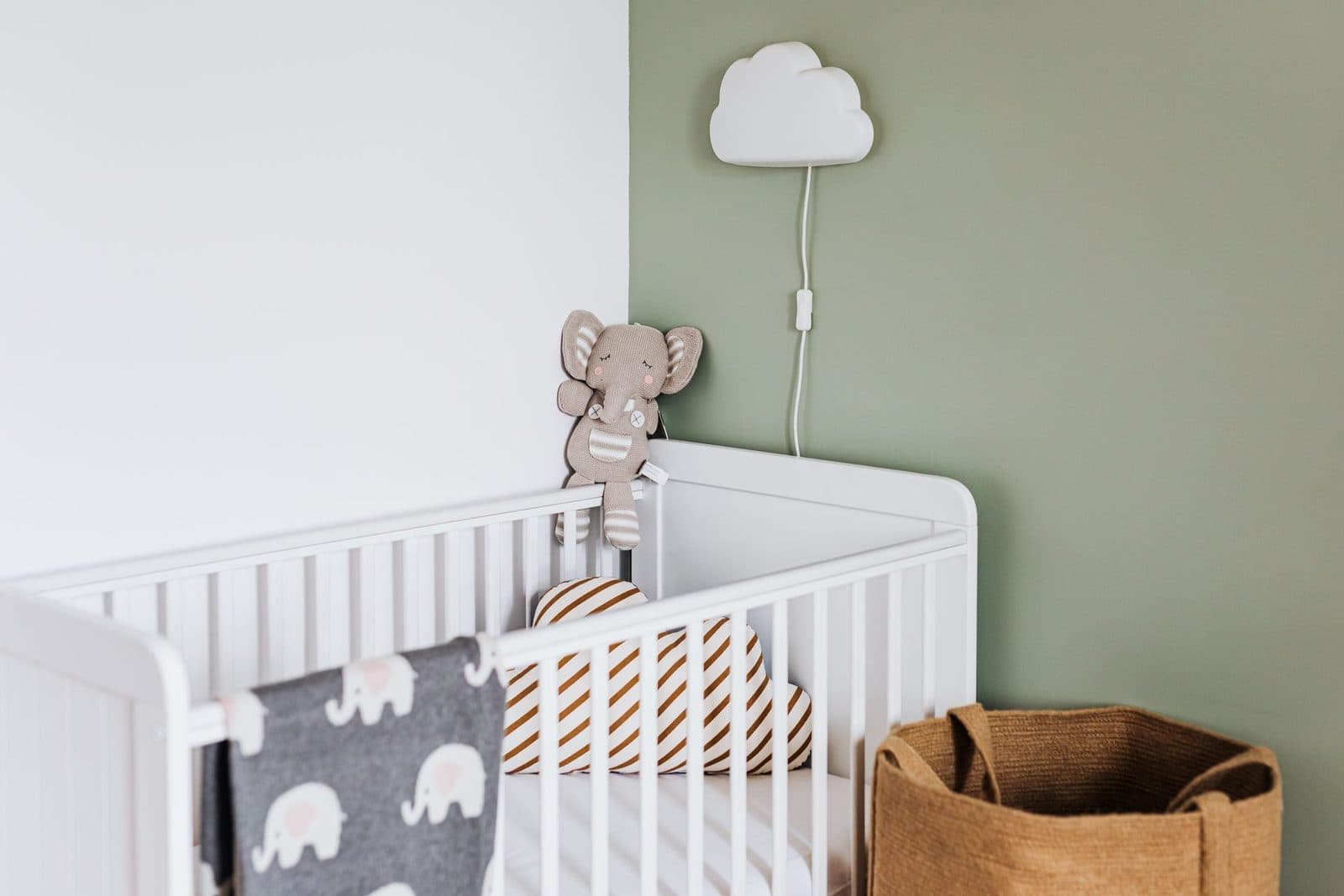
A nursery’s real work is sleep and settling, and color is the fastest way art either helps or hinders. Soft, desaturated palettes — misty greens, warm grays, dusty blues, blush and cream — lower the visual temperature of a room in a way saturated primaries do not. That does not mean the walls have to be bland. It means the big fields of color in the art should be quiet, with any brighter notes kept small: a single bird in a warmer tone, a border, a detail the eye finds slowly.
Think about the light the art will actually be seen in. Much of a nursery’s life happens in dim lamplight, and colors that look tender at noon can turn murky at two in the morning. Pale backgrounds and gentle contrast survive low light best. If a piece only works in full daylight, it belongs in another room.
Nursery wall art subjects that stay gentle
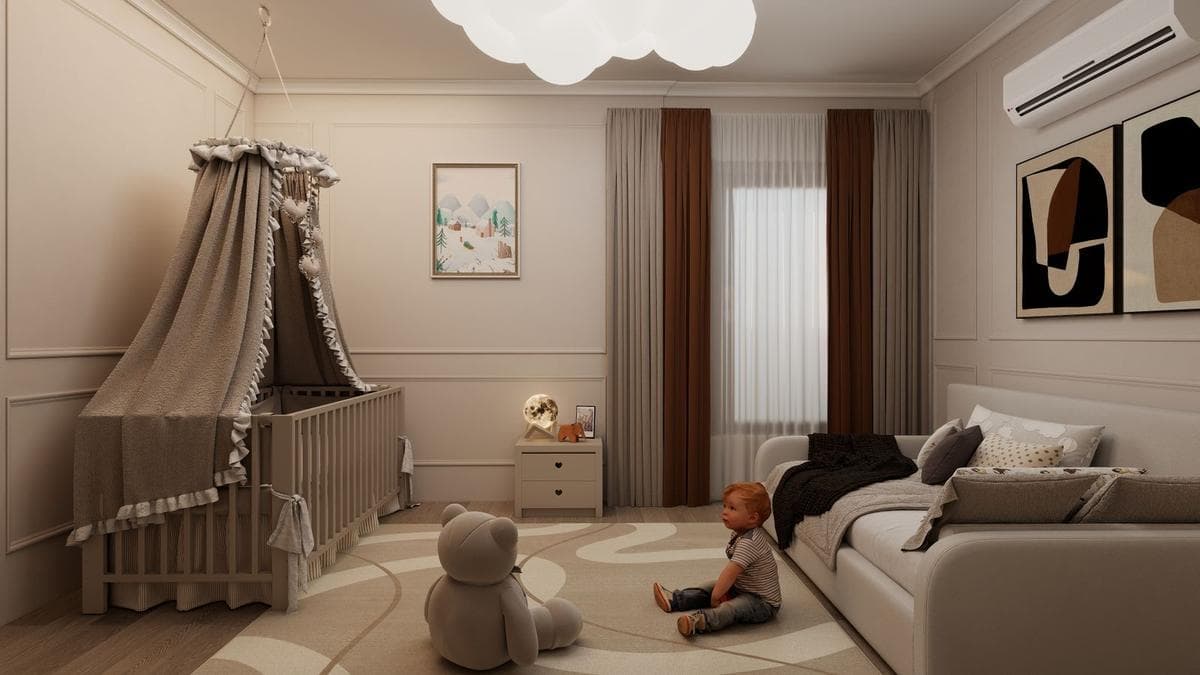
Animal subjects are the nursery classic for good reason: they are friendly without being loud, they reward close looking as a baby’s vision sharpens, and they do not date the room the way a licensed character does. Softly drawn woodland animals, birds, and sea creatures all work; so do simple landscapes, moons and stars, and unhurried botanical studies. Browse animal and wildlife art and you will see the range runs from storybook-soft to quietly realistic — pick the register that matches the room you are building, not the loudest option.
One caution about faces: very large, high-contrast faces — including big animal portraits — can be a lot for a tiny room and a small person. In a nursery, subjects at a modest scale, seen whole rather than cropped close, tend to feel kinder.
A little contrast, in the right place
Newborns see the world softly at first, and bold contrast is genuinely interesting to them — which is worth using deliberately rather than everywhere. One simple black-and-white piece, hung where the baby can see it during changes or tummy time on a mat, gives young eyes something to work on. Keep it to one piece, at their level rather than yours, and let the rest of the room stay soft. The art over the crib and the chair is for you; the high-contrast piece is for them.
Safety above the crib comes first
This is the one section of this guide that is not a matter of taste. The wall above a crib is the most safety-sensitive hanging spot in the house, because anything that falls, falls into the crib — and because a baby who learns to stand will reach, grab, and pull at whatever is in range.
The simplest safe choice is to hang nothing heavy above the crib at all. Put the main piece on an adjacent wall, where it is seen from the nursing chair and the door, and let the crib wall hold something light and firmly attached, or nothing — removable wall peels, light and flush to the wall, are built for exactly that spot. If you do hang above the crib, follow three rules: keep it genuinely lightweight, fix it with hardware that cannot be lifted or knocked off its mount, and position it high and far enough back that a standing child cannot reach it — remembering that reach grows faster than you expect. Never hang anything glazed with glass over a crib; if a framed piece belongs there, acrylic glazing is the forgiving option. And re-check fixings as the room changes: the day the crib rail drops and a toddler stands tall in it, every reach calculation changes.
Lightweight formats and forgiving frames
Format choice in a nursery is mostly about weight and what happens on the wall. Fine art paper prints are light, take fine detail beautifully — good for soft illustration — and sit happily in slim frames; choose acrylic rather than glass in the frame anywhere in this room, not only over the crib. Canvas is equally light for its size and has no glazing at all, which is why it is the other nursery staple. Whichever you choose, slim and light beats deep and heavy on every wall in here.
Choosing nursery wall art that can stay a while
The nursery phase is short. Within a few years this room is a child’s bedroom, and art chosen only for babyhood has to be bought twice. The pieces that survive the transition are the ones with a little room to grow: animals drawn with some realism, landscapes, maps, the moon and stars — subjects a seven-year-old still claims as theirs. The kids’ room wall art hub covers the older end of that same room’s life; art bought with one eye on it now saves a full redecoration later — the longer view is in kids’ room wall art that grows up with them.
The practical way to buy for both stages: keep the palette soft and the subjects timeless, and let the changeable things — bedding, cushions, the rug — carry the baby-specific cuteness. Those are cheap to swap. The art can simply stay.
Pairs and small groupings
A single piece over the dresser or beside the chair is the calm default, but nurseries also suit pairs unusually well: two small studies hung side by side, matched in size and frame, read as one quiet statement and give the room a gentle rhythm. If you pair pieces, keep the frames identical and the palettes closely related — in a small room, variety is noise, and two unrelated images compete in a way they never would on a large wall. A short horizontal run of three small pieces above a changing table works on the same principle, provided the fixings are the secure kind described above and everything sits well out of reach of the small hands that will one day explore from that table.
What does not work here is the dense gallery wall. However charming elsewhere, a crowd of frames at many sizes raises the visual tempo of the room and multiplies the number of fixings to keep safe. The nursery’s version of collected is a few pieces, calmly spaced, that can thin out or grow as the child does.
The finishing touches
Hang the main pieces at adult eye level on the walls adults face — from the chair, and from the doorway where you will pause a hundred times. Keep one small piece low, near the reading corner or the mat, at the height of the person it is actually for. And before the baby arrives, stand in the doorway once in daylight and once by lamplight and check that the room feels like somewhere you can be patient at 3 a.m. That, more than any theme, is what nursery wall art is for. The adults’ own room asks for the same calm at a larger scale — bedroom wall art for a restful room.
More in Room Guides

Continue exploring: Room Guides guides · All guides