

Marine Life Wall Art: Below the Surface
Skip the beach umbrella: whales, turtles and reefs offer ocean calm from below the surface. Check the water around the creature before you buy.
Key Takeaways
- Use depth as a mood dial: sunlit shallows are the cheerful register for family rooms and bathrooms, open water with a single whale or turning school is the contemplative one, and dark deep-water images are the dramatic, almost abstract choice.
- Run three checks before buying: the animal needs water around it rather than a tight crop, it should be moving into the frame's open space rather than pressed against the edge it faces, and its colours should stay believable rather than neon.
- Exploit the aquarium effect: a large whale or turtle printed big does not overwhelm a room the way a large face would, so one oversize piece on a calm wall can finish a generous wall on its own.
- Protect the depth around the piece: a single large image with plain wall on either side reads deeper than the same image crowded into a busy gallery arrangement.
- Know your cast: whales and dolphins bring scale and serenity, turtles bring warmth and welcome, coral reefs bring pattern that rewards close looking, and jellyfish bring a translucent, meditative drift.
Coastal art looks at the ocean from the shore. Marine life art goes under. Marine life wall art trades the horizon for depth: whales moving through blue dark, turtles paddling over reef, coral and anemones building their bright architecture. It delivers the calm people want from ocean imagery without a single beach umbrella, and it does so with a cast of animals that carry genuine presence. If you want the water’s peace with a pulse in it, this is the subject.
The distinction from its shore-bound cousin matters when you choose. A seascape is mostly light and air; a marine life piece is mostly blue and green depth with a creature suspended in it. That depth is the mood — looking at a good underwater image feels a little like pressing your face to aquarium glass — and everything about choosing well comes back to protecting it. The creatures themselves follow the rules of animal art and its portraits: presence first, honest scale, temperament matched to the room.
The cast, and the mood each one brings
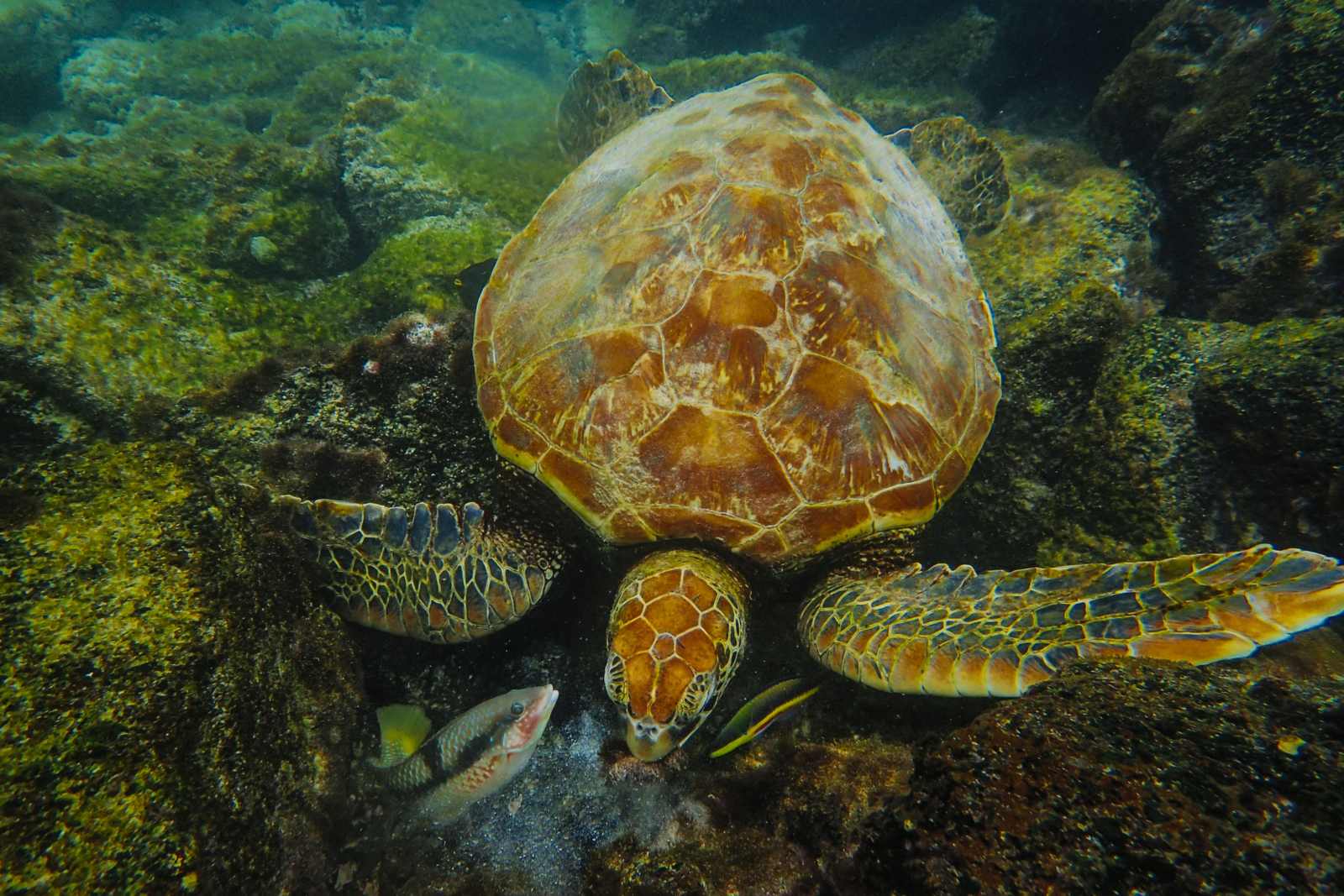
Whales and dolphins bring scale and serenity. A single whale in open water is one of the most calming images in the whole subject: enormous, unhurried, and usually photographed from a respectful distance that leaves blue around it on every side. Sea turtles bring warmth — an ancient, gentle face and a shell patterned like stained glass. They are the friendliest entry point, at home anywhere children or guests need the art to feel welcoming.
Coral and reef scenes bring abundance: color, layering, hundreds of small lives. They suit rooms that can take pattern and reward close looking. Jellyfish bring something else again — translucence, drift, and a meditative, almost abstract quality, especially photographed against deep water. Schools of fish sit between portrait and pattern: a turning school is movement frozen, silver and rhythm, and it pairs beautifully with restrained decor because the image supplies all the energy.
Marine life wall art: the blue-green palette
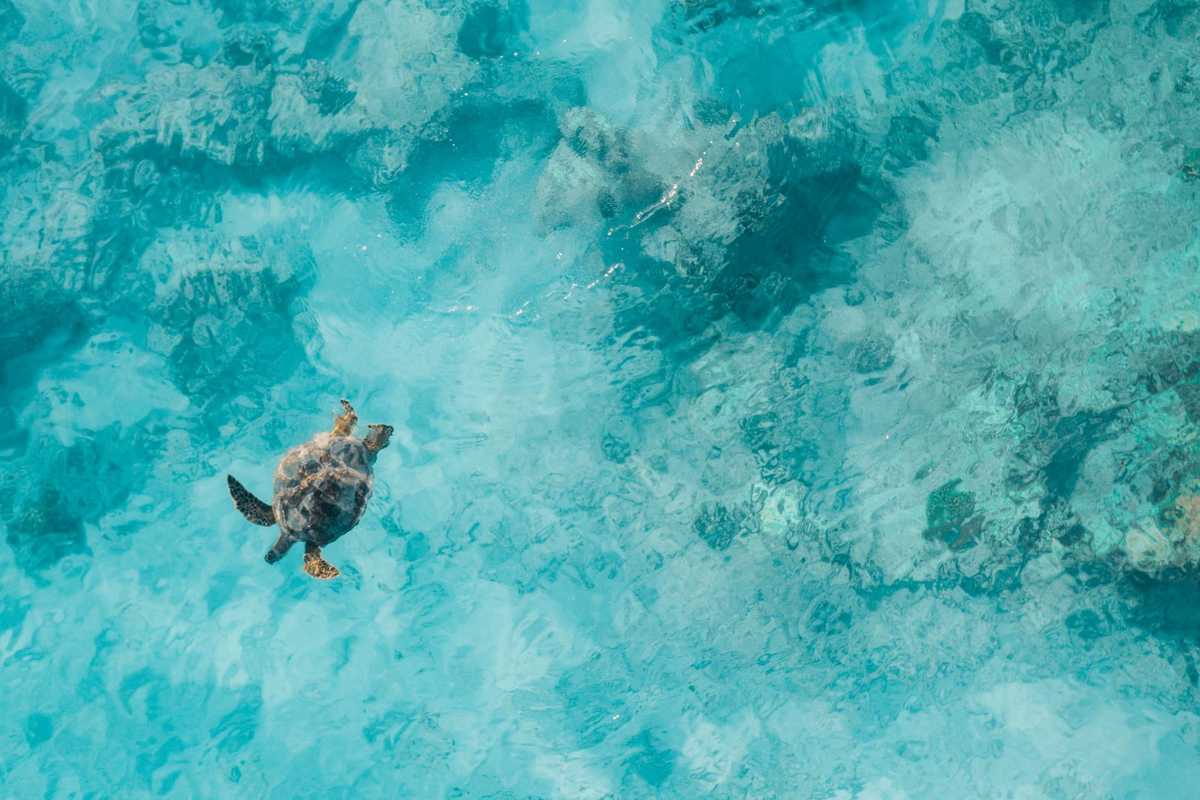
Underwater color runs on a gradient: sunlit turquoise at the top of the water column deepening through teal to indigo below. Images that honor that gradient feel true, and rooms decorated in its neighborhood — white, pale aqua, sea-glass green, sandy neutrals, weathered wood — let the piece glow rather than argue. The palette is forgiving in one specific way: it cools a room down, which makes marine life art a natural ally in sun-struck spaces that feel too warm by afternoon.
Two cautions. First, cheap-looking saturation is this subject’s failure mode — coral pushed to neon turns a reef into a screensaver. Prefer images whose color stays believable even when it is vivid. Second, give the piece visual depth around it: a single large image with plain wall on either side reads deeper than the same image crowded into a busy gallery arrangement. Underwater scenes are about volume; wall space is how you supply it.
Three depths, three moods
Underwater images also sort by depth, and the depth is a mood dial. Sunlit shallows — reef tops, turtle water, sand ripples lit through the surface — are the cheerful register: bright, patterned, full of small life, suited to family rooms and bathrooms that start the day. Open water is the contemplative middle: a whale, a shark at a distance, a school turning in blue with nothing else in frame. These are the images with the most wall presence per square inch, because the emptiness does emotional work. The deep — jellyfish in dark water, creatures lit against near-black blue — is the dramatic register, almost abstract, and it suits moody rooms and anyone who wants the ocean’s strangeness rather than its postcard.
Light behaves differently underwater, and the best images use it: rays fanning down from the surface, a bright ceiling of rippled light above a darker scene. That ceiling is what makes a marine piece feel like a place rather than a specimen jar. When you compare candidates, look for the light first. An animal photographed flatly against blue is a portrait; the same animal under a ceiling of moving light is a world.
Scale, sets, and the aquarium effect
Marine subjects are unusually generous about size. A large whale or turtle printed big does not overwhelm a room the way a large face would — the animal is suspended in its element, and the wall becomes a window. This is the aquarium effect, and it is the subject’s party trick: a single oversize piece in a calm room produces a sense of depth that smaller art cannot. If you have one generous wall and want one purchase to finish it, this subject is a strong candidate.
The alternative strategy is the collection: three or four smaller studies in matching frames — a turtle, a ray, a coral detail, a jellyfish — hung as a cabinet of the sea. Sets suit the scientific-plate tradition best, and they belong in hallways, studies, and children’s rooms, anywhere the looking is close and repeated. Keep the frames identical and the spacing even; the discipline is what turns four small pictures into one collection.
Marine life wall art: three traditions to choose among
Underwater photography is the modern default and the most transporting, especially for whales, turtles, and jellyfish. Scientific illustration — species plates in the old natural-history manner, the animal posed against a plain ground with its forms drawn precisely — brings order and a vintage calm, and it groups beautifully: a set of three plates at matching sizes reads as one considered collection. Soft illustration, watercolor especially, gentles the whole subject for nurseries and quiet bedrooms, trading drama for tenderness.
Reading a marine image before you buy it
Three checks separate the transporting pieces from the merely pretty. Negative space: the great underwater images leave water around the animal — room for the creature to be going somewhere. A subject cropped tight to the frame’s edges reads as a specimen, not an encounter. Direction: animals moving into the frame’s open space feel alive; an animal pressed against the edge it faces feels trapped, and the room will feel it too. Hang the piece so the subject swims into the room’s open wall, not into a corner. Believable color: held next to the other two checks, this is the quality filter — water that glows a plausible blue-green, coral that is vivid without fluorescing, skin and shell with their true, slightly muted tones. Photographers who work underwater fight for that believability; on a wall, it is the difference between a window and a poster.
Where it hangs best
The bathroom is the subject’s most natural room — water art in the room of water, and the blue-green palette sits happily beside tile, chrome, and white porcelain — provided the image stays grown-up; a refined turtle or jellyfish study reads as spa, while a cartoon fish reads as a child’s bath, unless a child’s bath is the assignment. Bedrooms take the deep-water pieces well, since few images lower a pulse like a whale in blue quiet. Hallways and stairwells suit the long, drifting subjects — a school of fish moving along the wall in the direction of travel is a small piece of choreography.
If the shore itself is what you love, that is the neighboring territory of coastal scenes — horizons, dunes, and harbor light. That shore-bound neighbor has its own guide: coastal art from the shore side. Marine life begins where that subject ends, at the waterline, and its gift is the world below: quieter, stranger, and more alive. Choose one creature or one reef, give it depth and room, and the wall stops being a picture of the ocean and starts feeling like a window into it. Marine life wall art is one branch of wall art chosen by subject; the overview weighs it against the shore, the land, and everything else in this series.
More in Subject Guides




Continue exploring: Subject Guides guides · All guides