

Safari Wall Art: Savannah Light and Animals
Done well, this is serious landscape and portrait photography in warm light — not a lodge theme. Let the art be the room's only safari reference.
Key Takeaways
- Let the art be the only safari reference in the room: no animal-print textiles competing with a real animal on the wall and no novelty objects underneath it, with furniture and fabrics chosen for texture rather than motif.
- Pick one family to lead: wide savannah landscapes bring space and lower a room's tempo above a sofa, while animal portraits bring presence and want a wall where they can be met at eye level — a grand one of each on the same wall splits the focus.
- Choose by the hour: dawn images run cool-gold and hopeful and dusk images run amber, while midday savannah photographs look bleached and flat, so use dusk's warmth for cold, north-facing rooms.
- Size each family by its own logic: a savannah scene should span most of the sofa's width and is almost always better larger, while a portrait needs the animal's head at or above life size to read as presence rather than illustration.
- Prefer work showing the animal in its own life — grazing, resting, moving, unbothered — over staged or baited encounters, whose tension reads on the wall even when viewers cannot name it.
Safari art fails in one predictable way: the lodge look, where a room stops being decorated and starts being themed — animal print on the cushions, a pith helmet on the shelf, a zebra rug underfoot. The images themselves deserve better. Safari wall art at its best is simply great landscape and great animal portraiture that happens to come from the savannah: grassland under a huge sky, and animals photographed with the patience those subjects demand. Treat it as serious art with a warm palette, and it will never look like a costume. It is also one subject family among many in this series’ survey of subjects, chosen here for warmth rather than green depth or blue calm.
Safari wall art: two families of image
The landscape family is the savannah itself: golden grass running to a flat horizon, a lone acacia tree, storm light building over the plain. These are horizon-dominant images, wide and spare, and they bring space into a room the way a window does. They are also the easier family to live with at large sizes, because their emptiness is the point — a big savannah scene above a sofa lowers the room’s tempo without asking for attention every minute. They obey the same rules as any landscape — horizon first, depth in layers — covered in our landscape guide to bringing the outdoors in.
The portrait family is the animals: elephants at walking pace, a giraffe’s head and neck against the sky, lions resting in grass, zebra pattern resolving into a herd. Portraits bring presence — a face, a gaze, a personality — and they want a wall where they can be met at eye level. The strongest safari rooms usually pick one family as the lead. Mixing a grand landscape and a grand portrait on the same wall splits the room’s focus; give each its own wall, or let one be large and the other a small supporting study.
Meeting the animals one at a time
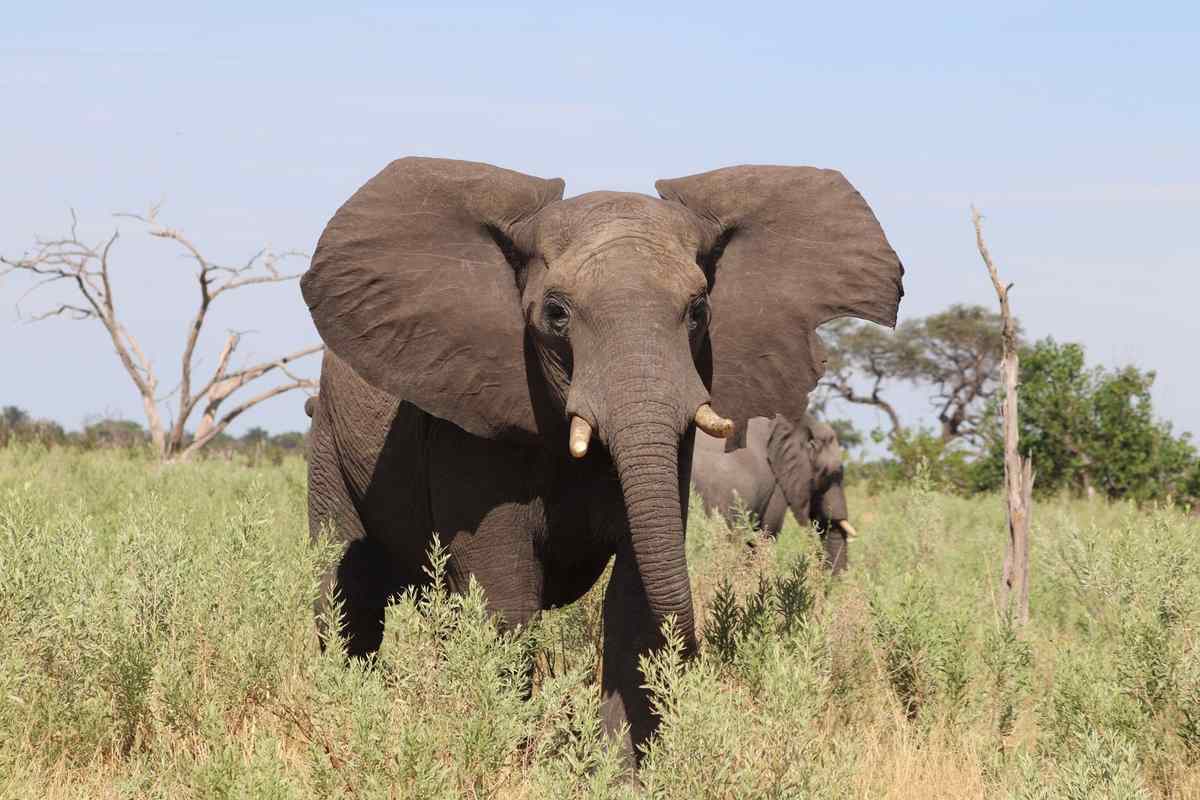
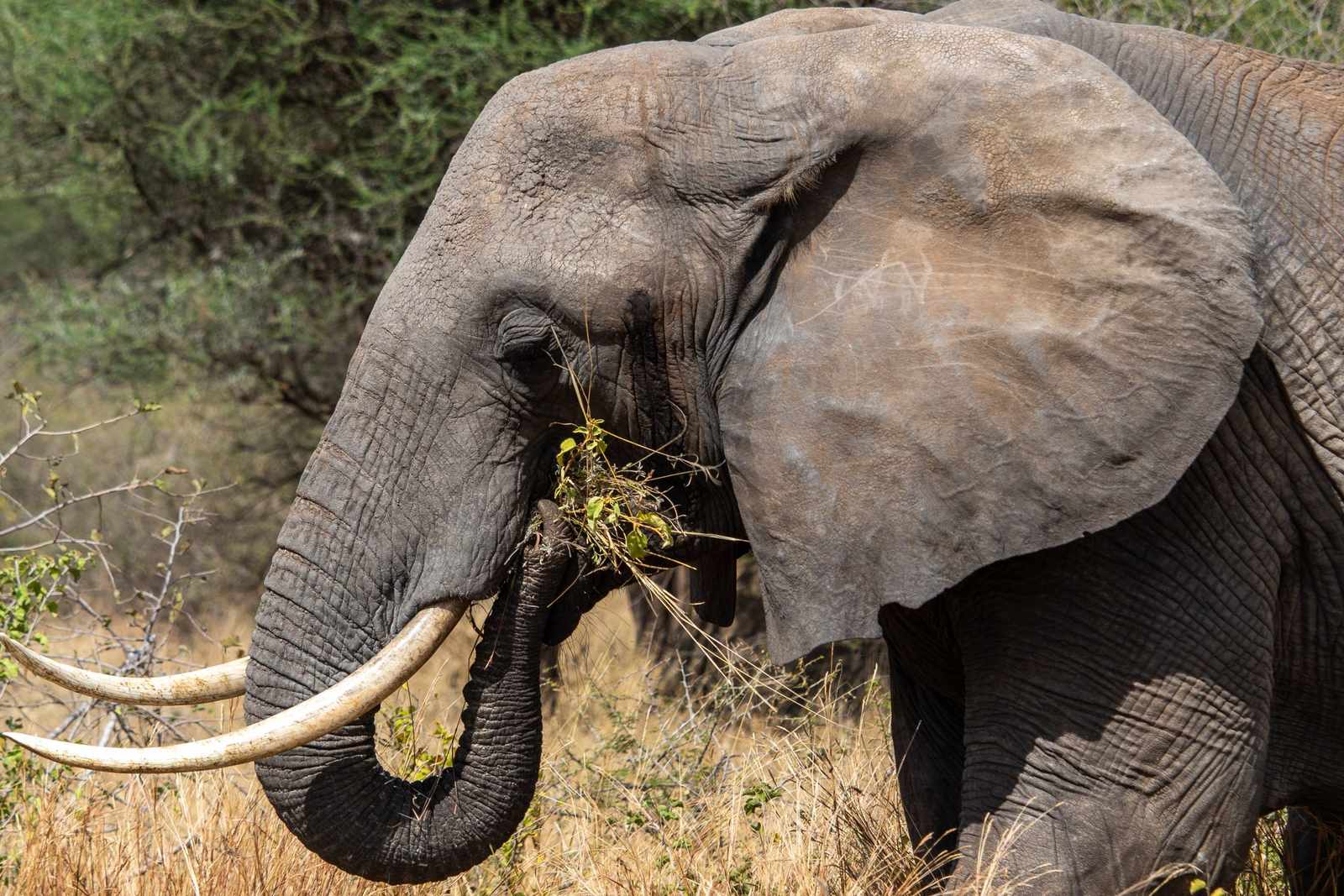
Each of the classic safari animals does different work on a wall, and choosing among them is choosing the room’s temperament. The elephant is gravity and gentleness at once — the most architectural of subjects, all structure and texture, and the one that holds the largest walls without strain. The giraffe is verticality and grace: a head-and-neck portrait in a tall frame brings height into low rooms, and the animal’s pattern is bold enough to read as design. The lion is the portrait of authority — a direct gaze that will dominate any wall it hangs on, to be used where dominance is wanted and nowhere else. The zebra is the graphic artist of the family: pure black-and-white pattern, the one safari subject that behaves like abstract art and can hold a modern room almost alone. The herd — antelope, wildebeest, buffalo moving together — is motion and multitude, best in the wide landscape register rather than the portrait one.
Notice that none of these descriptions mentions a souvenir. That is the test while you browse: a strong safari image could hang, unlabelled, in a gallery of photography. If the picture needs its location explained to justify itself, it is memorabilia wearing a frame.
Savannah light: why the hour matters
Almost every memorable safari image was taken in the first or last hour of the day, and the light is half the picture. Low sun rakes across grass and turns it to metal; animals are rimmed in gold; the sky takes up half the frame in layered color. Midday savannah, by contrast, is bleached and flat, and midday photographs look it. When you choose, you are largely choosing an hour: dawn images run cool-gold and hopeful, dusk images run amber and elegiac, and the choice will set the temperature of your room more surely than any paint swatch. Rooms that face north and feel cold suit the dusk register; bright rooms can take dawn’s paler gold.
The warm, earthy palette
Savanna color is a lesson in restraint: ochre, sand, clay, olive, bone, and the grey-brown of dust and hide, lit by the low gold of morning and evening. Almost nothing in a good safari image is saturated, which is precisely why the images sit so comfortably in real rooms. They harmonize with the materials most living rooms already contain — linen, leather, wool, wood, rattan — and they warm up white and grey schemes that risk feeling cold. If your room leans neutral and modern, a safari piece adds temperature without adding color noise.
Black-and-white photography is the subject’s other register, and for elephants especially it may be the finest: remove the gold and what remains is form — the architecture of an ear, the wrinkles of a hide, the curve of a tusk. Monochrome safari portraits read as fine art rather than travel souvenir, and they are the safest choice if your fear is the room tipping toward theme.
Keeping safari wall art tasteful
The rules are mostly about what surrounds the piece. Let the art be the only safari reference in the room: no animal-print textiles competing with a real animal on the wall, no novelty objects underneath it. Choose furniture and fabrics for texture rather than motif — a nubby throw, a worn leather chair — and let the image supply all the story. Scale helps too: a portrait printed large, with presence, reads as art; the same portrait printed small and surrounded by knickknacks reads as memorabilia.
Placement follows the portrait logic. In a living room, one substantial portrait or one wide savannah above the main seating is the whole arrangement; a study or den takes the moodier dawn and dusk images well. For children’s rooms the subject softens naturally — giraffes and young elephants in gentler, more illustrative treatments — but keep the adult rooms photographic and you keep them dignified.
Sizing the two families
The landscape family wants width and the portrait family wants presence, and sizing follows. A savannah scene above a sofa should span most of the sofa’s width — the horizon needs run, the way a real view does — and the piece improves the wider and quieter it gets; if you are between two sizes of a grassland image, the larger is almost always the right call, because the subject is space itself. Portraits obey the opposite instinct: one animal, large enough that its head is at or above life size at viewing distance, commands the wall the way the animal commands its ground. Below that scale a portrait becomes an illustration of an animal; above it, it becomes the animal’s presence in the room.
A final word on sourcing the image itself: prefer work that shows the animal in its own life — grazing, resting, moving, unbothered — over staged or baited encounters, whose tension reads on the wall even when viewers cannot name it. The calm in a good safari room is not only compositional. It is the calm of subjects that were allowed to be themselves, and rooms tend to keep the mood of the pictures hung in them.
Choosing within the wider animal family
Safari wall art is one territory within animal and wildlife art generally, and its boundary is climate and light: this is the art of dry grass, big skies, and warm earth. Choose it when your room wants warmth and spaciousness rather than the green depth of forests or the blue calm of the sea. The general craft behind all of it — portrait versus in-the-wild, presence, temperament — is laid out in our guide to animal wall art. Pick the single image that holds you longest at a glance — the animal you would wait for — hang it with quiet surroundings, and the savannah will lend your room its two best qualities: light, and room to breathe.
More in Subject Guides
Continue exploring: Subject Guides guides · All guides