

Traditional Wall Art: The Long View, Framed
Choose for the third year, not the first glance: depth in the subject, truth in the reproduction, and a classical frame doing half the work.
Key Takeaways
- Choose subjects that repay decades of looking — composed landscapes, still life for dining rooms, portraits for gravity — and reject any piece that would bore you by the third month.
- Treat framing as half the art: a substantial gold, gilt-toned, or deep stained profile with a cream or ivory liner; in this register gold is a neutral, and the same landscape unframed reads as a poster.
- Judge reproductions three ways: muted, time-true color, middle-ground detail that still separates at real viewing distance, and a matte surface that does not announce its flatness.
- Build series with no exceptions smuggled in — identical frames, mats, and spacing — and hang pairs and singles with architectural symmetry, measured and level.
- Reserve judgment until evening: these pictures were painted for warm lamplight, and a dark landscape in direct sun will look closed even when it is right for the room.
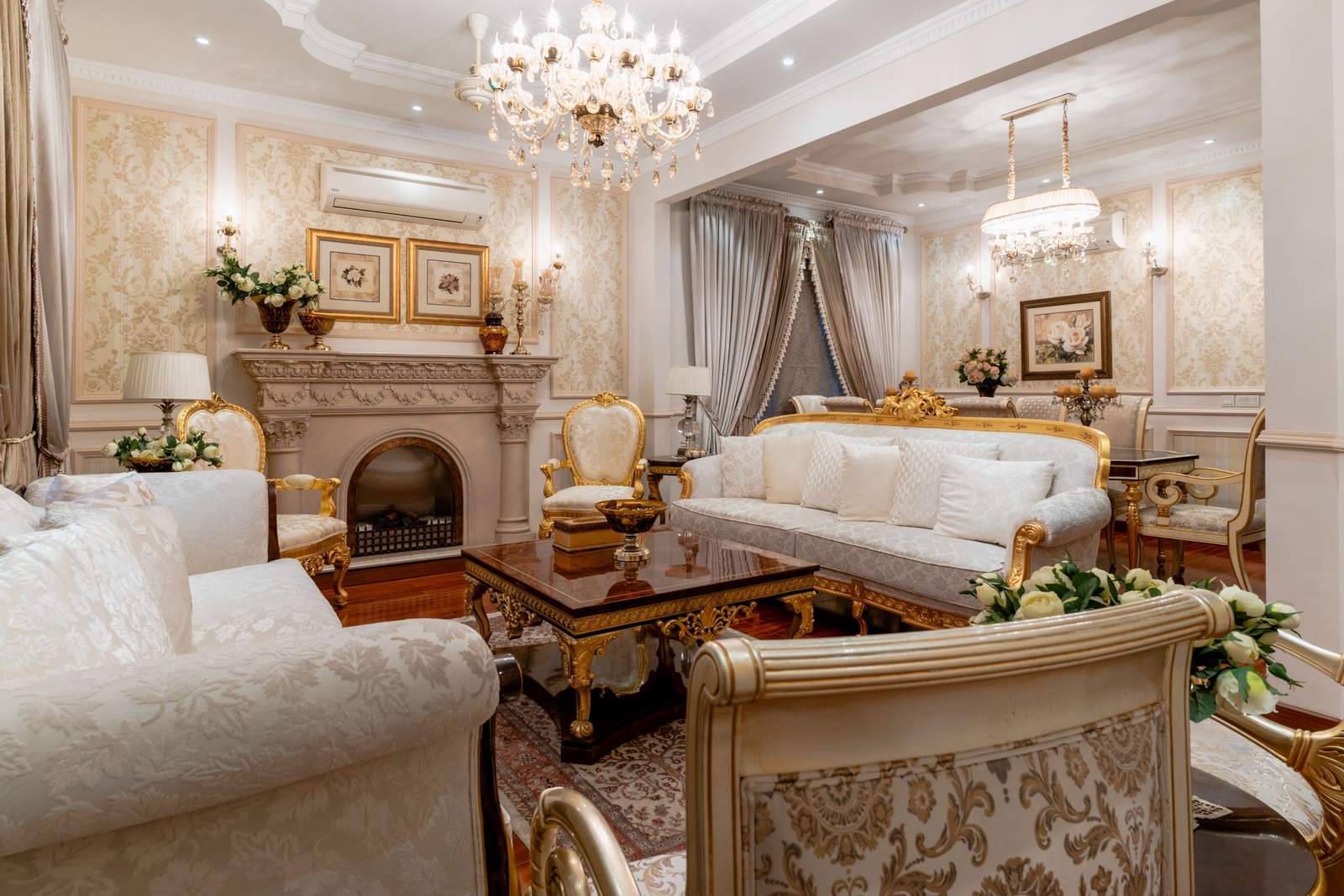
Traditional decorating is the style that asks art to stay. Where other approaches chase the current year, traditional wall art draws on the genres that have hung in rooms for centuries — the classical landscape, the still life, the portrait, the hunting and maritime scene — and installs them in rooms built to last: balanced, upholstered, wood-toned, calm. The look can be grand or modest, but its register is always the same: considered, symmetrical, and in no hurry whatsoever.
That patience is the style’s real subject. A traditional room assumes its art will be looked at for decades, so it chooses subjects with depth to repay the looking — a landscape with weather in it, a still life with light doing quiet work — over images whose whole effect lands in the first glance. If a candidate piece would bore you by the third month, it does not belong here, whatever its frame costs.
The genres: a short inheritance
The landscape is the traditional wall’s anchor genre: composed views with a foreground, a middle distance, and a sky, in the pastoral tradition that runs from seventeenth-century Dutch painting through the English and American schools. Still life is the second pillar — fruit, flowers, game, and vessels arranged for the light — and it retains its old assignment to dining rooms, where painted abundance has kept company with real dinners for four hundred years. Portraits, formal or ancestral in feeling, bring the human gravity; maritime, equestrian, and sporting scenes bring the motion, and hang where a household’s actual affections run that way.
Reproduction is no disgrace in this style — it is the style’s normal condition. The masterworks of these genres live in museums — the gallery tradition they belong to, of work made for close looking, is explored in our guide to fine art on the wall— and traditional rooms have always been furnished with faithful reproductions and with contemporary paintings made in the inherited manner. What matters is fidelity and surface: a reproduction whose colors have been coarsened, or whose details dissolve at viewing distance, fails the one test the style sets, which is that the image bear the close looking it invites.
Why framing is half the art in traditional wall art
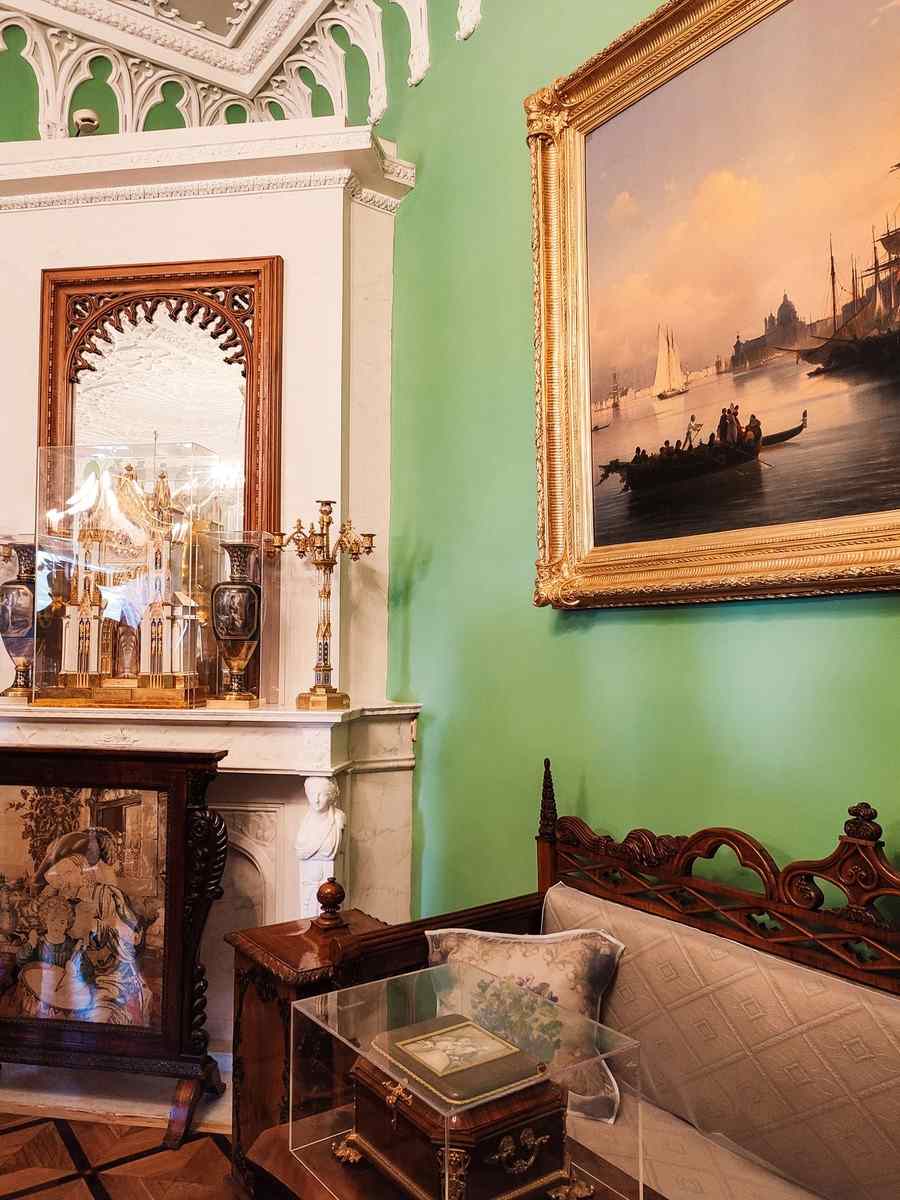
In most styles the frame serves the picture; in traditional rooms it is a genuine partner. The classical frame — a substantial profile in gold, gilt-toned wood, or deep stained timber, often with a linen liner or a mat — does three jobs at once: it mediates between the image’s old world and the room’s present one, it gives the piece the physical weight the wall expects, and it signals that what hangs inside was chosen, not merely acquired. A framed presentation with a profile in that family is effectively mandatory here; the same landscape unframed reads as a poster of a landscape, which is a different and lesser object.
Gold deserves a specific note, because it is misunderstood as flash. In the traditional register, gold is a neutral — the color of candlelight and old varnish, warmer than white and quieter than black — and an antique, rubbed finish suits this style better than a bright one anywhere it appears. The wider color question — whether a piece should match, echo, or contrast the room around it — is worked through in our guide to how to choose wall art colors. Mats and liners should breathe the same air: cream, ivory, and soft white, never the stark white that belongs to contemporary rooms.
Sets: the botanical, sporting, and architectural series
Traditional walls run on series more than any other style. The hand-colored botanical set — six plates of the same family, framed identically — is its archetype, and its cousins are everywhere: architectural engravings of one city, sporting prints of one season, Audubon-style birds pursued one species at a time (bird artists of the period worked in series by commission and subscription, which is why matching plates survive to be matched). A series works because it makes a promise and keeps it repeatedly; the wall becomes a small exhibition with a thesis. When you build one, completeness of treatment matters more than rarity of subject: identical frames, identical mats, identical spacing, no exceptions smuggled in.
Scale within the set should be honest. Plates made at one size hang at one size; the temptation to enlarge a favorite member to feature status breaks the series’ contract and is better served by hanging that piece separately, somewhere it can be a single. A hallway or a study wall takes a series of six to twelve particularly well — the run of the corridor gives the set its rhythm, and the passing viewer reads it the way it was published: page after page.
Judging a reproduction the traditional way
Because this style lives on reproductions of older work, it developed its own connoisseurship of them, and three checks carry most of it. First, color truth: the old palettes are muted by chemistry and time — varnish warmth, softened greens, blacks gone slightly brown — and a reproduction that renders them in modern saturated color has falsified the picture. Second, detail at distance: stand at the room’s real viewing distance and check that the middle ground of a landscape still separates — the ridge from the wood, the ship from the shore. Third, surface plausibility: the image should not announce its own flatness; a whisper of texture and an unhurried, matte finish let the eye stay in the picture instead of on it. A reproduction that passes all three will hang contentedly beside genuine antiques, which is the company this style keeps.
Arranging traditional wall art: symmetry and the long wall
Traditional hanging is architecture: pairs flank a fireplace or a doorway in exact balance, a single large landscape centers over the sofa or the sideboard, and a matched set of prints — botanical, architectural, sporting — runs in a level row or a true grid. The eye in these rooms is soothed by alignment the way the ear is soothed by a resolved chord, and arrangements that would look charmingly loose elsewhere read here as unfinished. Measure, level, and match heights with care; the style’s calm is built out of millimeters.
Pairs and sets have their own discipline: same frame, same mat, same size, hung as one object with a seam. The still life sets that flank so many dining-room sideboards work because the pair is treated as a single sentence in two clauses. If you inherit or acquire singles, hang them singly and strongly rather than forcing a false pair — tradition values the genuine over the matched, which is the one sentence that summarizes the entire style.
Light, the traditional way
Traditional pictures were painted for candlelight and lamplight, and they keep their side of that bargain: warm light models their surfaces kindly, and the deep tones of the classical palette open up under it in a way flat daylight can flatten. The practical corollaries are gentle ones. Avoid hanging a dark-toned landscape where it takes direct sun — the glare closes the picture like a shutter, quite apart from what years of sun do to any image. Give the principal piece in a room the wall that evening light reaches first. And when a portrait or a still life seems dull at noon, reserve judgment until evening: this is the one style whose pictures are routinely better at the hour the room is actually used, which is not an accident but an inheritance.
Rooms built to last
The living room and dining room are the style’s public stages, and libraries and studies its private ones — a portrait or a maritime scene above a desk has been the portrait of a working life for centuries. Bedrooms take the softer landscape register: pastoral views and quiet still life, framed gently. Hallways, often long and underused, are where the level row of prints earns its keep, turning a corridor into a gallery of one subject pursued properly.
Mixing traditional art into less formal rooms is possible, with one rule: let the piece be the room’s elder. A single framed classical landscape can give a plain, modern-ish room a center of gravity it lacked — but the frame must stay classical and the wall around it quiet, so the piece reads as an inheritance rather than an error. Traditional wall art does not need the whole house. Kept carefully in even one room, it gives the home a memory longer than its own — which was always the point of hanging the long view. Traditional is one of the sixteen styles surveyed in the full field guide to wall art styles.
More in Style Guides
Continue exploring: Style Guides guides · All guides