

Fine Art Prints: Gallery Tradition at Home
The question is never whether it goes with the sofa. It is whether it still gives you something new when you stand a foot away, years later.
Key Takeaways
- Apply the reward test: a fine art piece gives more the longer you look — pleasant from the doorway, better from the chair, best from a foot away where the making shows.
- Borrow the gallery manner at home: one piece per visual field, quiet wall left empty around it, restrained framing, and light that models the surface without glare.
- Match scale to viewing geometry, not grandeur — a small, dense piece at eye level beside a reading chair can outperform a wall-sized canvas in a room nobody sits in.
- Know which door you entered by — original, limited edition, or faithful reproduction — and value each for what it offers instead of paying one door's reverence at another.
- Buy slowly: live with a candidate for a few weeks, prefer a maker and context you can learn, and accept that one true piece outranks a wall of agreeable ones.
Every other style in this series describes how art looks. Fine art describes how it is meant. The term comes out of the gallery tradition behind fine art prints: work made by an artist pursuing an idea, a perception, or a mastery of craft, and offered to viewers prepared to meet it halfway. Fine art on the wall is the domestic end of that tradition: detailed, considered pieces, chosen slowly, hung where people sit still long enough to actually look at them.
The boundaries of the term are honestly contested, and a useful guide should say so. Critics and art historians have argued for centuries about where fine art ends and decoration, illustration, or craft begins, and the line has moved with every generation — photography and printmaking both spent decades outside it before being let in. For the practical purpose of hanging art at home, the working test is simpler than the theory: a fine art piece rewards sustained attention. The longer you look, the more it gives back.
Artist intent: the piece is an argument
Decorative art is made to complete a room. Fine art, whatever room it ends up in, was made to complete an idea — a way of seeing light on water, a meditation on a face, an inquiry into color itself. That origin changes how the piece behaves on a wall. It does not match the sofa, and it is not supposed to; it converses with the room instead, and the conversation is the value. When you choose in this style, you are choosing a mind’s work to live with, which is why the style’s first question is never “does it go?” but “does it hold me?”
This is also why provenance and authorship matter here in a way they do not elsewhere. Knowing who made a piece, when, and out of what body of work is part of owning it — the story is woven into the looking. Reproductions of canonical works carry a share of this: the image arrives with its history attached, and generations of viewers before you are, in a real sense, part of what you are hanging.
Close looking at fine art prints: what the detail is for

Fine art pieces are built in layers — of paint, of exposure and development, of decisions — and they disclose themselves in that order. A landscape in this tradition gives you its valley at ten feet, its brushwork or grain at two, and its smallest incident — a figure on a path, a window lit — only when you come close and stay. This is the practical reason the style gravitates to formats and presentations with fine surface resolution, and why our companion guide to the gallery format behind this tradition treats surface and presentation as seriously as the image itself: a piece made for close looking deserves a presentation that survives it.
The viewing distance test follows. Before you hang a piece in this style, stand where its viewers will actually be — the chair across the room, the seat at the table — and then walk to it. A piece that is magnificent at ten feet and empty at two is decoration wearing the style’s clothes. A true fine art piece inverts that: pleasant from the doorway, better from the chair, best from a foot away, where the making shows.
Presentation: the gallery manner at home
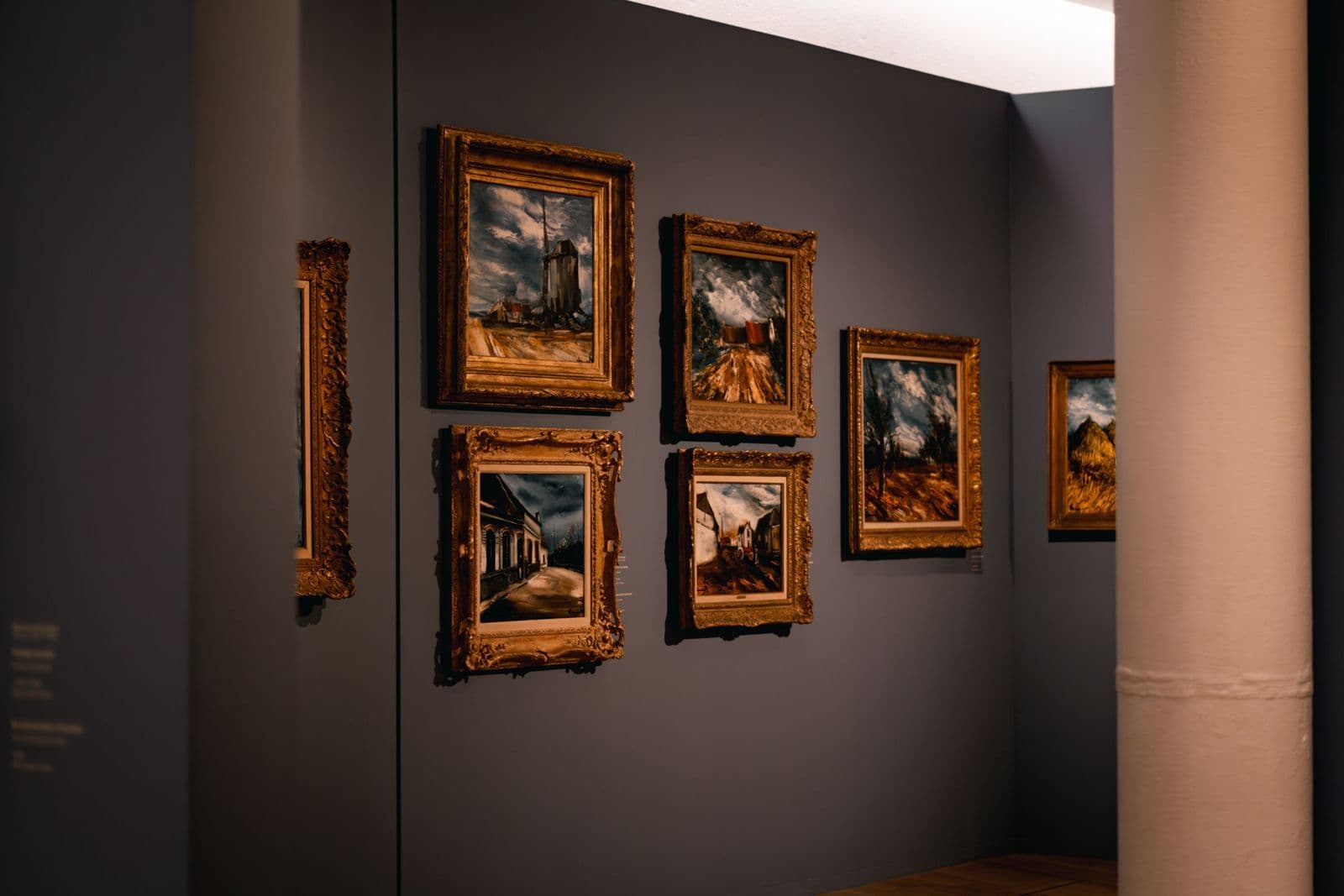
Galleries present work the way they do for reasons a home can borrow. One piece per visual field, with wall left empty around it, so attention has nowhere else to go. Restraint in framing — the frame marks the boundary of the work without performing on its own account. Lighting that models the surface without glare. The traditional gallery format exists inside this presentation language, and the language matters more than any single element of it: quiet wall, honest light, room to stand back and room to come close.
Scale in this style is about viewing geometry, not grandeur. A small, dense piece — an etching-sized image with a world in it — hung at eye level in a quiet corner can outperform a wall-sized canvas in a room nobody sits in. Match the piece’s intended viewing distance to a place where that distance naturally happens: the wall beside a reading chair, the end of a hallway you walk toward, the space across from a desk where your eyes rest between thoughts.
Rooms where people sit still
The map of this style is a map of stillness. The dining room is its first home — people sit, unhurried, facing the walls, in the warm light the gallery tradition was built under, and a considered piece above the sideboard gets looked at the way it was made to be. Studies and libraries follow: rooms whose whole purpose is sustained attention. A living room takes fine art well when one wall is given to one piece and the seating is arranged to face it rather than merely coexist with it.
Bedrooms suit the quiet end of the tradition — the piece you would choose to see first and last — and hallways, surprisingly, suit its small end: a short corridor with a single detailed work at its end turns a passage into a destination several times a day. Avoid, where you can, the two enemies of close looking: glare from an opposing window, and traffic — a piece hung where nobody can stand still in front of it is a book in a locked case.
Three doors in: originals, editions, reproductions
Home collectors enter this tradition through three doors, and none of them is a wrong one. Original work by living artists is the tradition continuing itself: the piece is singular, its making is recent, and buying it sustains the very practice the style celebrates — the artist’s intent reaches your wall unmediated. Editioned works — prints and photographs made by the artist in a stated, limited number — occupy the tradition’s middle ground: authored multiples, made under the artist’s control, where the edition size and the maker’s hand are part of the work’s identity. Reproductions of canonical works are the widest door: the great images of the tradition, faithfully rendered, carrying their centuries of looking with them — the classical landscapes, still lifes, and portraits that traditional rooms have hung for centuries, gathered in our guide to traditional wall art.
The honest guidance is to know which door you are walking through and to value each for what it actually offers. An original is a relationship with a living practice. An edition is authorship at a multiple’s reach. A reproduction is communion with the canon — and its quality is judged exactly as the gallery would judge it: fidelity of color, resolution of detail, and a presentation that respects the original’s intent. Confusing the doors — paying an original’s reverence for a careless reproduction, or dismissing a fine edition as “just a print” — is where buyers in this style go wrong. The tradition itself is unbothered by the door; it cares that the looking on the other side of it is real.
Choosing fine art prints: the slow discipline
Buy in this style the way the work was made: slowly. Live with a candidate image in mind — or in a saved folder — across a few weeks, and notice whether it keeps offering something or whether its effect was a first-glance effect. Prefer pieces with a maker and a context you can learn. Accept that one true piece outranks a wall of agreeable ones; the gallery tradition at home is not a quantity game, and a single work that holds a room’s attention for years is the cheapest art you will ever own, however it is priced.
Start where you sit still the longest. Give one piece the quiet wall, the honest light, and the viewing distance it asks for, and let it teach the household how to look. The promise of fine art prints was never that they match the room. It is that, years from now, you will still be finding things in it — and that the room, having been looked at so carefully itself, will have become a better place to sit still in.
More in Style Guides

Continue exploring: Style Guides guides · All guides