

Bird Wall Art: Plates, Portraits, Flocks
Plates, portraits and flocks each lighten a wall differently. Match the bird to the room — and leave it air, sky and space around the frame.
Key Takeaways
- Pick your kind: field-guide plates suit studies, halls and dining rooms where close looking happens, single portraits carry character, and flock pictures act as pattern and movement that calm a wall rather than fill it.
- Keep plate grids from one source: plates from the same book share size, paper tone and engraving hand, while a mixed grid registers as a jumble sale rather than a collection.
- Make the scale decision on purpose: a garden bird at natural size is a companion and at six feet tall is a monument and a joke at once, but the in-between size, twice life and apologetic, is the only wrong answer.
- Let the bird carry the colour: keep walls and furnishings in the picture's quiet colours — its sky, branch or water — and note that antique plates run muted, suiting cream, linen and old-wood rooms.
- Give birds the in-between architecture of a house — hallways, stair landings, above a sideboard, up a staircase — but keep raptors' full stare out of bedrooms and let a still heron, not a flock, serve a corner meant for total rest.
Birds are the lightest subject in the animal family — creatures of air and motion, hollow bones and departure — and bird pictures lighten a wall in a way no other animal art does. Where a lion portrait holds a room still, a flock in flight sets it gently moving. Bird wall art also has the longest pedigree of any subject in this series: birds were the obsessive subject of the great nineteenth-century plate books, and the range today runs from those antique field-guide pages to photographs of a single heron standing in morning water. This guide walks the range — plates, portraits, and flocks — and the groupings, colors, and rooms each kind rewards.
Birds belong to the wider animals and wildlife family — the subject of our guide to animal portraits and their presence — and share its general craft of presence and scale; what follows is what wings add to it. One member of the family — the peacock — is such a special case of plumage and drama that it has its own category and its own guide elsewhere in this series, peacock wall art, jewel tones and a little drama; here we stay with the wider tribe.
The field-guide plate: bird wall art as knowledge
The defining bird images of the nineteenth century were made as science: pairs and families arranged on the branch, plumage rendered feather by feather, eggs and nests admitted as evidence. Audubon’s Birds of America is the famous summit of the tradition — its plates, many of them now in the public domain through museum and library collections, remain among the most reproduced bird art in the world — but hundreds of working ornithologies and game-bird books followed the same form, and their plates fill the vintage market to this day. A field-guide plate is information arranged beautifully: it suits viewers who like their decoration with its Latin showing, and walls — studies, halls, dining rooms — where close looking is part of the furniture’s daily use.
Plates were published in series and still think in sets. The natural arrangement is the matched grid — four or six plates, same family or same book, identical frames and mats, narrow spacing — which borrows the archive’s authority and turns a wall into a chapter. Keep one rule: plates from the same source sit together best, because plate size, paper tone, and engraving hand were consistent within a book and vary between them, and the eye registers a mixed grid as a jumble sale rather than a collection.
The single bird: portrait and character
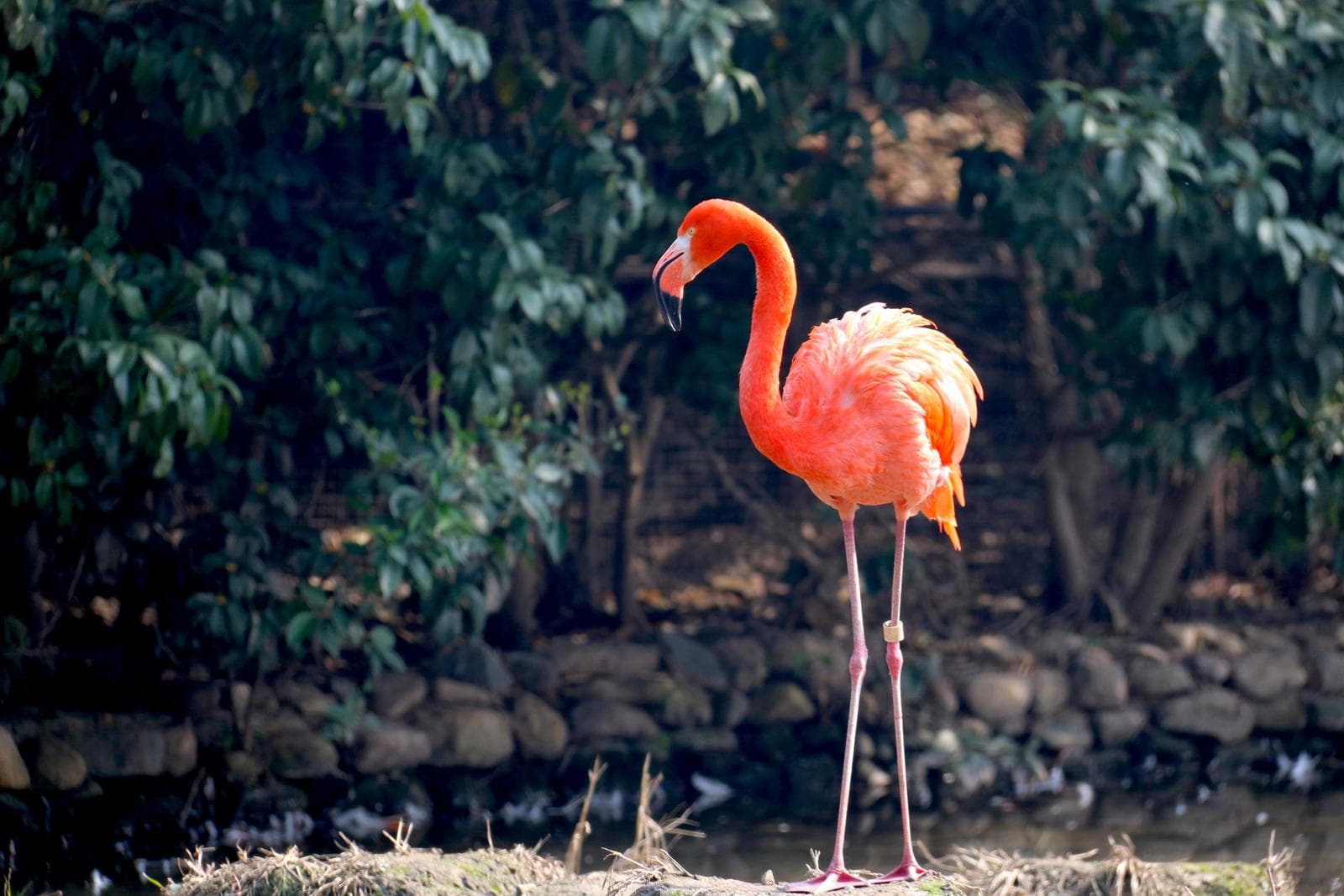
Modern bird art centers on the individual: one owl on a post, one heron in the shallows, one robin at the scale of a door. The portrait birds divide by temperament. The raptors and owls bring the animal family’s gravity in its most concentrated form — forward-facing eyes, a stare with seniority — and they hold formal rooms and studies the way a lion holds a living room. The water birds — herons, egrets, cranes — bring poise instead: all line and patience, the most elegant silhouettes in the subject, natural in calm and coastal-leaning rooms. The garden birds — robins, wrens, chickadees, goldfinches — bring charm at modest scale, and they are the birds of kitchens, breakfast corners, and every room that wants to be smiled at before nine in the morning.
Scale, for birds, is a style decision with a wink in it. A garden bird printed at natural size is a companion; the same bird printed six feet tall is a monument and a joke at once, and modern rooms that can carry wit should not refuse it. Just make the decision on purpose — the in-between size, twice life and apologetic, is the only wrong answer.
Bird wall art in flight: flocks, pattern, and weather
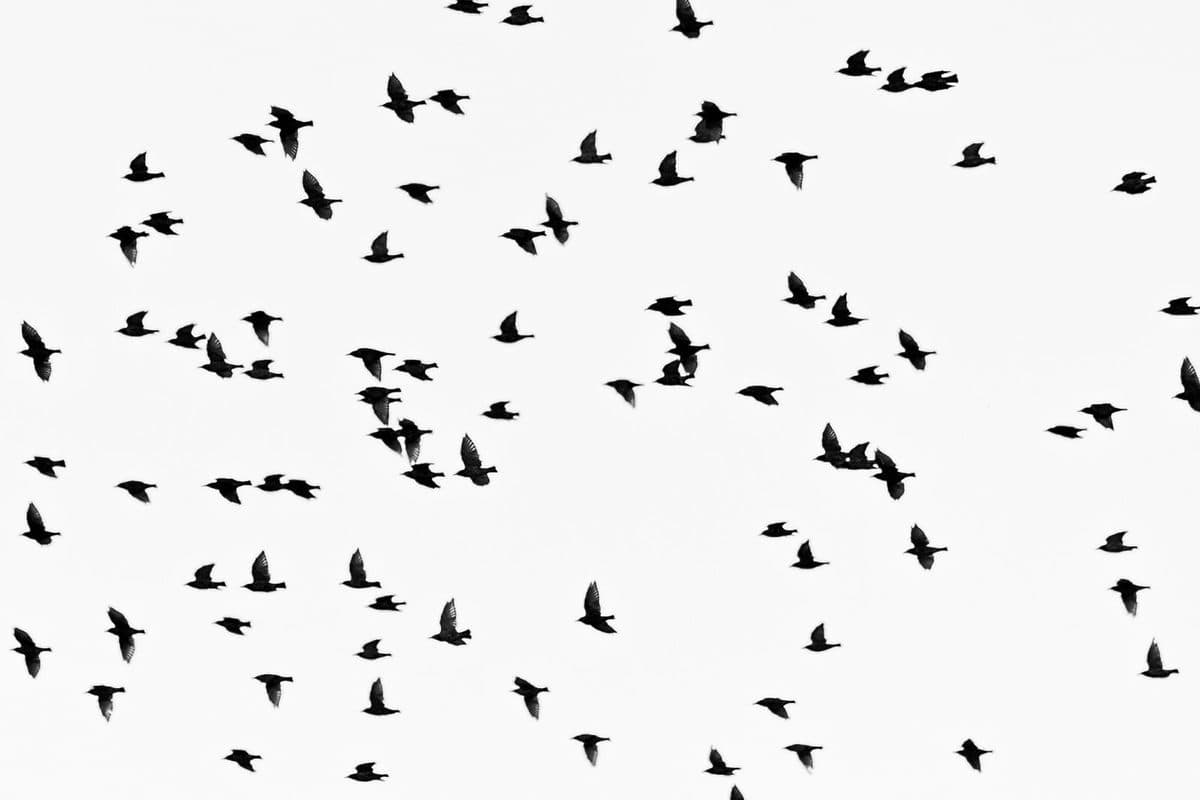
The third kind of bird picture has no individual in it at all: the flock — starlings in a murmuration’s poured shapes, geese in their traveling V, swallows stitching a summer sky. Flock pictures are really about pattern and movement; the birds are marks, and the mark making is the subject. They are the most abstract bird art and the most architectural: a murmuration over a sofa behaves like a great soft sculpture of punctuation, and a flight line across a wide, low frame gives a room a horizon made of wings.
Flocks want width, sky, and quiet company. Their images are high and spacious, often mostly air with the birds as a dark calligraphy in one register of it, so they calm a wall rather than fill it — the right art over busy furniture, patterned upholstery, and shelves that already carry the room’s detail. In the dining room, a wide flight piece above the sideboard does something rare: it gives seated people, facing each other across a table, a shared sky to look up into between courses.
The bird year: migration on the wall
More than any other subject, birds are calendar creatures, and bird art quietly keeps the seasons. Spring belongs to arrivals — swallows returning, warblers in first leaf, courtship plumage at its brightest — and spring bird pictures have the year’s most hopeful register. Summer is the settled season: birds on nests and branches, young being fed, color at full strength. Autumn is departure, all flocks and gathering, the sky organizing itself to leave; its pictures carry a gentle melancholy that thoughtful rooms love. Winter birds — the cardinal in snow, the owl in bare branches, the junco at the feeder — are the stay-behinds, drawn in the starkest palettes and often the most beloved, because they are the birds of the home window in the dark months. Choosing bird art by season is choosing which part of the year the room remembers; there is a long tradition of hanging the winter cardinal precisely because he does not leave.
Where birds belong
Birds suit the in-between architecture of a house — hallways, stair landings, the wall above a sideboard, the stretch beside a window — because their lightness asks little of a room and gives movement to spaces furniture cannot reach. A flight of plates up a staircase is one of the oldest arrangements in domestic decorating, each step a species, the climb a small field trip. Bedrooms take the dawn birds: herons, doves, single calm portraits, nothing with a raptor’s full stare at pillow height. Children’s rooms take the garden birds at honest sizes, where naming the species becomes part of the furniture of childhood. Kitchens and breakfast rooms take the whole cheerful tribe, and earn the subject’s oldest pairing — birds are appetite’s heraldry, the dawn chorus outside the window where the day is first eaten. The one wall to be careful with is the wall of total rest — a flock is motion, and a meditation corner may want the heron instead: one bird, standing still, in no hurry at all.
Color from the plumage
Birds are nature’s colorists, and bird art lets a room borrow combinations no decorator would dare propose on paper: the kingfisher’s teal and rust, the goldfinch’s yellow against black, the jay’s blues stacked like tiles. Use plumage as the picture’s gift and the room’s restraint — let the bird carry the saturated note and keep the wall and furnishings in the picture’s quiet colors: its sky, its branch, its water. The antique plates run the opposite way — their colors are hand-tinted and muted, all soft ochres and sage — and they suit the rooms of cream, linen, and old wood where a saturated photograph would shout. Choose your bird pictures in the light they will live in: dawn herons and dusk owls keep evening rooms, and noon-bright garden birds keep morning ones.
If you are choosing a first bird, let it be one you have actually watched — the heron on your river, the owl from the lane, the robin who supervises your gardening. Recognition is this subject’s secret fuel: a known bird is never merely decorative, because half the picture is the memory it hangs beside. And if no single species claims you, choose the flock, which belongs to everyone who has ever looked up at the right moment.
Whether you choose the plate’s knowledge, the portrait’s character, or the flock’s moving pattern, birds repay the one habit this whole family of subjects rewards: give them air. Space around the frame, sky in the image, nothing crowding the wings. A bird on a wall should look like it could leave — that possibility, held gently in a frame, is the entire charm. Bird wall art earns its place in the wider map of subjects by doing what no other family does: adding motion without noise.
More in Subject Guides




Continue exploring: Subject Guides guides · All guides