

Wedding Photo Prints: Gallery Link to Wall
Hundreds of wedding frames can stay in a gallery link forever. Picking the few with feeling, and saving the real files early, gets them lived with.
Key Takeaways
- Choose the few, not the best fifty: most couples find three to five frames do the work - a wide scene, a true portrait, a detail, and an unposed moment.
- Download full-resolution originals in the first month, back them up in more than one place, and check the personal print release in your contract before printing.
- Give album and wall different jobs: the album holds the complete, sequential story including group photos, while the wall holds a few emblematic images seen daily.
- Match format to frame: fine detail often suits fine art paper behind a frame, while scenic, atmospheric frames take naturally to canvas; hang away from direct sun.
- Let anniversaries spread the choosing: the first, traditionally the paper anniversary, and later years are natural occasions to print another frame or gift one to parents.
A modern wedding produces hundreds of photographs and then hides them. The gallery link gets shared, scrolled once by everyone who was there, and bookmarked into oblivion — while the couple’s walls, the place those photographs were ultimately for, stay bare. Printing those wedding photo prints is how the photographs finish their journey. This guide covers the decisions between the gallery and the wall: choosing the few frames that deserve to be lived with, handling the files and permissions properly, picking a format, and the anniversaries that give you excuses to print more.
Wedding photo prints: choose the few, not the best fifty
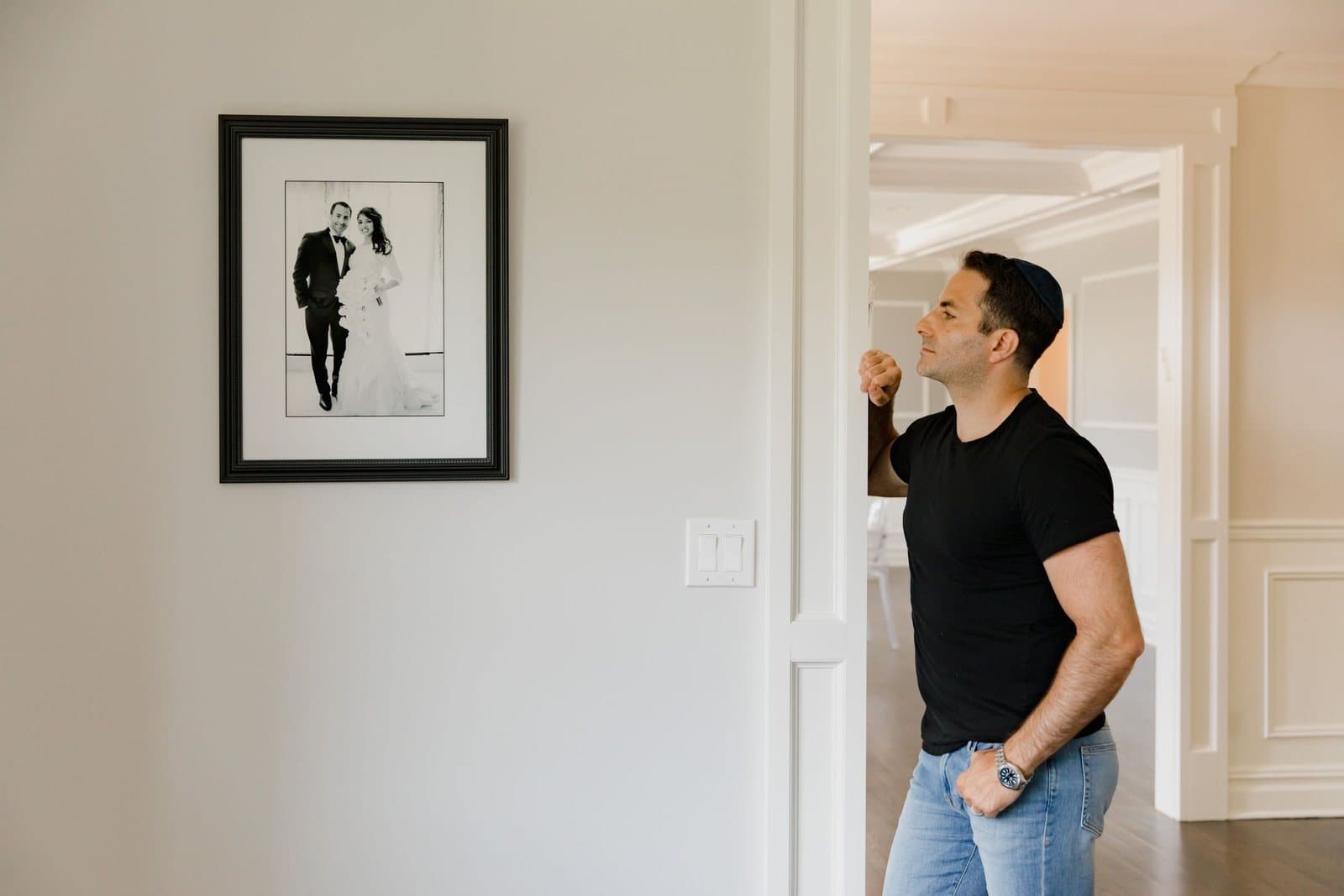
A wall wants icons, not coverage. From a full gallery, most couples find that three to five frames do the work: typically one wide scene that holds the day’s setting, one true portrait of the two of you, one detail — hands, flowers, the table before anyone sat down — and one unposed moment that nobody staged. The test for each candidate is not “is this a great photograph?” but “will I still want to meet this moment in the kitchen every morning in ten years?” Formal group photographs, for all their importance, usually fail that test on walls and pass it in albums; the frames that pass on walls are the ones with feeling in them.
Choose together, and choose slowly. A useful method is to each mark your own shortlist from the gallery independently, then print the overlap — the frames you both chose without conferring are almost always the right ones. Let the decision rest a week before ordering anything large; the photograph you still miss seeing is the one that has earned its size. Those chosen frames can also become the anchor around which a family photo wall grows, as later years are added around it.
Get the real files, and know your rights
Two practical steps come before any printing. First, the files: download the full-resolution originals from your photographer’s gallery rather than printing from screenshots or the small web-sized versions. Galleries expire — photographers retire them after a season or a year — so make this download a deliberate task, and keep the originals in more than one place. Your future anniversary prints depend on those files existing.
Second, the permission. Wedding photography contracts commonly include a personal print release — the right to print the images for your own home and gifts — but the terms vary, and the copyright itself normally stays with the photographer. Check your contract or release before printing, keep to what it allows, and ask the photographer if anything is unclear; they would rather answer a question than discover a use nobody agreed to. This is housekeeping, not legal advice — but it is the housekeeping that keeps a happy purchase happy.
Consider one black-and-white conversion along the way. Wedding galleries are shot in the color of the day — the flowers, the light, the weather you got — and a monochrome version of a strong portrait often outlives its color original on a wall, because it sheds the palette of a single season’s styling and keeps the two faces. Photographers expect the question, and a print you commission from the converted file, within your release, gives the wall a piece with a different register from everything else in the gallery.
Wedding photo prints: album versus wall, different jobs
Couples sometimes treat printing as a single decision, but the album and the wall do opposite work. The album is the story — sequential, complete, held in the hands, allowed to include the funny and the imperfect because context carries them. The wall is the emblem — a few images, seen at distance, every day, that stand for the whole day. Neither substitutes for the other, and the frames that star in one rarely star in the other: the album’s best page might be a chaotic dance-floor sequence that would exhaust a wall in a week.
Decide the wall first, from the shortlist method above, and let the album absorb everything else — including the group photographs, which belong where people can lean in and find themselves. Printing the wall pieces well and the album completely beats compromising both.
Paper, canvas, and where they hang
Formal portraits and fine detail — lace, lettering, jewelry, the architecture of the venue — generally suit fine art paper prints, whose smooth surface and mat hold small detail crisply behind a frame. Scenic and atmospheric frames — the golden-hour portrait, the venue in its landscape — take naturally to canvas, whose texture flatters skin and sky alike — the format our guide to printing a photograph on canvas, step by step explains from file to finished piece. Many couples end with one of each: a framed paper portrait for the room where it will be seen closely, a canvas for the scene that wants scale.
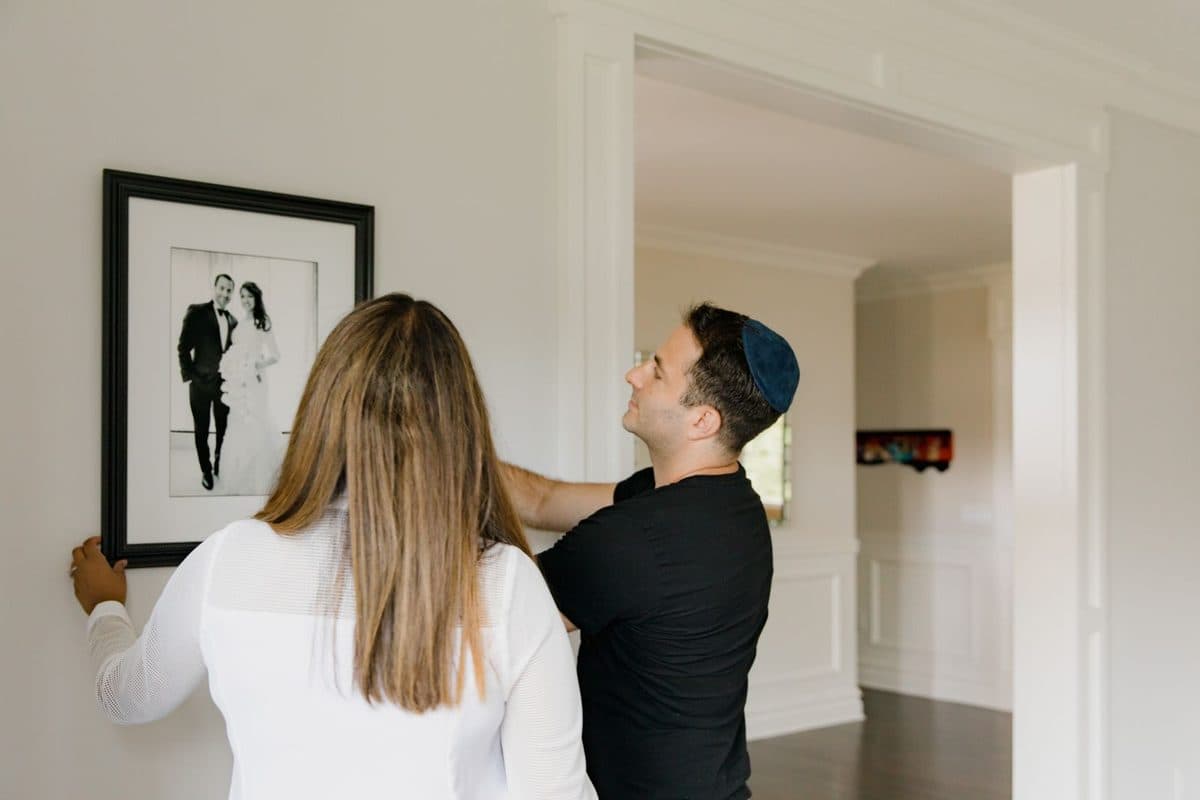
Framing a paper print follows the photograph’s register. The formal portrait takes a mat with real breathing room and a frame with some presence — thin wood or metal for a modern room, a more traditional molding where the wedding itself ran traditional — while the relaxed, candid frames often look best in simpler frames that do not overdress them. Keep the glass question in mind: standard glass reflects, especially across a room from windows, and anti-reflective glazing exists precisely for the print you intend to look at from the sofa. None of this needs deciding in the wedding’s aftermath; a print can live in an inexpensive frame for its first season and be promoted when the room it hangs in has settled.
Hang wedding prints where the light is kind. Direct sun is hard on every print over years, so the wall opposite the windows beats the wall the afternoon sun rakes across; a hallway or the wall above a dresser keeps the portrait in daily view without the daily blast. Above the bed and in dressing areas are the other natural homes — private rooms for the most personal photographs.
A timeline that actually works
The couples whose wedding photographs reach the walls tend to follow an unglamorous schedule. In the first month, while the gallery is fresh and guaranteed available: download the full-resolution files, read the print release, and back the files up in two places. That is all — no choosing under honeymoon conditions. In the first season: make the shortlists, choose the wall frames together, and print them, while the memory of the day can still adjudicate between two close candidates. Across the first year: the album, assembled at leisure, and the first gifts for parents.
After that, the anniversaries take over the schedule, and printing becomes an occasion rather than a project. The schedule matters because every step depends on the first one. Couples who skip the download discover the expired gallery years later, when the one frame they finally agree on exists only as a thumbnail in an old message thread. Ten minutes in the first month is the cheapest insurance in this entire guide.
Anniversaries are printing occasions
The first anniversary is traditionally the paper anniversary, which makes a print the rare gift that is both traditional and exactly right: one more frame from the gallery, printed and framed, a year after the day. The tradition scales gracefully — a detail shot for the second year, the wide scene finally printed large for a fifth — and it spreads the cost and the choosing across years instead of concentrating both in the month after the wedding, when neither money nor decision energy is abundant. Wedding photo prints also make the gifts parents actually keep: a framed portrait for the people who appear in half the gallery and own none of it — a case in point for our guide to giving wall art as a gift. The gift collection is where we gather pieces that sit well beside a personal print.
When custom printing opens here, wedding work is held to the standard the subject demands: your files handled carefully, honest advice about the size each frame can support, and nothing about the process hidden. The gallery link was never the destination. The wall is.
More in Custom Photo & Gifting


Continue exploring: Custom Photo & Gifting guides · All guides