

Family Photo Wall Ideas That Grow With You
A good family wall is edited, not accumulated. Fewer faces, treated the same way and led by one anchor, tell the story far better than dozens.
Key Takeaways
- Edit like an editor: gather every candidate, then choose roughly five to fifteen photographs spread across years, rather than trying to hang the whole archive.
- Build around one anchor: place the largest, strongest piece at the visual center, then arrange two or three medium pieces and the rest small around it.
- Use consistency as glue: one frame family or mat treatment throughout, and consider black and white to give faded older prints and modern phone photos a shared language.
- Keep older scanned prints at modest sizes, proof the anchor first before printing the whole set, and keep the same surface and color handling across all pieces.
- Leave room to grow by composing with air beside the arrangement, so new arrivals and seasonal rotations can join without starting again.
The refrigerator door is where family photographs go to be loved and ignored at the same time — dozens of them, overlapping, curling, none of them really seen. The best family photo wall ideas are the opposite discipline: a chosen few, printed well, arranged with intent, in a place where people actually stand and look. The difference is not the photographs. Nearly every family already owns enough good frames for a strong wall. The difference is editing — treating the wall as a selection rather than an archive — and consistency, the quiet craft that makes different years and different cameras feel like one story.
Edit like an editor, not an archivist
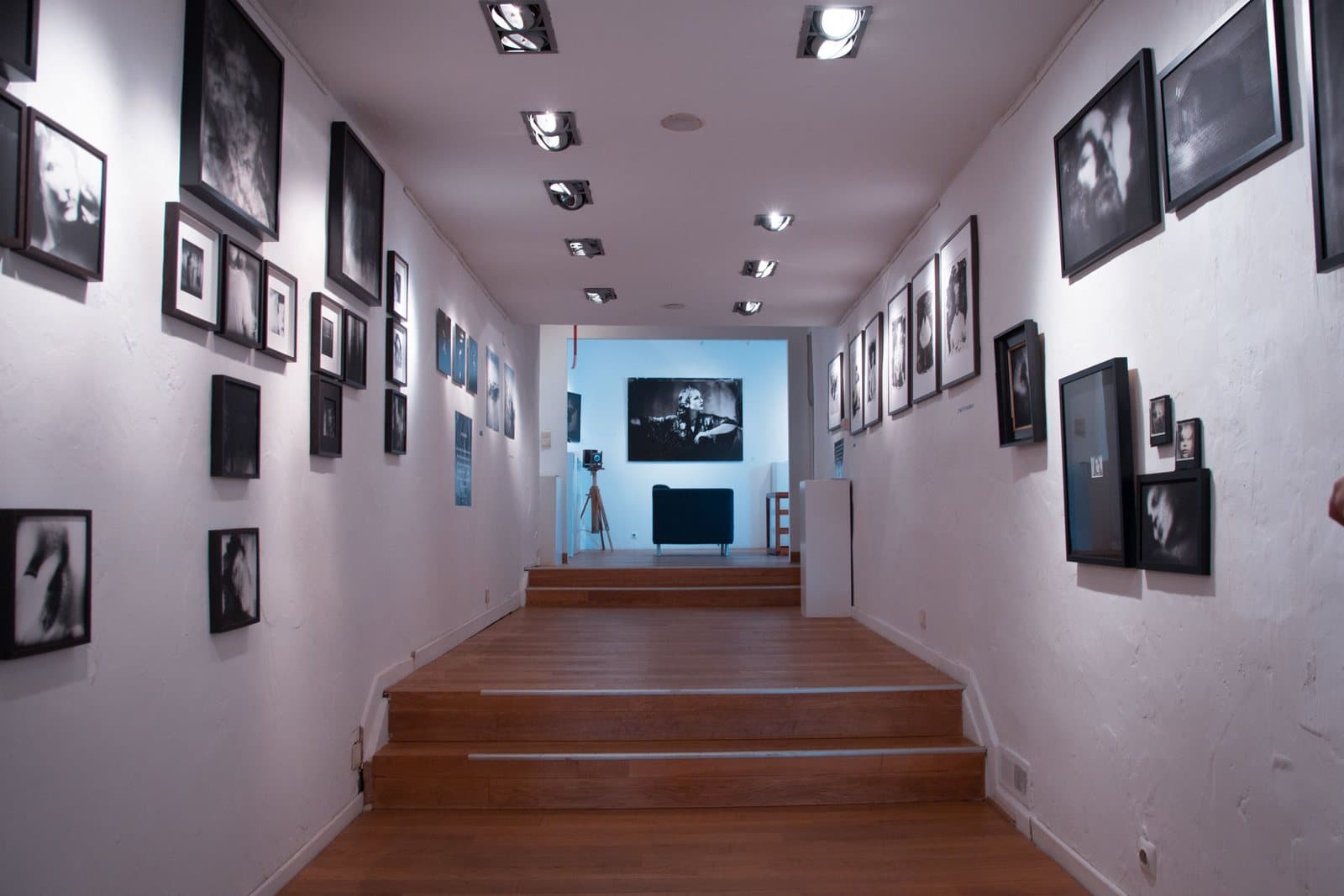
Start with abundance, then cut. Pull every candidate — the holidays, the milestones, the ordinary Tuesdays that turned out to be the real subject — into one folder, and then choose with a wall’s ruthlessness. A strong family wall usually holds somewhere between five and fifteen photographs. Fewer than that can feel sparse for a family story; more than that and the individual faces, which are the entire point, shrink toward postage stamps.
Choose for the wall’s job. If the wall is in a hallway people pass daily, it wants energy: laughter, motion, the unposed frames. If it anchors a living room, it can hold the quieter portraits. And spread the years deliberately — a wall that is all one summer is a scrapbook page, while a wall that moves from grandparents to grandchildren to the newest arrival is a family, which is a much better thing to walk past every day. The photos you cut are not rejected; they are the archive, and an archive on a shelf or a drive serves its turn on rotation.
The shoebox problem: older photographs
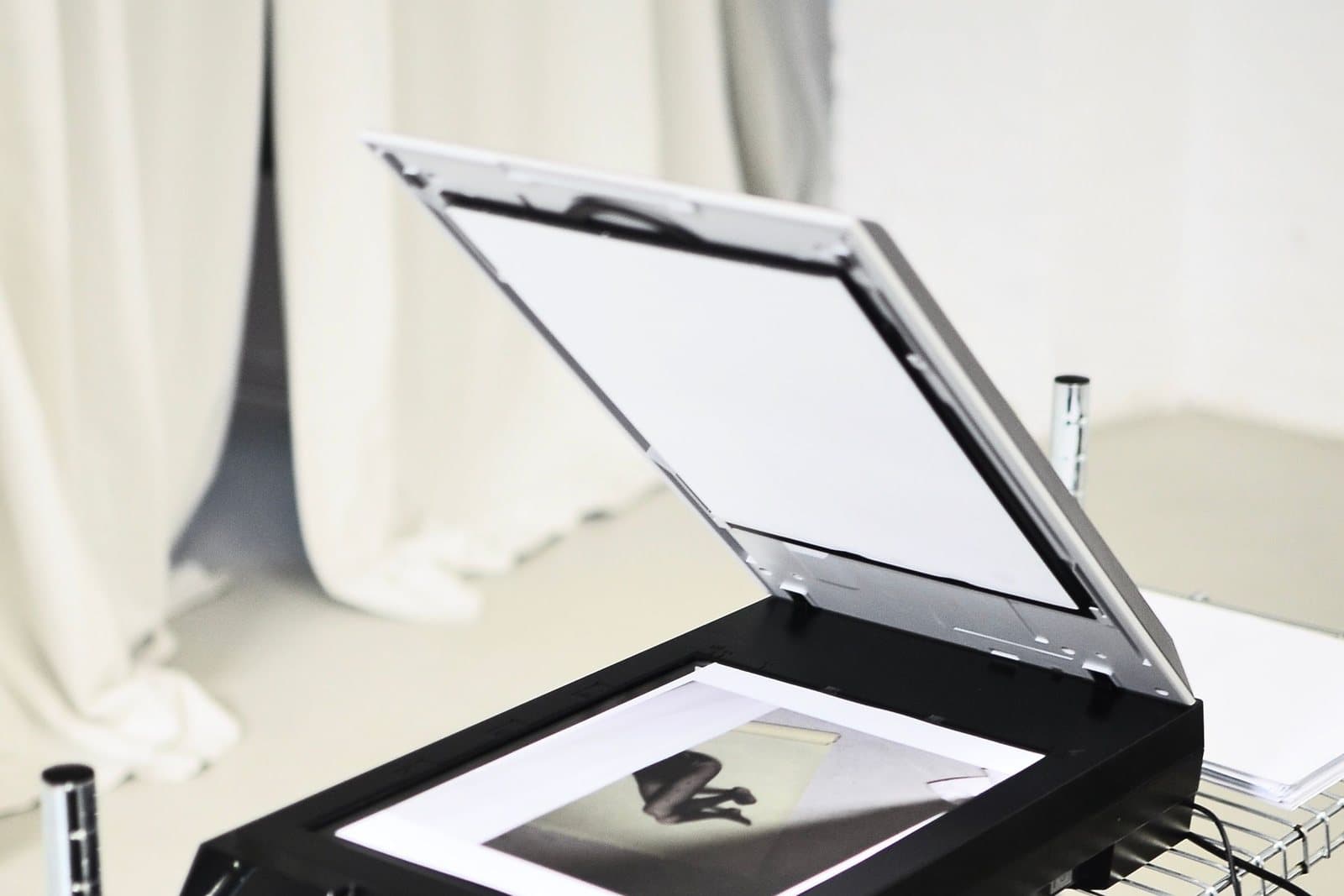
Most family walls want ancestors in them, and ancestors arrive as prints, slides, and negatives in boxes — not as files. Getting them onto the wall means digitizing them first, and the principle is the same as for any valuable original: capture once, carefully, at more quality than the wall needs. A flatbed scanner serves most shoebox prints well; fragile or oversize pieces deserve a print shop’s scanner rather than a home workaround. Faded color can be gently corrected on the digital copy — the original stays untouched, which is exactly why the copy exists.
Keep old photographs at modest sizes on the wall. A small original enlarged dramatically shows its age in grain and softness, while the same image printed near its original size looks crisp and carries its age as character. A wall that mixes one or two modest heritage pieces among modern prints also states the family’s timeline honestly — the past was smaller, and that is part of the story.
Family photo wall ideas need one anchor, then support
Arrangements hold together when one photograph leads. The anchor is the largest piece — often a single strong group portrait, or the one frame everyone agrees is the picture — placed at the visual center of the group, with the supporting photographs arranged around it at smaller sizes. Without an anchor, a wall of equal pieces reads as a grid of similar claims and the eye skates across it. With one, the wall has a sentence structure: subject first, then the clauses.
Vary the supporting sizes with intent rather than at random. A rough rhythm that rarely fails is one anchor, two or three medium pieces, and the rest small — the small ones are where the candids and the older, lower-resolution family scans belong, because a modest size asks little of a modest file and gives the favorites their charm at the scale they can honestly support.
Consistency is the glue
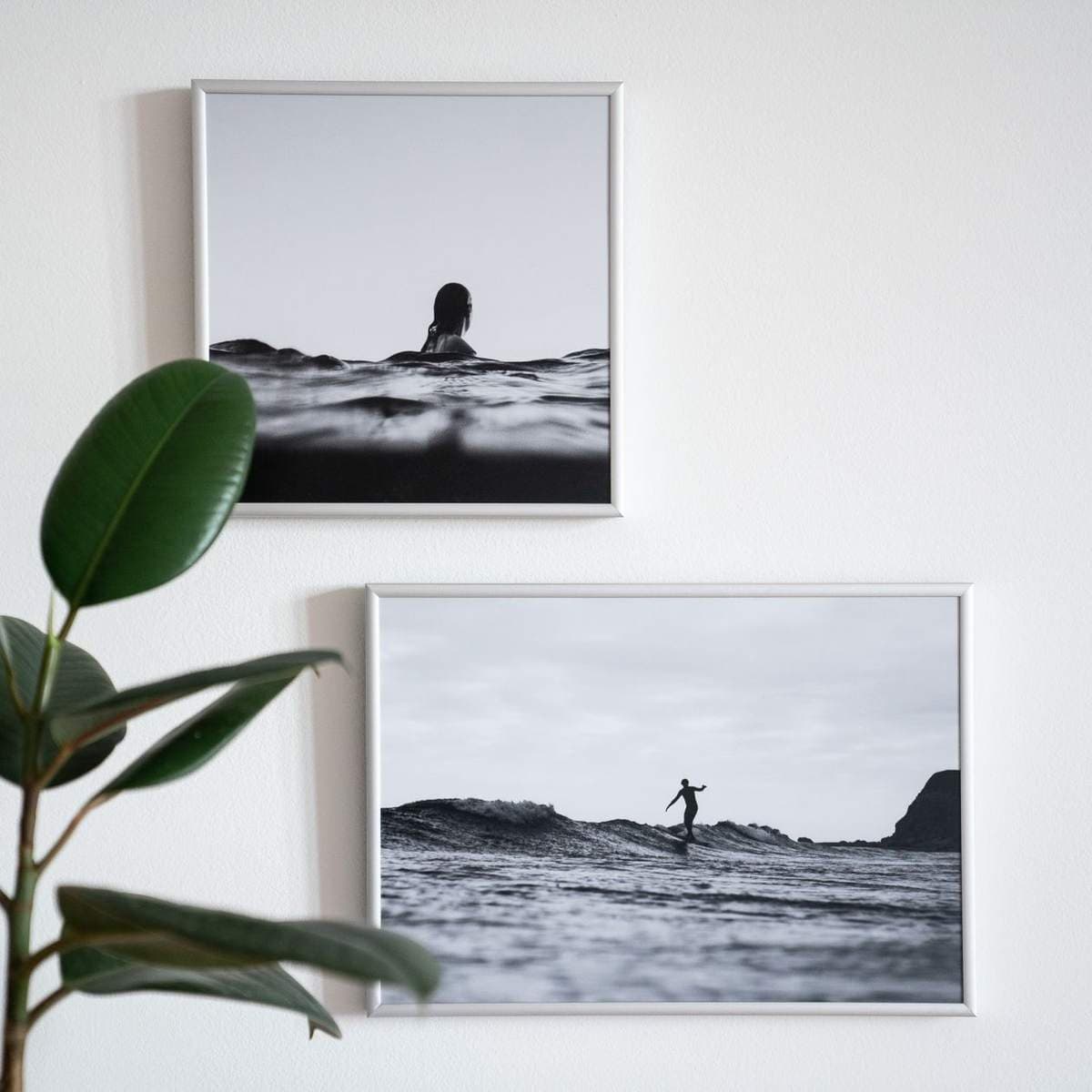
What unifies photographs taken across forty years by six different cameras is not the photographs — it is their treatment. One frame family, used throughout, is the simplest glue: the same molding and finish, varied only in size. A step softer, and nearly as effective, is one mat treatment and a narrow range of frame tones. Either way, the wall reads as one decision, and the differences between the images become the story instead of the noise.
Color versus black and white is the other unifier, and it solves the era problem elegantly. A faded seventies print, a nineties snapshot, and this year’s phone photos share almost no color language; converted to black and white, they suddenly speak the same one. Mixed approaches work too — color for the recent years, monochrome for the archive — as long as the split is deliberate and visible. And for the tidiest walls of all, a uniform square format across the whole set imposes its own order: one shape, one rhythm, every photograph equal in geometry whatever its age.
Family photo wall ideas: layouts that forgive
Three arrangements cover nearly every family wall — the same three worked through in detail in our gallery wall layout ideas. The grid — even rows, even gaps — is the most formal and the least forgiving of crooked hanging, but it rewards precision with real calm. The salon cluster — mixed sizes arranged around the anchor with consistent gaps — is the warmest and the most adaptable, and the easiest to extend. The ledge line, photographs leaned on a picture ledge rather than fixed, is the most forgiving of all: pieces can be swapped, added, and rearranged in minutes, which suits a family whose story is still being written quickly.
Stair walls deserve their reputation as the family wall’s natural home. The diagonal gives a salon cluster its rhythm for free — pieces stepping up with the stairs, following the rake of the handrail — and the audience is guaranteed: everyone in the house passes those faces at least twice a day, at the close range family photographs are made for. Hang the bottom row by measuring from the steps themselves rather than the floor, keeping each piece at a consistent height above its tread, and the staircase becomes the one wall in the house that is re-read daily and never finished being enjoyed.
Place the wall where the family actually gathers or passes. Hallways and stair walls are the classic territory — seen daily, at close range, in passing light. The living room suits the anchor-led version, where the wall is furniture’s companion rather than a passage’s. Either way, plan the arrangement on the floor or in paper templates first; family walls involve more pieces than most, and rehearsing the layout is cheaper than patching the wall — and how to hang a gallery wall, with its templates and spacing, is the step-by-step for that rehearsal.
Printing the set as a set
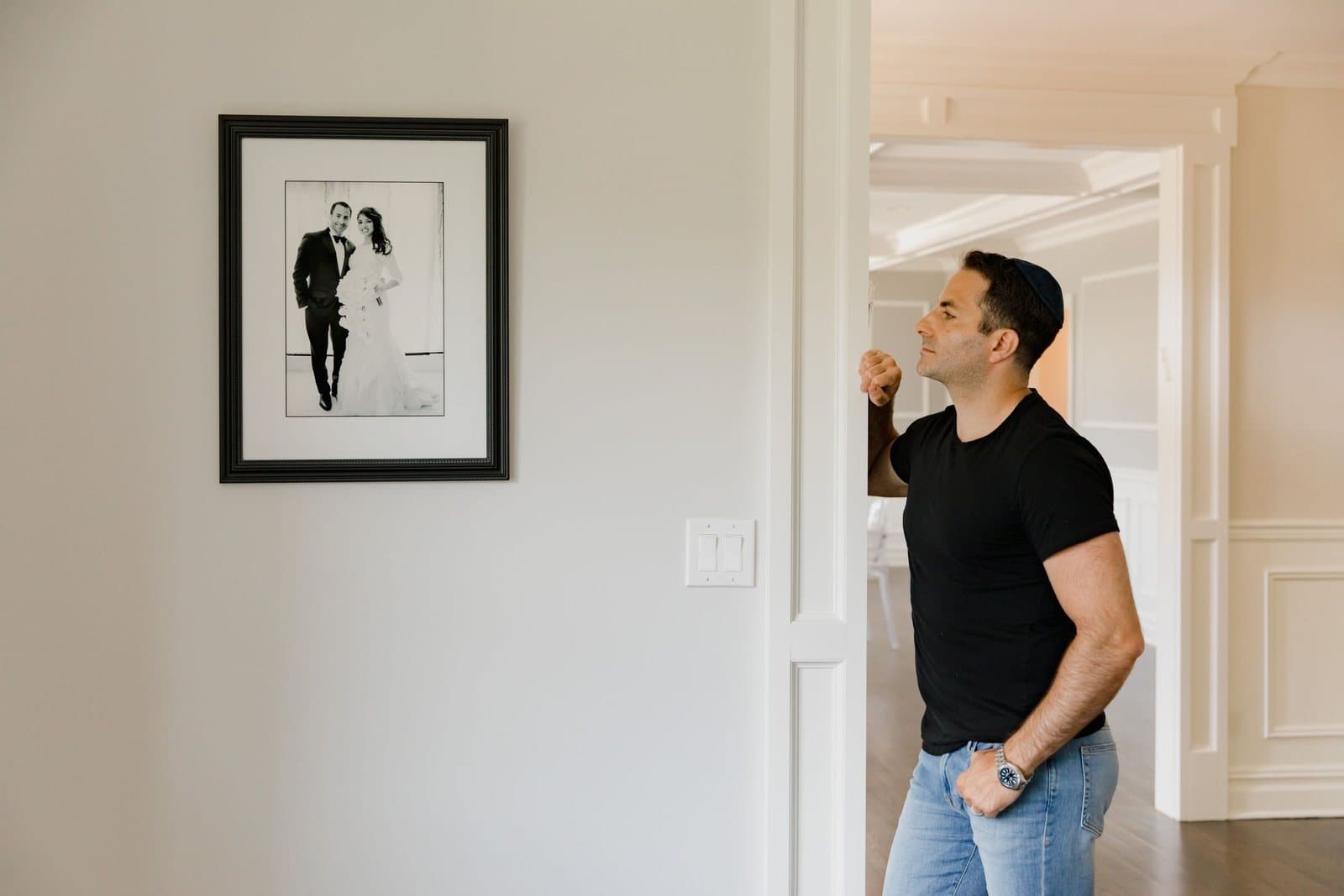
A family wall is printed in pieces but judged as a whole, so treat the printing as one job, not many; the photo-to-canvas process, from upload to wall applies to every piece in the set just as it does to a single print. Wherever the photographs are printed, keep the treatment consistent across the set — the same family of print surface and the same color handling — because mismatched finishes are the one inconsistency frames cannot hide. If some photographs are converted to black and white for the era-unifying effect described above, convert them all in the same pass, with the same eye, rather than one at a time across months.
And proof the anchor first. Print the largest piece before committing the whole set, live with it on the wall for a few days, and let it set the standard the others are printed to match. If its crop, brightness, or presence disappoints, you have spent the price of one lesson instead of fifteen — and the set that follows will be printed with the knowledge the anchor bought.
Leave room to grow
The loveliest property of family photo wall ideas is that they are unfinished by design. Build that in from the start: compose the first arrangement slightly off-center within its territory, or end a salon cluster with obvious air beside it, and the wall can welcome the next baby, the next graduation, the next dog, without being torn down and begun again. Families that rotate a few frames seasonally — the summer wall, the holiday wall — get a second benefit: photographs they already own feel new again on a schedule, and the archive earns its keep.
When custom printing opens here, family walls are the work we most want to get right, because the standard is unforgiving in the best way: every face has a name, and every name is known to the person who will walk past it ten thousand times. Choose fewer photographs than you love, treat them identically, give one of them the lead — and the fridge door can go back to holding shopping lists.
More in Custom Photo & Gifting



Continue exploring: Custom Photo & Gifting guides · All guides