

Warped Canvas Print Fix: Causes and Fixes
Sagging fabric and a twisted frame look alike from the front but need opposite responses. Two simple table tests tell you which problem you actually have.
Key Takeaways
- Diagnose first: lay the piece face up on a flat table - if corners lift or the piece rocks, the frame has warped; if it lies dead flat, your problem is in the fabric.
- Check the stretch by pressing the center gently and tapping it lightly: a healthy stretch feels taut and drum-like and springs back, while a sagging one feels soft, moves too far, and may show ripples radiating from the corners.
- For mild sagging on a frame with small triangular slots at the back corners, tap corner keys in a little at a time, moving corner to corner in rotation, and stop the moment the surface feels taut to avoid cracking a joint or tearing the canvas at the fold.
- Avoid folk fixes that move the problem: padding behind the fabric creates a bulge and point pressure can crease the print, and weight and pressure do nothing for tension at all.
- If sag is stubborn or the wood has twisted, have a framer re-stretch the print onto sound stretcher bars; if a brand-new print arrives slack or out of square, photograph it and contact the seller before trying any fix.
Two different problems share one complaint: “my canvas looks wrong.” A print can sag — the fabric itself has gone slack, rippling or bellied — or it can warp — the wooden frame has twisted so the piece no longer sits flat against the wall, one corner lifting into the room. The fixes are entirely different, and applying the wrong one makes things worse. Here is how to tell which problem you have, which warped canvas print fix you can honestly apply at home, and where the honest answer is a re-stretch.
Diagnose before you touch anything
Take the piece down and run two tests. First, lay it face up on a flat table: if corners lift or the piece rocks, the frame has warped; if it lies dead flat, your problem is in the fabric. Second, press the center of the canvas gently with a fingertip and tap it lightly. A healthy stretch gives a taut, drum-like response and springs back silently; a sagging one feels soft, moves too far, and may show ripples radiating from corners or a visible belly in raking light. Note, too, when it happened — a canvas that changed over one humid summer is telling you a different story from one that arrived slack.
Why canvas sags
Canvas fabric responds to the air. Cotton and linen fibers absorb moisture and relax when humidity is high, then tighten as things dry — which is why a print can look looser in August and tauter in January, and why mild, season-shifting slackness is normal rather than damage. Slackness that stays usually traces to the original stretching: fabric pulled unevenly, or simply not tightly enough, has nowhere to go but looser over the years — see the making process behind a print for the stretching step where that tension was set. A large piece stored leaning at an angle, or hung in a steamy bathroom for years, can also settle into a sag. None of these mean the print is ruined; the fabric itself is rarely the casualty.
A warped canvas print fix for mild sagging: corner keys
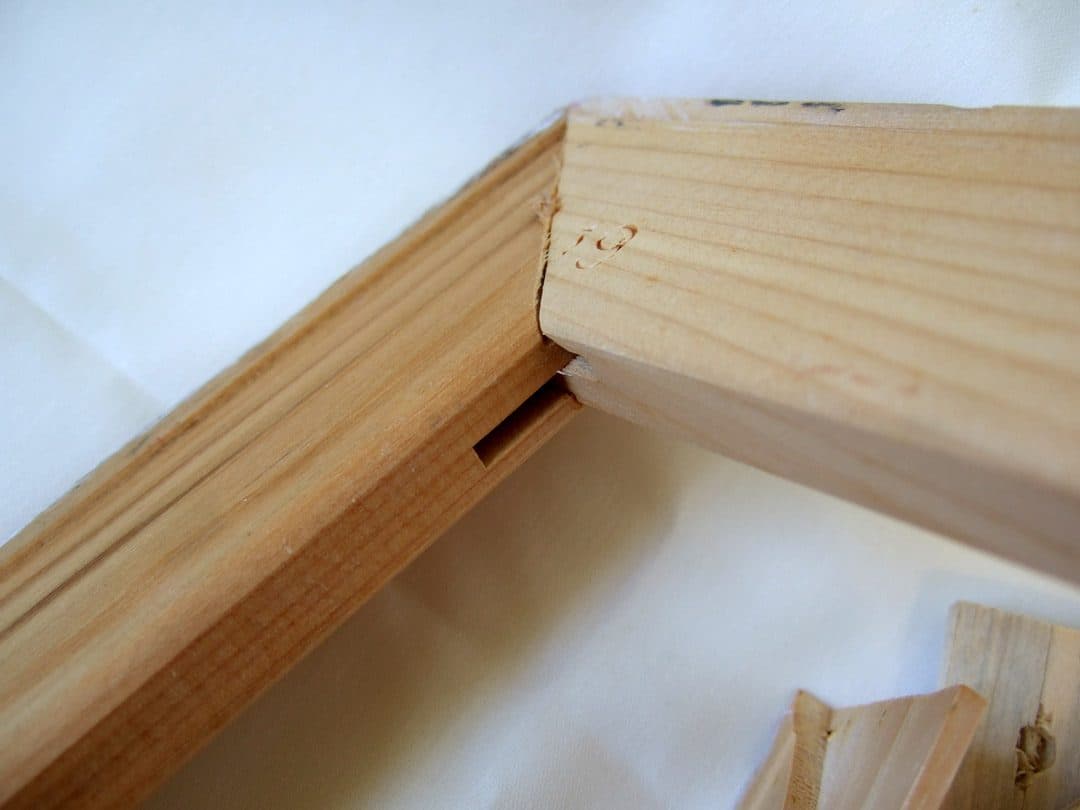
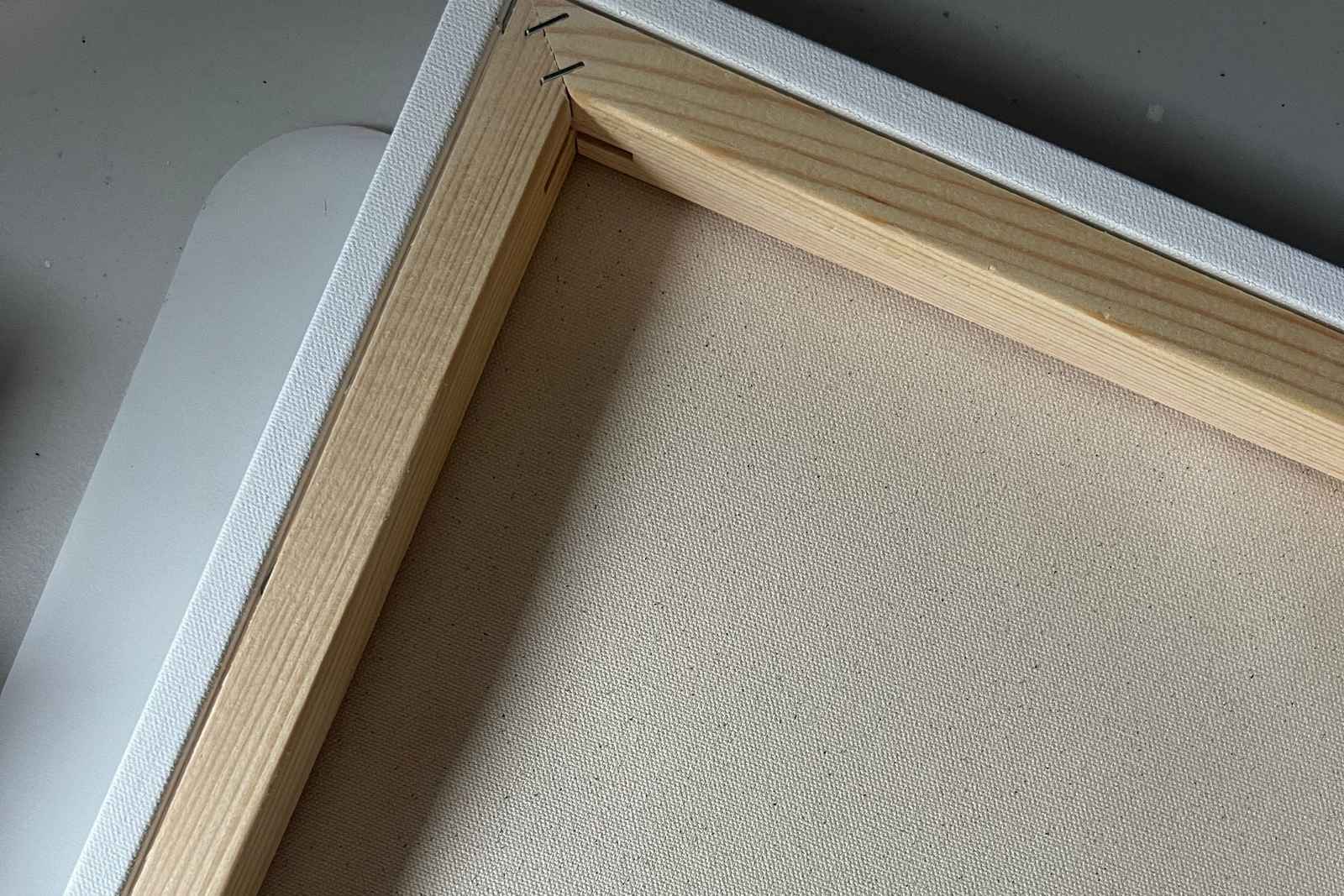
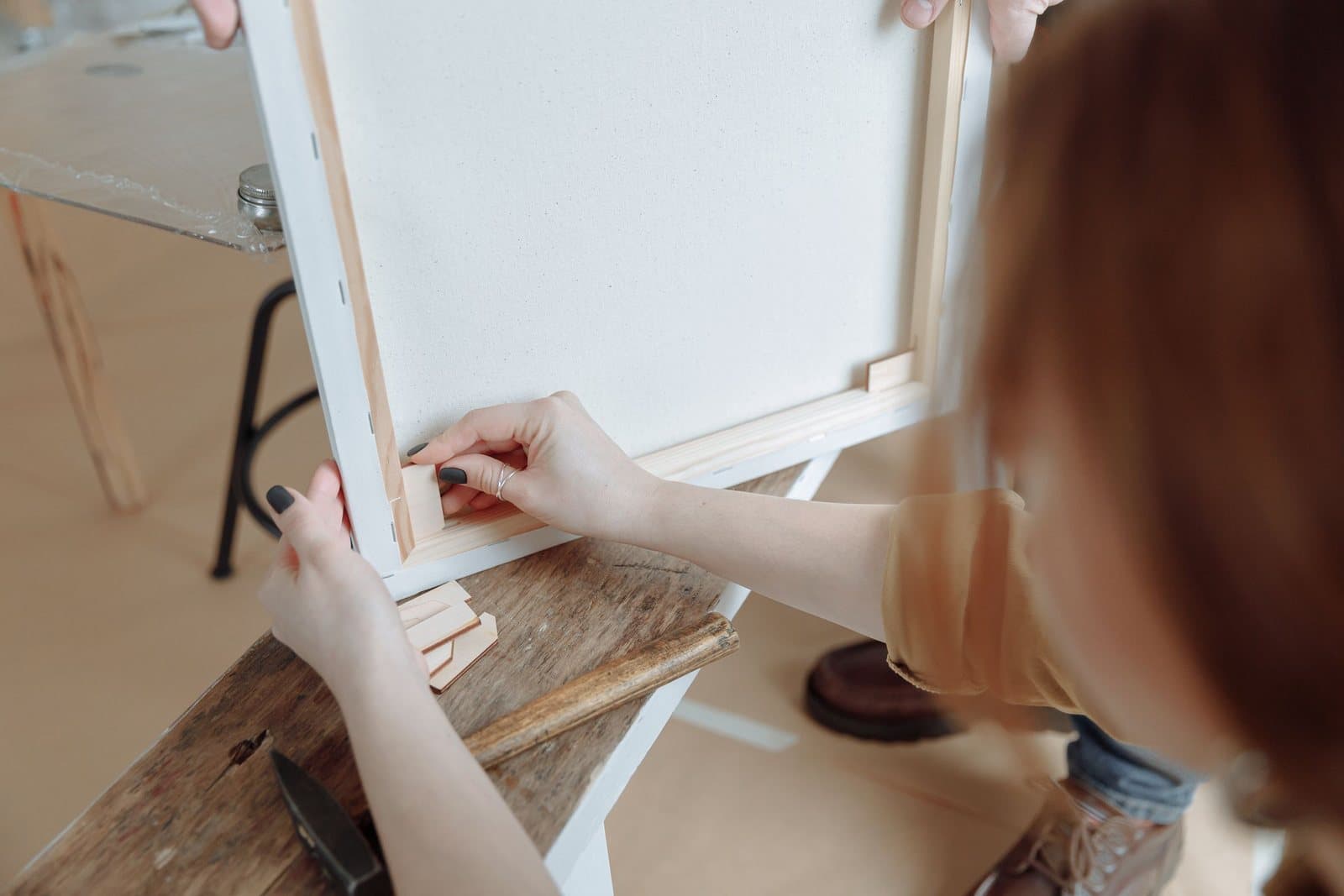
Many stretcher frames are built with a clever allowance for exactly this problem. Look at the back corners: if the joints have small triangular slots, your frame accepts corner keys — thin wedges made to be tapped gently into those slots. Driving a key in expands the corner slightly, which pushes the bars apart and re-tensions the whole surface. Work like this: tap each key a little at a time with a small hammer, moving corner to corner in rotation rather than finishing one corner first, and stop the moment the surface feels taut — over-keying can crack a joint or tear the canvas at the fold. If your print came with keys in a little bag on the back, this is what they were for. If the corners are hard-glued or stapled shut with no slots, your frame does not key, and forcing the joints apart is how frames break.
Reading the pattern: what the ripples tell you
Before reaching for the keys, read the shape of the problem, because different slackness has different causes. Ripples fanning out from the corners — the classic “draw” marks — mean tension is uneven across the piece, strongest along the diagonals; keying in rotation is exactly the remedy. A uniform, gentle belly in the center with straight edges suggests fabric that has relaxed overall, common after humid seasons, and a modest equal keying all round answers it. A single soft side, or slack that appears only along one edge, often traces to one bar bowing under load — look along each edge from the back for a curve in the wood; keying cannot straighten a bowed bar, and that piece is headed for the re-stretch conversation below. And slack that arrives with a musty smell or spotted backing is a damp story first and a tension story second: dry the piece out in moving air, away from heat, before judging its stretch at all.
What will not fix a sag (and may harm it)
You will find folk remedies: wedging cardboard behind the canvas, tightening the hanging wire, leaning the piece face-down under books. Padding behind the fabric hides a ripple by creating a bulge — it moves the problem rather than solving it, and point pressure can crease the print. Weight and pressure do nothing for tension at all. One technique with real physics behind it — lightly misting the back of the canvas with water so the fibers swell and then contract as they dry — is used by framers, but it is genuinely risky on a coated, inkjet-printed surface and unforgiving of a heavy hand. It belongs in the try-only-if-you-accept-the-risk category, on a piece you could bear to lose, never on one you love.
When the frame itself has twisted
A warped frame is a wood problem. Stretcher bars that were not properly dried, or that live in lopsided conditions — one side against a damp exterior wall, the other facing a heat vent — can bow or twist over time, which is why kiln-dried, well-braced stretcher bars sit near the top of the quality checklist. Minor twist sometimes relaxes if the piece spends a few weeks in a stable, moderate room, face down on a flat surface with gentle, even weight. Beyond minor, honesty is the guide: twisted wood rarely agrees to untwist permanently, and no amount of canvas tension will pull a crooked frame flat. The print itself, though, is almost certainly fine — canvas can be lifted off bad bars and put on good ones.
New-print problems versus old-print problems
Timing separates two conversations. A print that arrives slack, rippled, or visibly out of square is a manufacturing miss, not a maintenance task: photograph it, and contact the seller before reaching for any fix in this guide, because home remedies applied to a brand-new piece muddy an otherwise simple replacement conversation. A print that served well for years and changed slowly is wearing its environment, and the remedies here apply in full. The middle case — a piece that sags within its first year or two — deserves the diagnosis section most of all: check whether it hangs over a heat source, in a steamy room, or sealed against a cold exterior wall, because re-tensioning a canvas while leaving its conditions untouched is a repair with a return date.
The lasting warped canvas print fix: re-stretching
For stubborn sagging and for warped frames, the proper repair is a re-stretch: a frame shop removes the canvas, builds or supplies sound stretcher bars, and stretches the print fresh — the same operation it received when it was made, described in our guide to how canvas prints are put together. It is routine work for a framer, moderately priced relative to replacing a large print, and it returns the piece to drum-tight. Ask the shop to key the corners on the new frame, and you gain the home adjustment above for the future. Prevention, meanwhile, is dull and effective: hang prints away from steamy rooms and direct heat, store them upright rather than leaning — storing wall art between homes and seasons covers the wrapping and the room in detail — and keep both faces of the piece in the same air — a print sealed against a damp wall ages unevenly by design.
Most “ruined” canvas prints are nothing of the kind: they are sound images on slack fabric or tired wood, and both problems have a warped canvas print fix. Diagnose first, key if your frame allows it, and let a framer do the rest. Our FAQ and the shop pages answer the ordering questions in the same plain spirit.
More in Care & Print-Craft Quality
Continue exploring: Care & Print-Craft Quality guides · All guides