
What Is Giclee Printing? The Term, Decoded
The word sounds like a guarantee, but no one certifies it. What matters is whether a seller can name the inks, printer, and paper behind the label.
Key Takeaways
- Giclee has no official definition and no certifying body: no organization tests prints, licenses the word, or strikes off offenders, so the term alone guarantees nothing.
- When the word is earned it usually means three things together: pigment-based archival inks, a professional wide-format inkjet running typically eight to twelve inks, and an archival substrate, ideally acid-free, made to receive those inks without yellowing or cracking.
- Giclee says nothing about the image file, edition discipline, coating, framing, handling and storage after printing, or color accuracy, which depends more on the operator's calibration and proofing habits than on the printer model.
- Ask four questions when a seller leans on the word: are the inks pigment or dye, what paper or canvas is it printed on and is it acid-free, how was the print finished, and for editions how many exist and is yours numbered or signed?
Few words in the print world carry more prestige — or less definition — than giclee. It appears on product pages like a quality seal, usually next to a higher price, and most buyers nod along without ever asking what is giclee printing, or what it certifies. The honest answer is interesting: giclee points at real technology and real quality practices, but the word itself guarantees none of them. Here is what the term means, where it came from, and how to shop past it.
A French verb in a marketing costume
The word was coined in 1991 by Jack Duganne, a printmaker working with early high-end inkjet printers in Los Angeles. He wanted a name for the new digital fine-art prints that did not carry the cheap, officey associations of the word inkjet, and he borrowed from the French verb gicler — to spray or squirt — producing giclée, roughly “that which is sprayed.” (Industry lore holds that a French colleague later pointed out the verb also has a slang meaning best left off a product page.) The name worked beyond its inventor’s ambitions: within a decade it was the standard term for fine-art inkjet printing, and the accent mark quietly fell away in English usage.
There is no giclee standard, and no giclee police
This is the part the marketing leaves out. Unlike terms regulated by law or certified by a standards body, giclee has no official definition. No organization tests prints, licenses the word, or strikes off offenders. A shop can — and some do — print on an ordinary printer with ordinary dye inks on ordinary paper and call the result giclee, breaking no rule but the customer’s trust. That does not make the term meaningless; it makes it a claim you verify rather than a fact you inherit. The verification is not hard, because a genuine fine-art inkjet print has specific, nameable ingredients — and a shop using them is usually happy to name them.
What is giclee printing, when the word is earned
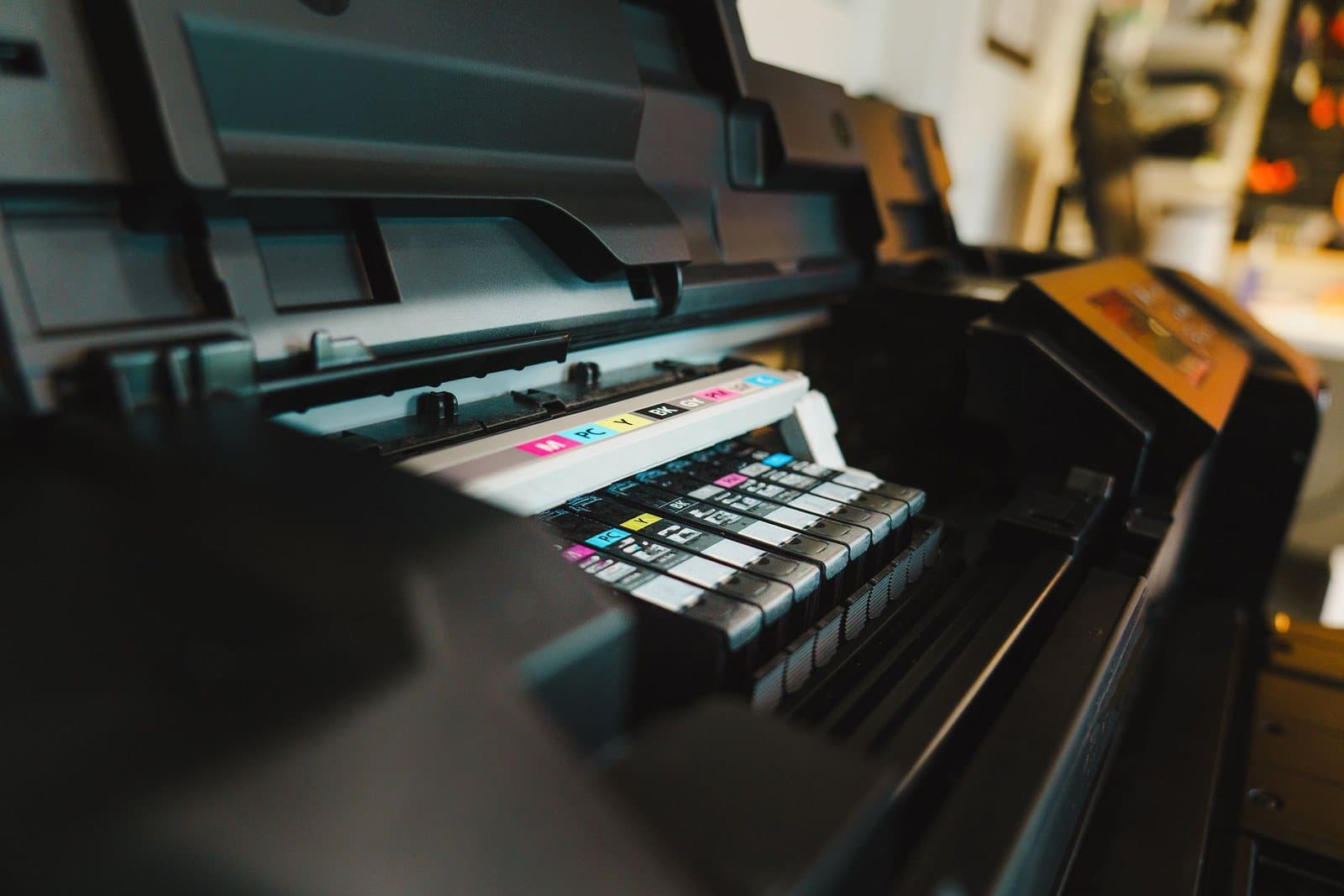
In serious print shops, giclee has settled into a working definition with three parts. First, the inks: pigment-based archival inks rather than dyes. Pigments are solid particles that sit on the surface and resist light far better; they are the foundation of every credible longevity claim. Second, the printer: a professional wide-format inkjet machine running many inks at once — typically eight to twelve, including light versions of the main colors and extra grays — which is how these prints get their smooth gradients and faithful shadow detail. Third, the substrate: an archival paper or canvas, ideally acid-free, made to receive those inks without yellowing or cracking over time. When all three are present, you have what the word promises. Our fine art paper format guide goes deeper on the papers themselves, from cotton rag to baryta.
Why artists adopted the word first
It helps to know who the term was coined for, because it was not originally about photographs of your holiday. In the early 1990s, the first artists to use high-end inkjet printers were printmakers and painters making reproductions — and original editions — of their work, and they had a real problem: the established art world heard “computer printout” and reached for its smelling salts. Giclee gave galleries a word that let them talk about the process honestly — ink, sprayed in microscopic droplets under digital control — without the office-supply echo. Photographers arrived soon after, for the same reason and with an extra grievance: darkroom prints were the prestige standard, and a new process needed a name that could stand next to them. That history explains the term’s flavor today. It comes from the art world, not the photo-lab world, and it still carries a faint promise of gallery seriousness wherever it travels.
Giclee on paper, giclee on canvas
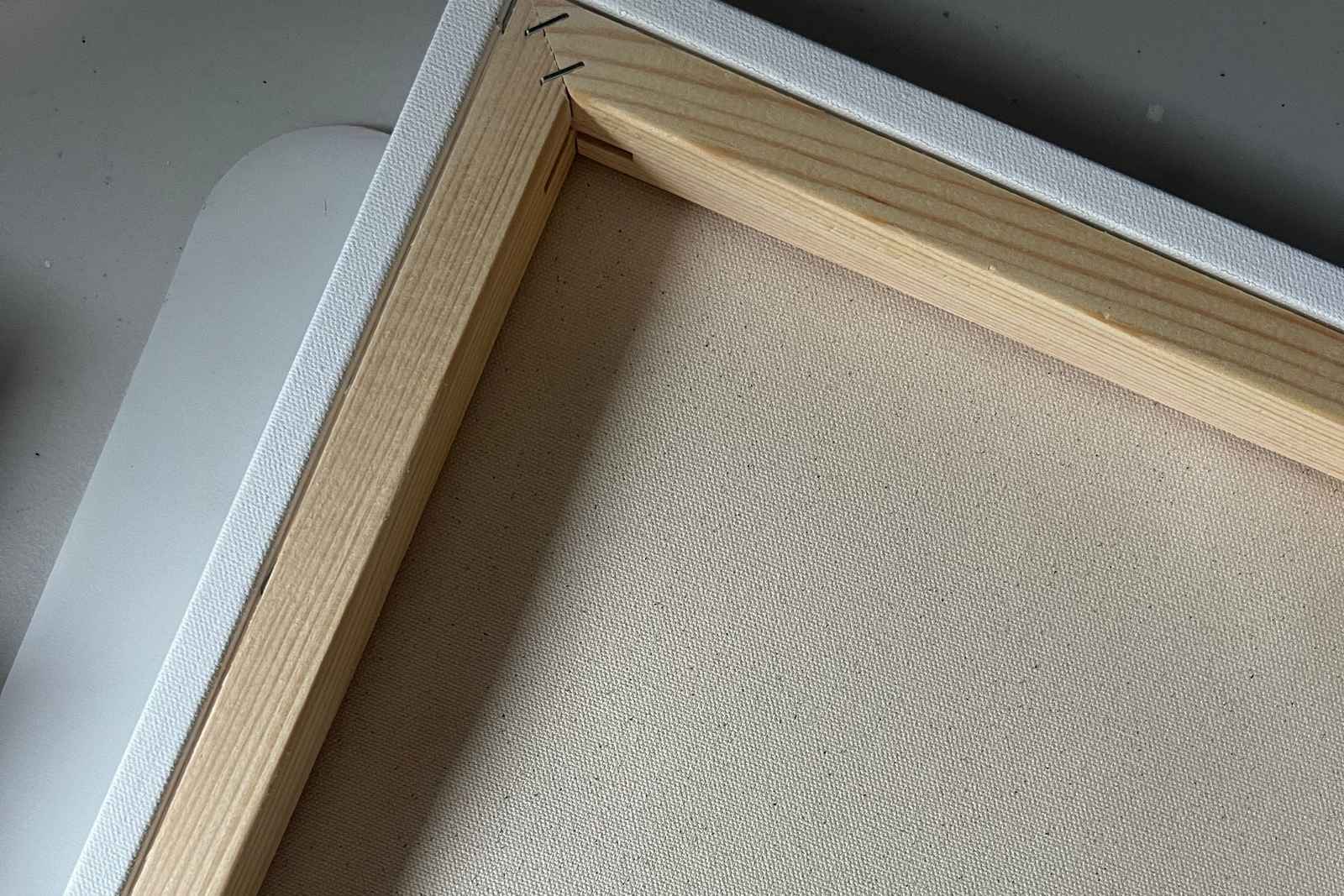
The term covers both of the substrates fine-art printing lives on, and the choice changes what you are buying. On paper — cotton rag, alpha-cellulose, or baryta — a giclee print is normally framed behind glazing, which becomes part of its protection and its look. On canvas, the same ink technology produces a print that is coated and stretched instead, with the texture of the weave participating in the image. Neither is the more authentic giclee; the word describes the printing, not the mounting. It does mean a seller should be able to tell you which substrate they mean and why they chose it — and that “giclee” alone, without the substrate named, is only half a description; the paper side is spelled out in our guide to fine art paper prints.
What giclee does not tell you
Even an honestly used giclee label leaves plenty unsaid. It says nothing about the image itself — a soft, low- resolution file printed giclee is a soft print with archival inks. It says nothing about edition discipline: an open-edition giclee and a numbered edition of fifty use the same technology and very different economics. It says nothing about coating, framing, or how the print was handled and stored after printing — how canvas prints are made, from file checks to the final inspection, is the companion walk-through of that side. And it says nothing about color accuracy, which depends on the operator’s calibration and proofing habits more than on the printer model. Treat the word as the start of a conversation about those things, not a substitute for one.
Giclee versus ordinary inkjet: is there a real difference?
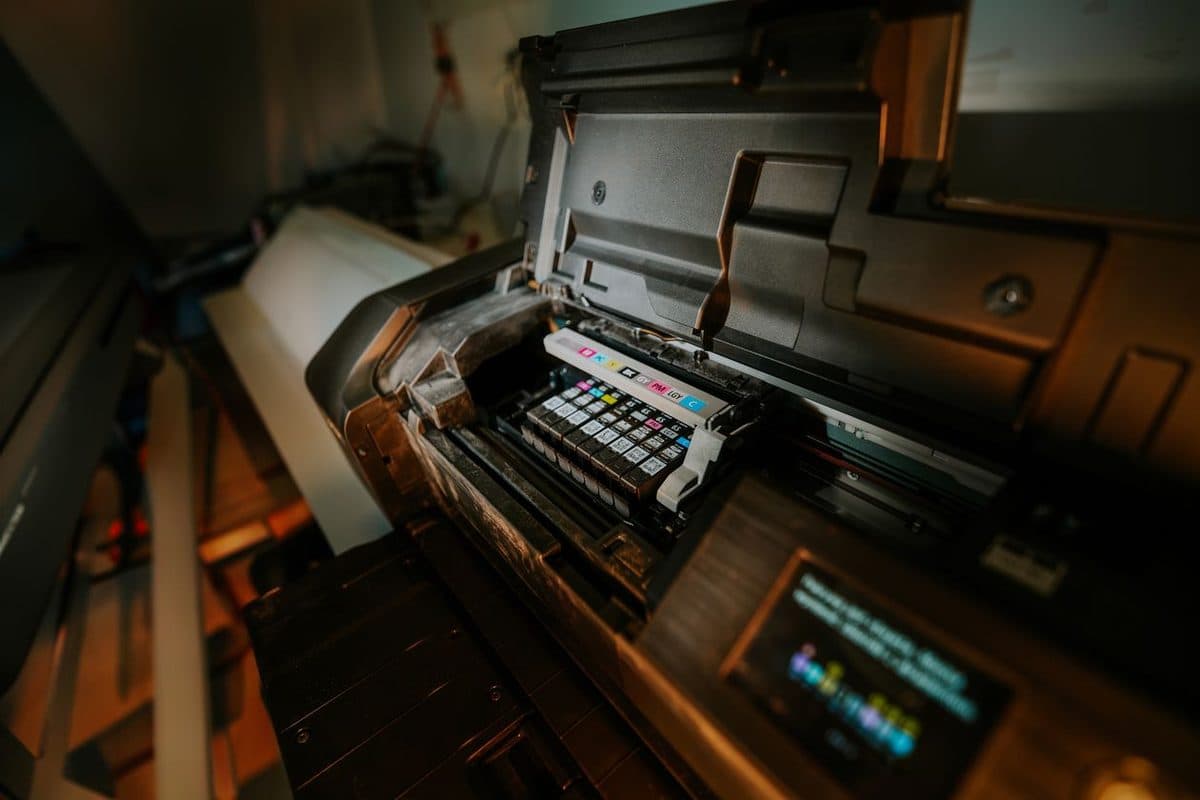
Technologically, no — and yes. A giclee print is an inkjet print; the word was invented precisely because the underlying technology is the same one in smaller machines. The difference is one of degree and intent: professional printers hold tighter tolerances, lay down more ink colors in finer droplets, and are fed archival materials by operators printing for permanence rather than for a draft. Dismissing giclee as “just inkjet” misses that degree matters; a snapshot printer and a twelve-ink wide-format machine are cousins, not twins. Believing the word alone elevates any print misses the other half.
“Archival” deserves the same skepticism
Giclee rarely travels alone; its usual companion word is archival, and the same rule applies — meaningful in specifics, empty as a badge. In materials terms, archival points at things that can be checked: papers that are acid-free and lignin-free, so they do not yellow from within; pigment inks rather than dyes; testing by independent laboratories that expose prints to accelerated light and publish ratings for particular ink-and-paper combinations. When you see a lifespan figure attached to a print, the credible version of it always traces back to such a test, for that specific pairing of materials, under stated display conditions — and the honest sellers say so. The vague version, a round number floating free of any named ink, paper, or test, is decoration. Neither word, giclee nor archival, is doing anything wrong; they are simply adjectives that became nouns in the marketplace, and they repay the buyer who asks them to show their working.
What is giclee printing: questions that cut through the label
When a seller leans on the word giclee, four questions will tell you more than the label does — they are the print-shop version of the checks in the buyer’s field guide to a quality canvas print. Are the inks pigment or dye? What paper or canvas is it printed on, and is it acid-free? How was the print finished — coated, mounted, framed? And for editions: how many exist, and is yours numbered or signed? A seller of genuine fine-art prints — the tradition our fine art category celebrates — answers these in a breath. A seller who cannot is telling you the word was the whole product. We keep our FAQ page in the same plain spirit, because the questions buyers ask deserve better than adjectives.
So: what is giclee printing, honestly? Not a scam and not a certification. It is a thirty-year-old piece of vocabulary for the best version of inkjet printing — archival inks, serious machinery, lasting materials — that anyone may borrow and no one polices. The prints that deserve the name can always prove it in specifics. Ask for the specifics.
More in Care & Print-Craft Quality

Continue exploring: Care & Print-Craft Quality guides · All guides