

Music Wall Art: Posters and Instruments
Put the main piece opposite the listening seat, not beside the speakers, and collect it like you collected the music — shows you actually saw, one at a time.
Key Takeaways
- Place the main piece opposite the listening seat: art near the system competes with the gear's geometry, while the wall the listener actually faces for hours becomes the room's second performance
- Favour forms with a double audience: gig posters as graphic design and diary, instrument studies as portraits, and sheet music or notation that reads as texture to non-readers and as music to readers
- Keep reproductions honest: prefer gig-poster reprints that retain ink character and grain rather than over-cleaned versions that flatten colour and paper texture
- Collect by attendance and love, in consistent frames: a show you actually saw outranks a legendary one you didn't, and edited, unified framing lets different decades and genres hang together
Music is the invisible art that fills a house, so it is natural to want its visible traces on the walls: the poster from the show, the instrument rendered like a portrait, the page of notation that looks like lace until you read it. Music wall art succeeds when it honors how seriously its owner listens — and fails, like sports art, when it settles for novelty. This guide covers the music subject on its own: the forms worth hanging, how to place them around the equipment and furniture of listening, and why the subject rewards the same restraint as the music itself. Music is one answer to the prior question — what subject your walls should carry— which the series answers in full in its subject guide.
The forms of music wall art: posters, instruments, notation
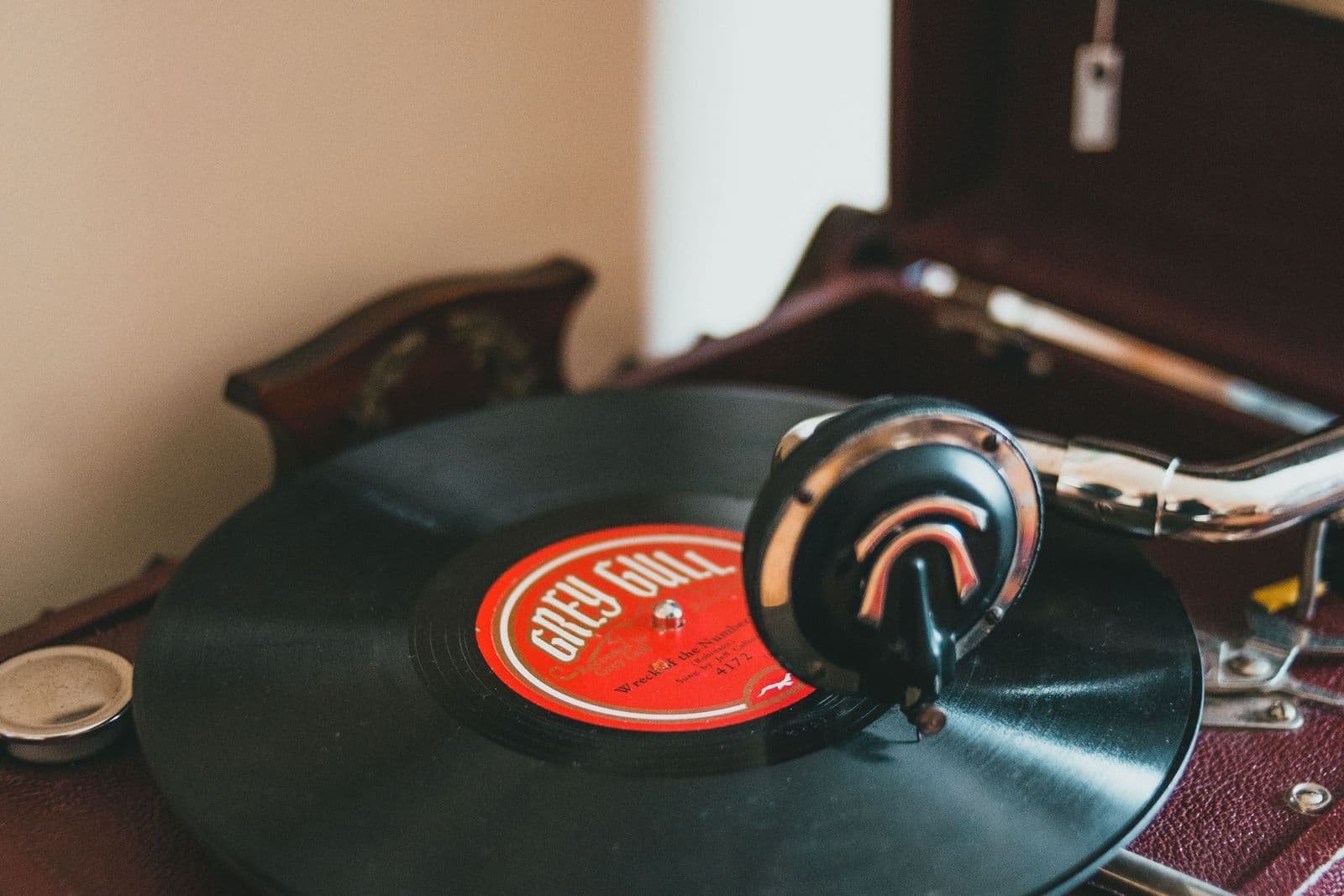
Gig and concert posters are the subject’s folk art. Designed to be read across a street and remembered after one glance, the best of them — the psychedelic lettering traditions, the stark modernist bills, the letterpress hatch-show style — are serious graphic design with a date and a town attached. A real or faithfully reproduced show poster is also a diary entry: proof of a night, a band, a version of yourself. Instrument studies are the subject’s portraits: a guitar’s curves, brass catching light, a piano’s geometry of keys and strings, drawn or photographed with a still life’s patience. They suit players especially, who read them the way riders read a horse portrait — knowledgeably, and with affection for accuracy.
Sheet music and notation art is the quietest form: a beloved score page, a hand-written chart, notation abstracted into pattern. Non-readers see texture; readers hear it. That double audience makes notation the most graceful music art for shared rooms — it never argues about taste, because it is the music, not a claim about it. Portraits of musicians form a fourth, riskier family: magnificent when the photograph is magnificent, dorm-room when it is merely famous. Judge the picture, not the fame.
Hanging music wall art where music happens
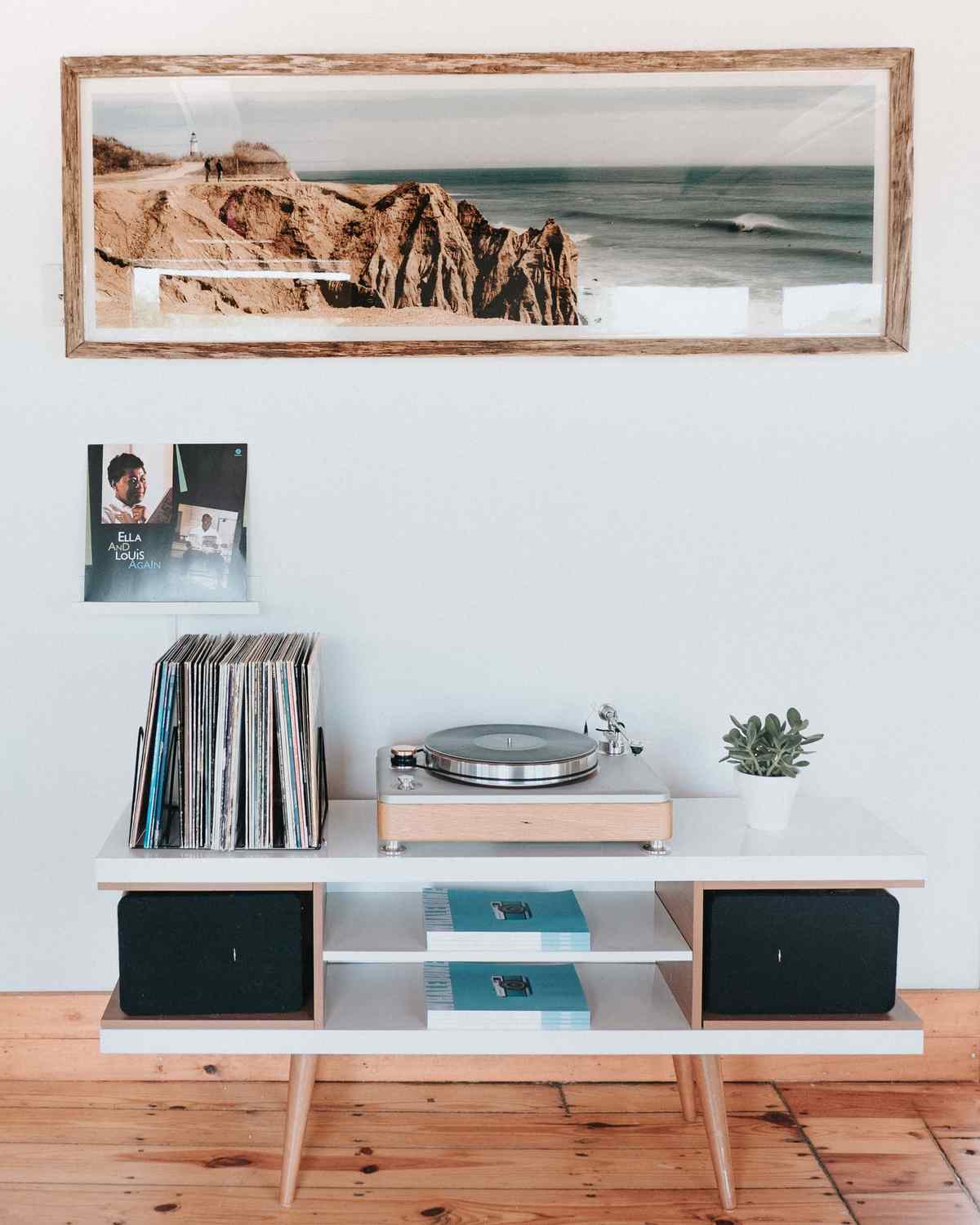
The listening room or corner has one sovereign piece of furniture — the system, the piano, the chair between the speakers — and its walls should be arranged as that throne’s court. Art placed near the gear competes with the gear’s own strong geometry, so give the wall opposite the listening seat the main piece: it is the view the listener actually faces for hours. A single large poster or instrument study there becomes the room’s second performance, the one for the eyes.
Practical acoustics deserve one honest paragraph. Bare, hard walls reflect sound and can sharpen a room unpleasantly; soft, broad surfaces calm it. Wall art is not acoustic treatment and should not be sold to yourself as such — but the instinct to cover a listening room’s walls with substantial pieces is not wrong either, and a wall fully dressed with framed work and shelves sounds less bare than an empty one. Choose the art for your eyes; let any softening be a side effect.
In the wider living room, music art mixes with the household’s other life. A poster series from shows actually attended, hung in one consistent frame system, reads as a family’s concert history — guests browse it like a shelf of ticket stubs. Bedrooms take the personal cut: the instrument you play, the score you are learning, the poster from the first show. Music is autobiography with a beat; the closer the room, the more personal the print can honestly be.
The vintage current running through it
Music art leans old for good reason: the poster traditions, the photography, and the instruments themselves carry the vintage style in their bones. Letterpress texture, period lettering, and the patina of a much-handled program suit the subject because music is inherited — songs outlive their makers and arrive to each listener already storied. A modern, minimal treatment can work beautifully for electronic and contemporary tastes, but even there, the pieces that last tend to borrow the old virtues: strong composition, honest materials, one idea per poster.
A caution on reproduction: gig posters were printed fast and cheap for walls that were rained on, and reproductions that over-clean them — colors flattened, paper texture polished away — lose the object’s soul. Prefer reproductions that keep the ink’s character; a little grain is the sound of the original room the poster was pasted in.
For players: the working wall
A practicing musician’s wall has a job to do, and art that helps it earns a different kind of place. The practice corner — stand, instrument, metronome, chair — is a small room inside the room, and its wall can hold the tools of the trade made beautiful: a fingering chart drawn like a diagram in a fine old book, the score of the piece currently under the fingers, a photograph of the hands of a player you study. These are not decorations about music; they are equipment with good looks, and they belong at reading distance, lit like a desk.
Children learning an instrument deserve the same respect scaled down: one inspiring, well-made piece near the practice spot — the instrument’s portrait, the poster of a player they admire — rather than a scatter of novelty stickers of sound. Practice is a daily appointment with difficulty; the wall beside it should model the seriousness that makes the difficulty worth it, and the pride that waits on the other side of it.
Genre by genre: visual dialects
Each musical world evolved its own graphics, and hanging the dialect you actually listen to keeps the wall honest. Jazz speaks in cool photography and modernist covers — smoke, brass, and negative space. Rock’s dialects run from psychedelic lettering’s liquid type to punk’s torn collage, each as period-true as a recording. Classical music speaks in notation, hall architecture, and the instrument portrait — the most naturally framed of all the dialects. Folk and country speak letterpress: wood type, plain words, dates and towns. Electronic music speaks in geometry and grid, poster art as clean as its synthesized lines. A mixed collection across dialects works when the frames unify what the styles divide — the same lesson every collected wall teaches — and a single-dialect wall works when the listening really is that devoted. What fails is the generic music-symbol piece, the treble clef as decor: it announces music the way a plastic grape announces wine.
Lyrics deserve their own caution, borrowed from typography’s house rule: a line on a wall is read at every glance, and a lyric that thrills in a chorus can flatten as furniture. Choose lines that read as poetry standing alone, in rooms where being read daily is a compliment the line can survive.
Building the wall over a listening life
Collect music wall art the way you collected the music: by attendance and by love, one piece at a time. The show you actually saw outranks the legendary one you didn’t; the instrument on your own stand outranks the icon’s. Frames stay consistent so the decades can hang together, and the collection stays edited so each piece keeps its volume and its own clear moment of attention. Do that, and the wall becomes what a good record shelf already is — the autobiography of a listener, at rest between songs.
More in Subject Guides



Continue exploring: Subject Guides guides · All guides