

Canvas vs Framed Canvas: Which Finish?
They are the same print underneath. The only question is whether your room wants the picture to run edge to edge or end with a deliberate line.

Key Takeaways
- The post's verdict is conditional: frame it if the image is busy at its edges, the room is dressed, or the piece hangs alone as the main event; leave the wrap bare if the piece is contemporary, grouped or multi-panel, oversized, or bound for a casual room.
- A float frame is not a paper-print frame — there is no glass, mat, or lip over the image; the canvas sits inside a shallow tray with a narrow shadow gap all around, so it appears to float.
- Unframed canvas reads as continuous and relaxed, while framed canvas reads as contained and deliberate — the boundary traditional and transitional rooms usually need alongside tailored furniture.
- Practical trade-off: a float frame's shadow gap collects dust that needs a soft brush or puff of air, but the frame stands proud and takes hallway scuffs and knocks that would otherwise hit the exposed wrapped edges and corners.
- The decision can be undone: an unframed canvas can be float-framed later by any framer, and a framed one is simply unscrewed — rehearse it first with painter's tape at both sizes if you are torn.
Canvas vs framed canvas is the closest comparison in wall art — the narrowest of all the wall art formats, side by side — because the two options are the same object: the same print, on the same canvas, stretched on the same wooden bars. The only difference is that framed canvas adds one component — a float frame — around the stretched piece, while plain canvas stops at the wrap. That single addition changes the look on the wall more than its modest size suggests, and it is worth understanding exactly what a float frame does before you decide whether your room wants one. If your shortlist runs wider than two versions of canvas — if a hard surface is in contention too — canvas versus metal prints is the comparison that settles texture against sheen.
What a float frame actually is
A float frame is not the frame of a paper print. There is no glass, no mat, and no lip overlapping the front of the image. Instead, a shallow wooden or metal frame — often called a tray frame — is built slightly larger than the stretched canvas and fixed to it from the back and sides. The canvas sits inside the tray with a narrow, even gap of shadow between its edge and the frame all the way around, so the piece appears to float within its border. The image keeps the full face of the canvas; the frame never touches it.
Because the canvas inside is the deeper gallery-wrap style, the finished object is substantial: canvas depth plus frame depth, standing proud of the wall with a clean shadow line. The frame adds a little height and width — typically under an inch on each side — and a little weight. Everything else about the print, its texture, its matte surface, its light weight for the size, is identical to the unframed version.
Canvas vs framed canvas: continuous versus contained
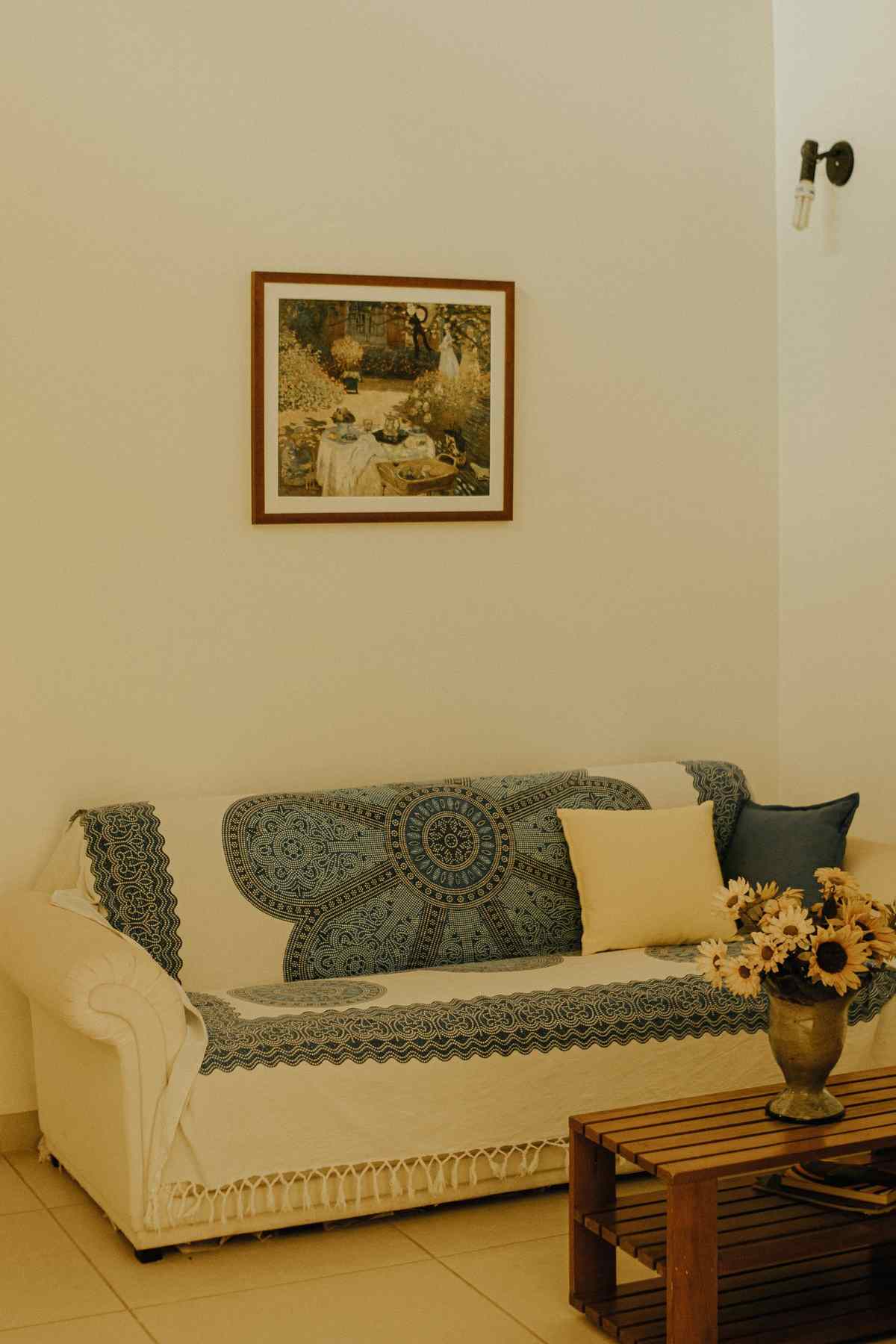
Unframed canvas is continuous. The image wraps the edges, so the picture has no boundary on the wall — color runs to the side faces and stops at the wall itself. That reads as relaxed and contemporary, and it makes the piece easy to live with in informal rooms, grouped arrangements, and spaces where other elements already provide plenty of structure. Its risk is a faint sense of the unfinished: on a formal wall, next to tailored furniture, a bare wrap can look like a painting waiting for its frame, because in gallery terms that is historically what it was.
Framed canvas is contained. The float frame draws a deliberate line around the image and says the picture ends here, on purpose. That boundary is what traditional and transitional rooms usually need from art: a finished object that answers the room’s other finished objects — the sideboard, the door casing, the table edge. The frame also introduces one more material decision: a warm wood tone, a matte black, a soft white, or a slim metallic each steers the same image toward a different decade of decor. Neither look is better art. They are different punctuations at the end of the same sentence.
Room by room
In the living room, the choice usually follows the furniture. Rooms built around clean-lined sofas, open shelving, and gallery groupings take unframed canvas naturally — a triptych or a wall of wrapped pieces with frames on every one would feel fenced in. Rooms with classic bones — mantels, wainscoting, a rug with a border — tend to want the framed version over the sofa, where a single large piece is doing the work of a painting. In dining rooms and entries, where art is seen up close and often in lamplight, the frame’s shadow gap adds a crafted detail that rewards the shorter viewing distance.
Bedrooms sit happily on both sides: the frame adds polish to a dressed bed wall, while unframed keeps a deliberately soft room soft. The one place unframed almost always wins is the oversized statement piece — at very large sizes the wrap alone keeps the weight and the visual bulk down, and a frame on a huge canvas can tip a dramatic piece into a heavy one.
The practical differences nobody mentions
Dust treats the two differently. On unframed canvas, dust settles on the top edge of the wrap, where a dry cloth reaches it in one pass. A float frame adds a ledge and a shadow gap; the gap is too narrow for a cloth and collects its own fine line of dust, dealt with by a soft brush or a puff of air — a two-minute job a few times a year, but a real one. Edges cut the other way: the wrapped sides of an unframed piece are exposed to scuffs, vacuum handles, and the general traffic of a hallway, while a frame stands slightly proud and takes those knocks first. Frames protect corners the way a bumper protects a car — sacrificially.
Moving and rehanging mildly favor the framed piece, whose edges you can grip without touching the image surface, though it is a touch heavier. Leveling favors neither — both hang the same way — but the frame gives the eye a strong horizontal reference, so a framed piece that sits one degree off level announces it more than a wrap does. Check it twice.
Choosing the finish, when you do frame
Because the frame’s whole job is emphasis, its finish should be chosen from the image and the room together, in that order; the fuller treatment of how to choose a frame color — black, white, wood, or metal — works through each family in turn. A natural or warm-stained wood frame echoes the tones in landscapes and still life and sits comfortably among wooden furniture; it is the traditional pairing for good reason. Matte black is the gallery neutral: it sharpens photography, abstracts, and anything with strong geometry, and it disappears in modern rooms. White and pale finishes lighten coastal and Scandinavian schemes and keep a small room’s walls feeling open, though on a pale image a white frame can wash the edge out entirely. Slim metallic finishes — brushed silver, soft gold — belong to glamorous and deco-leaning rooms and to images with their own metallic notes. The reliable test is temperature: warm image, warm frame; cool image, cool frame. A frame that fights the picture’s temperature wins the fight, and you end up seeing the frame.
One consistency rule covers the rest: in any room where two framed pieces hang within sight of each other, match the frame finish, even if the images, sizes, and subjects differ. Matching frames are the cheapest way to make unrelated art read as a collection, and mixed finishes are the fastest way to make a deliberate pair look like an accident. Unframed pieces have no equivalent decision to get wrong — one more quiet point in the wrap’s favor for eclectic walls.
The cost question, honestly framed
A float frame is real material and real labor — mitered, joined, finished, and fitted — so the framed version of any given piece costs more than the unframed version. That is the whole economics of it, and it is a fair trade when the frame is doing work: finishing a formal room, protecting edges in a busy space, giving a gift the completeness of a made object. It is money spent on ceremony when the room is casual, the piece is huge, or the art will hang in a group where boundaries only get in the way. Judge the frame as you would judge any furniture purchase — by whether the room needs what it adds.
Canvas vs framed canvas: a short decision rule
If the image is busy at its edges, the room is dressed, or the piece will hang alone as the wall’s main event — frame it. If the piece is contemporary in spirit, part of a multi-panel or grouped arrangement, oversized, or bound for a room that prizes ease over formality — let the wrap speak for itself. And if you are torn, remember the asymmetry: an unframed canvas can be float-framed later by any framer, since the frame is a separate component that fits around the finished stretch. The reverse direction is simply unscrewing. Few decor decisions come with a genuine undo option; enjoy one that does.
If the decision still will not settle, rehearse it with painter’s tape. Mark the piece’s outline on the wall at the unframed size, live with it for a day, then add a second line an inch outside it to stand in for the frame and live with that. The framed version stakes a slightly larger, noticeably more formal claim on the wall, and seeing that claim at full size — in morning light and in lamplight — tells you more than any product photo can. Walls are honest in a way screens are not; in the canvas vs framed canvas choice, give yours the last word.
More in Formats & Materials

Continue exploring: Formats & Materials guides · All guides