

How-To: Sizing, Hanging & Arranging
Wall Art Size Guide: How Big Should Art Be?
Most art that looks wrong is simply a step too small. A few ratios, a size ladder, and a rectangle of tape will tell you what a wall actually needs.
Key Takeaways
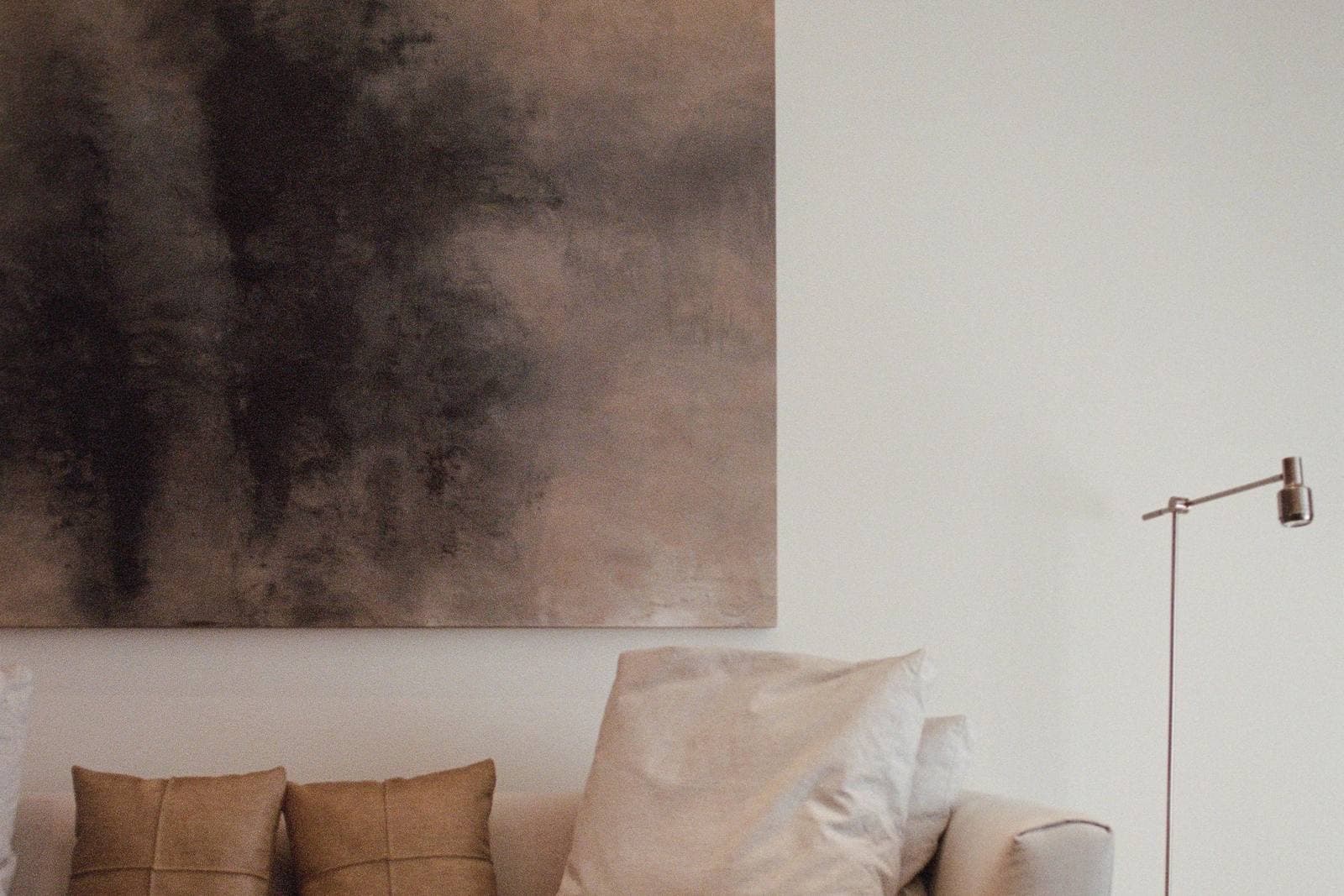
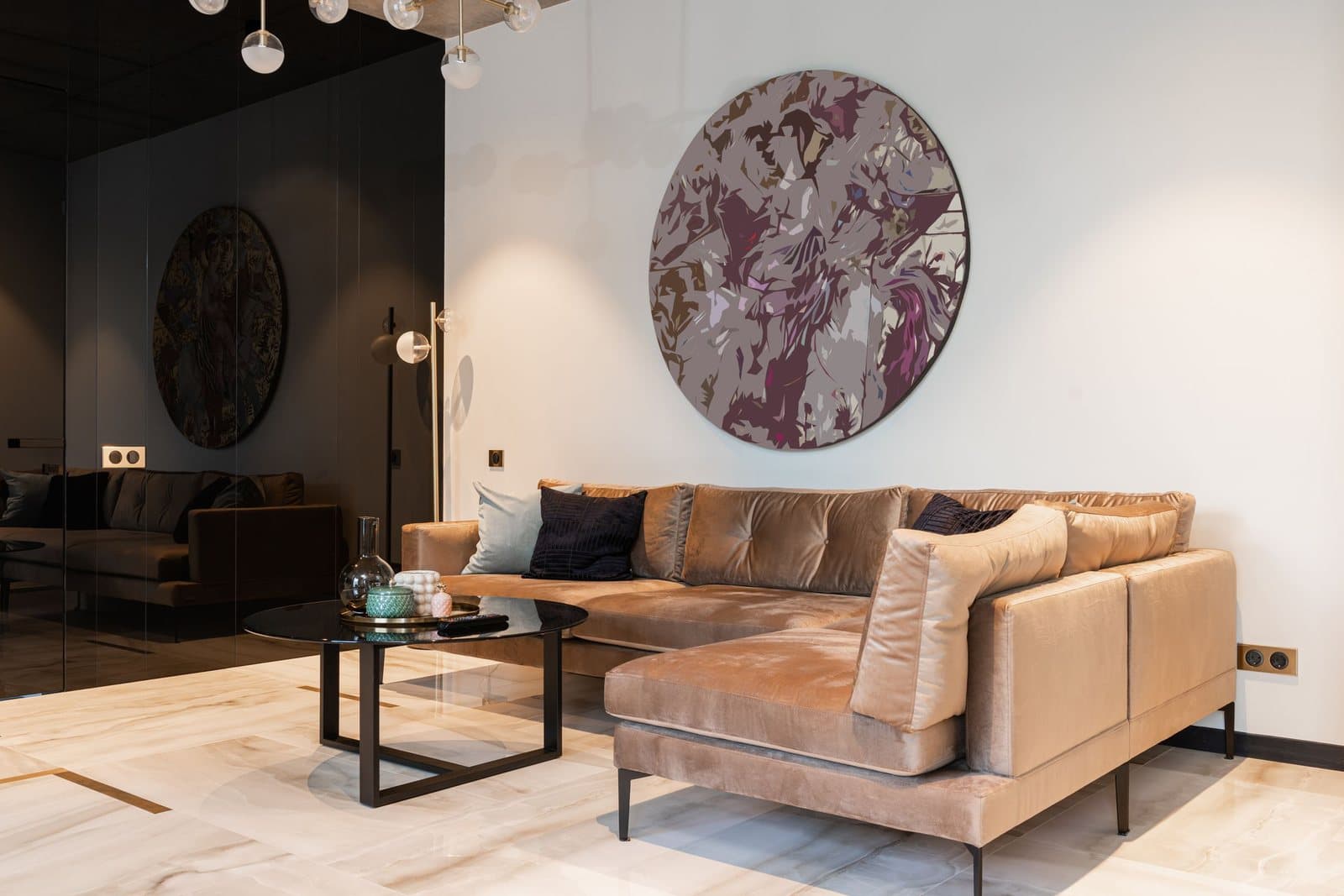
- Art over furniture should span about two-thirds of its width — roughly 60 to 75 percent; an 84-inch sofa wants about 56 inches of art, and a 72-inch sofa about 48 inches.
- On a bare wall, hang the center at 57 to 60 inches from the floor and aim for the art or arrangement to fill roughly 60 to 75 percent of the available wall width.
- Over furniture, leave the bottom edge 6 to 10 inches above the furniture's top — above a sofa's back, a headboard, or a sideboard's surface.
- Count the gaps in group totals and keep them consistent at 2 to 3 inches between neighbors; three 16-inch panels with two 2.5-inch gaps total 53 inches.
- Tape the exact footprint on the wall before ordering, check it from the doorway and from where you sit, and compare candidates by finished wall footprint, not print size, since matting and framing commonly add 5 to 8 inches in each dimension.
Ask a room full of decorators for the most common wall art mistake and you will get one answer: too small. Not the wrong subject, not the wrong color — the wrong size, usually a piece a full step smaller than the wall and furniture called for. The good news is that sizing is the least mysterious part of decorating. It runs on two or three ratios, a short ladder of standard sizes, and one roll of painter’s tape. This wall art size guide gives you all of it: how big art above a sofa should be, how big it should be over beds and tables, how to measure a wall for art honestly, and the mock-up trick that prevents nearly every sizing mistake before money changes hands.
Wall art size guide: the two-thirds rule for art over furniture
Most living room art hangs over something — a sofa, a bed, a sideboard, a console — and for that situation there is one governing ratio: the art should span about two-thirds the width of the furniture below it. Between roughly 60 and 75 percent reads as deliberate; below half, the piece starts to look like it wandered in. The worked examples, using furniture widths you probably own:
- Sofa, 72 inches wide: art about 48 inches wide (a single 48-inch piece, or a pair adding up to it).
- Sofa, 84 inches wide: art about 56 inches wide.
- Sofa, 96 inches wide: art about 64 inches wide.
- Queen bed, 60 inches wide: art 40 to 45 inches wide above the headboard.
- King bed, about 76 inches wide: art 50 to 57 inches wide.
- Sideboard or console, 60 inches wide: art about 40 inches wide.
This is why living room art so often ends up larger than first-time buyers expect: the arithmetic of an ordinary sofa lands you in the 48- to 64-inch range, not the 24-inch range. Trust the ratio over your instincts the first time; your instincts recalibrate the moment the right-sized piece is on the wall.
The size ladder: what standard sizes are for
Art sizes cluster into a ladder, and each rung has a job. Small pieces — 8 by 10, 11 by 14 inches — are shelf and layering art: propped on mantels, mixed into bookcases, used as the small voices in a gallery wall. The 16 by 20 and 18 by 24 range is the gallery-wall building block and the right scale for hallways, bathrooms, and over a desk. A 24 by 36 is the first true statement size: enough for a small room’s main wall or a piece over a dresser. The 30 by 40 and 36 by 48 sizes are the over-sofa and over-bed workhorses for average furniture. From 40 by 60 upward you are in large and oversized territory — single-piece walls, high ceilings, and rooms where the art is meant to be the architecture.
Mind the shape as well as the size. Standard proportions — 3:2, 4:3, square, and the wide panoramic ratios — change how a size behaves: a 36 by 48 horizontal and a 36 by 48 vertical occupy the same area and completely different walls. Horizontals stretch a room and suit sofas and beds; verticals lift low ceilings and fit the narrow walls between windows and doors; squares and panoramas are specialists, for grids and for the long wall above a long piece of furniture respectively.
How tall, and how high
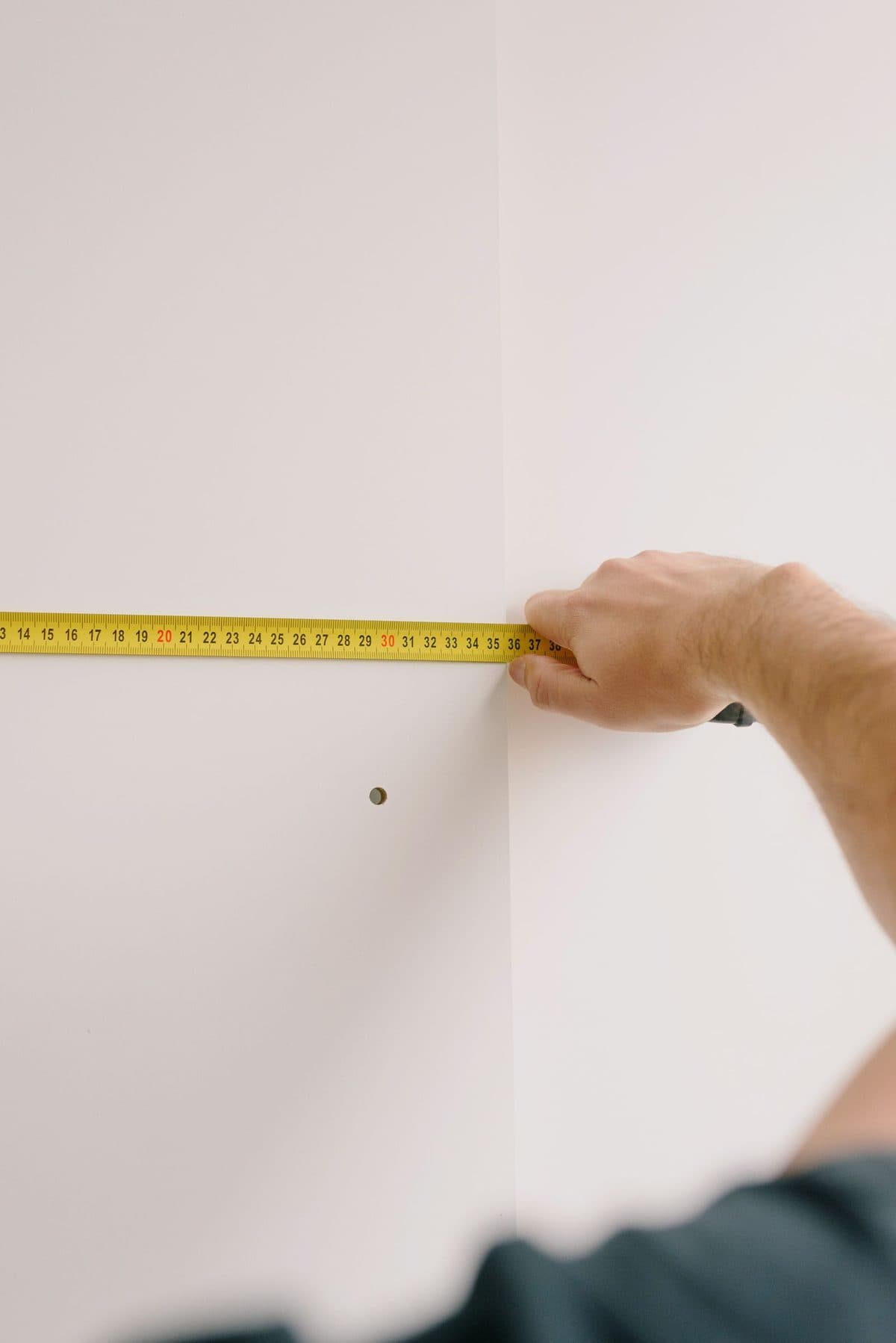
Width gets the attention, but height decides whether the piece belongs to the furniture or to the ceiling. Two rules cover it. Over furniture, hang the piece so its bottom edge sits 6 to 10 inches above the furniture’s top — above a sofa’s back, above a headboard, above a sideboard’s surface. On a bare wall, hang so the center of the piece falls at 57 to 60 inches from the floor, average eye level. The two rules usually agree more than people expect: a typical sofa back stands about 32 to 36 inches tall, so a 30-inch-tall piece hung 8 inches above it tops out around 72 inches and centers close to eye level anyway. The finer points of how high to hang pictures — stairs, hallways, and seated rooms included — have their own guide in this series.
On a bare wall, also size to the wall itself: aim for the art — or the arrangement — to fill roughly 60 to 75 percent of the available wall width, meaning the stretch between corners, doorways, and windows, not the full architectural width. A wall that is 10 usable feet wide wants 6 to 7.5 feet of art presence, which is why bare-wall rooms so often need either one very large piece or a planned grouping.
More spots, same math: fireplaces, dining walls, hallways
The fireplace wall fools people because it has two widths: the mantel shelf and the chimney breast. Size to the furniture logic anyway — the art should span about two-thirds of the mantel shelf, and it should never be wider than the shelf itself. A 60-inch mantel wants roughly a 40-inch piece; the same piece centered on a wide chimney breast still reads correctly, because the mantel is the furniture the art belongs to. If the piece leans on the mantel instead of hanging, the height rules relax but the width rule does not, and overlap is allowed: layered pieces leaning together can share width the way frames on a shelf do.
Dining rooms are judged from a chair: art is seen for an hour, at seated eye level, at close range. That favors the middle of the size ladder and centers a few inches lower than a standing gallery hang — the 57-to-60-inch rule is measured for standers, and a dining room’s audience sits. Sideboard math is the two-thirds rule again: a 60-inch sideboard, about 40 inches of art, 6 to 10 inches above the surface. Hallways invert the usual problem: the wall is long but the viewing distance is a few feet, so a series of modest pieces at walking rhythm — centers at eye level, even spacing — beats one giant that can never be seen whole. Save the giant for a room that lets you step back.
Viewing distance: the forgotten measurement
Size only means anything relative to how far away the viewer stands, and there is a serviceable rule of thumb: comfortable whole-piece viewing happens at roughly one and a half times the diagonal of the piece. A 36 by 48 inch print has a 60-inch diagonal, so it comes together as a whole at about 7.5 feet; a 40 by 60 has a 72-inch diagonal and wants about 9 feet. This is the quiet reason oversized art belongs in rooms with a long sightline — a great room, a stairwell landing, a wall faced from across a sofa — and why a modest bedroom wall, viewed from four feet, can make a mid-size piece feel enormous. It is also why fine detail argues for restraint: detailed work is inspected from closer than its diagonal distance, so detail rewards mid-sizes in close rooms more than it rewards scale.
Multi-piece math: totals and gaps
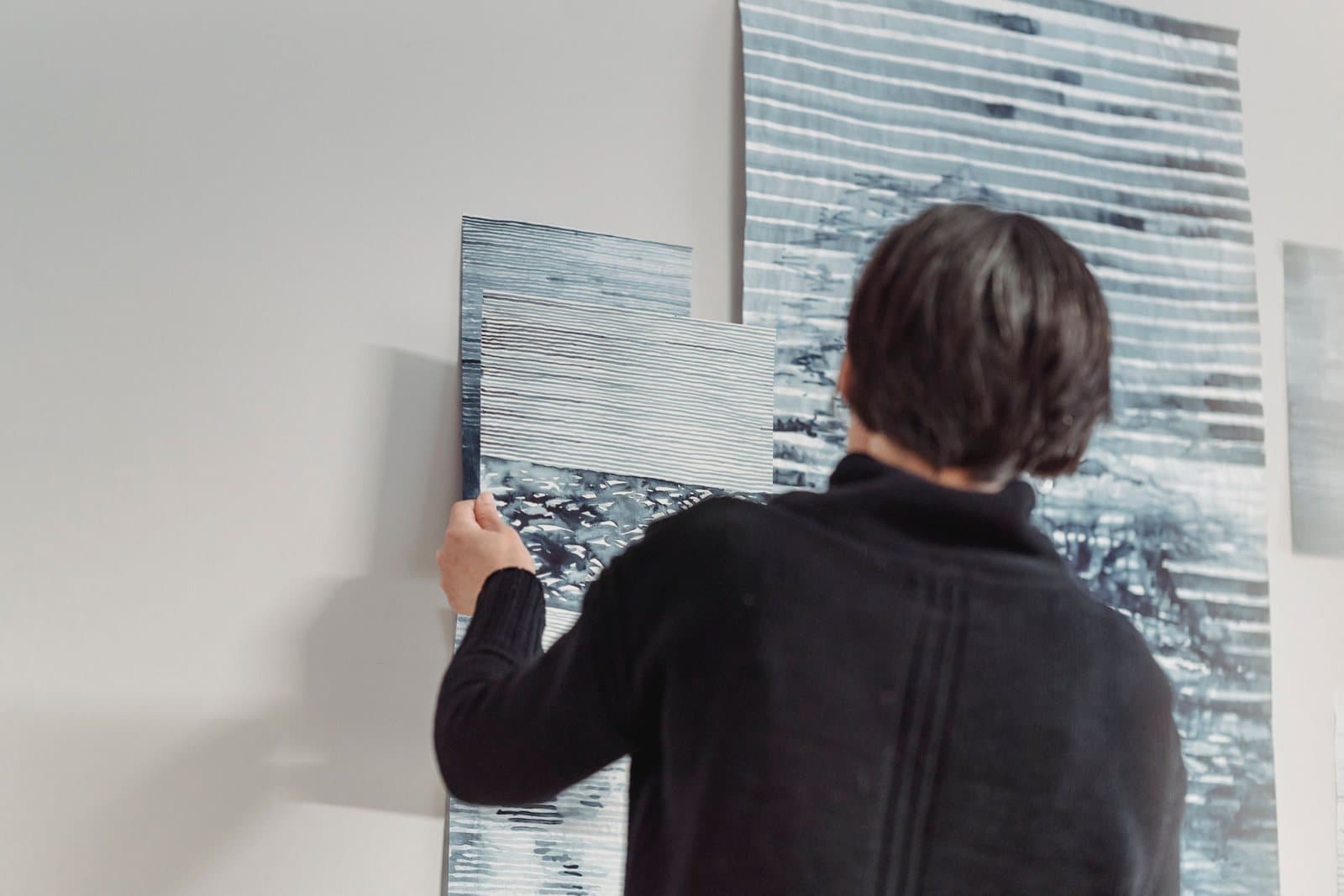
Groups obey the same rules as single pieces, with one addition: the gaps count. Measure the arrangement as a single rectangle — total width equals the pieces plus the spaces between them — and run the two-thirds rule on that total. Keep gaps consistent at 2 to 3 inches between neighbors; consistency, not the exact number, is what reads as intention. Worked example: you need about 56 inches over an 84-inch sofa and you want a triptych. Three 16-inch panels with two 2.5-inch gaps give 53 inches total — in range. A diptych of two 26-inch panels with one 3-inch gap gives 55 inches — also in range, and calmer. When in doubt between a tight group and a spread one, spread slightly less than feels right on the floor; walls always make groups look airier than floors do. For the layouts themselves — grid, salon, and asymmetric — see the gallery wall layout guide.
The painter’s-tape mock-up
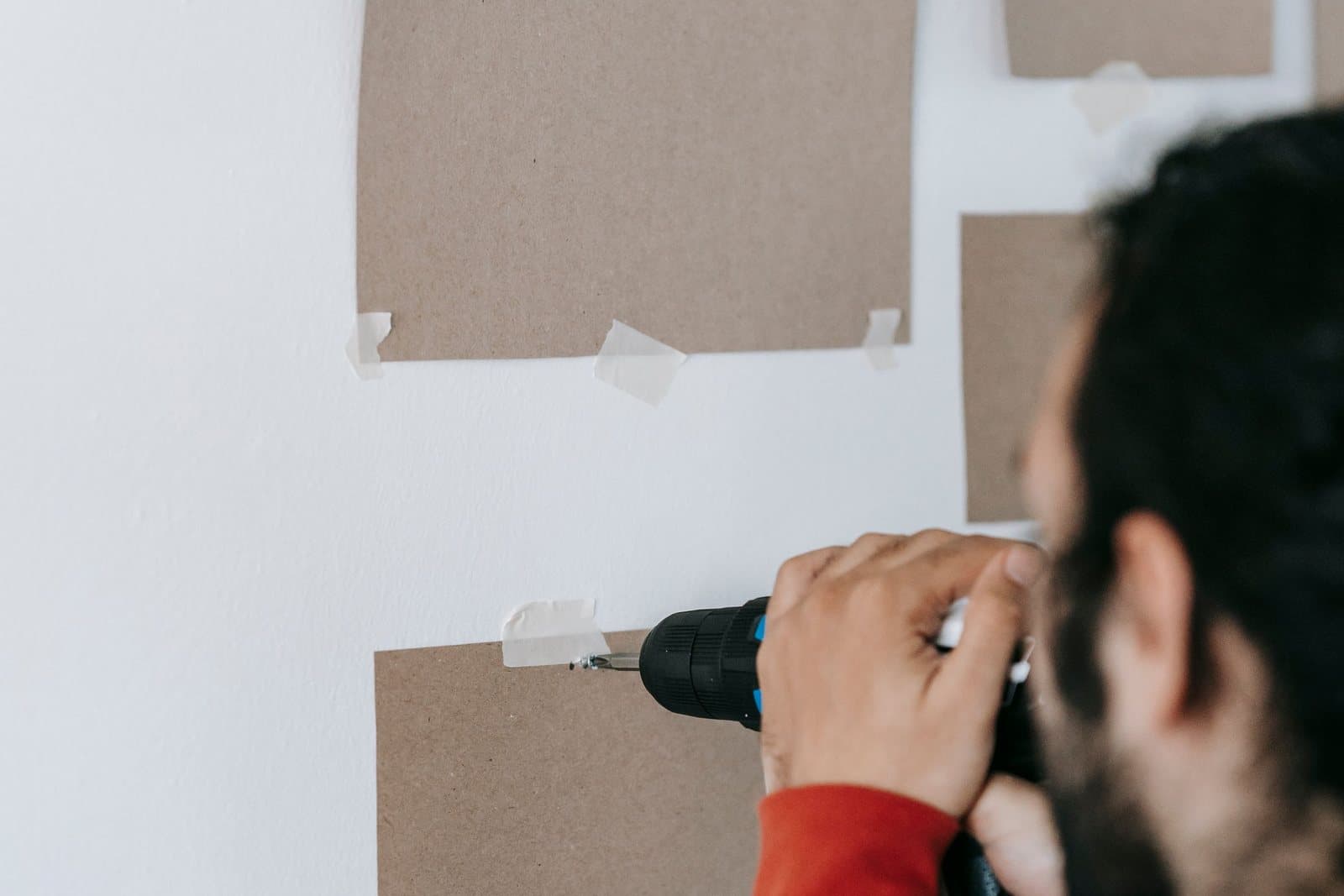
Every rule above is a prediction. This step is the experiment, and it is the single best habit in all of decorating. Before you order, outline the exact footprint of the candidate size on the wall with painter’s tape — the full rectangle, at the exact hanging height, with the furniture in place. Then:
- Look from the doorway. The first impression is the one guests get; the piece should read as a presence, not a postage stamp.
- Look from where you sit. Seated eye level is lower than standing; check the piece from the sofa, the bed, the table.
- Live with it for a day. Tape is patient. Walk past it at breakfast and at lamplight; size mistakes announce themselves within a day, and they are free at this stage.
- Photograph it. A phone photo flattens your politeness about your own room; proportions that “seem fine” in person confess themselves on screen.
Adjust the tape before you adjust the order. Ten minutes of this replaces the most common return in the industry — the piece that was perfect except for being a foot too small.
Wall art size guide: the mistakes this math prevents
Four errors account for nearly all sizing regret — the errors this wall art size guide is built to prevent. Buying for the room’s size instead of the wall-and-furniture math — a big room with a small sofa wall wants small-room art. Hanging to the ceiling because the wall is tall, instead of to the furniture because the furniture is what the art belongs to. Choosing a size in the store or on the screen with no tape measure involved, where every piece is exactly the size of your hand or your monitor. And the quiet one: going one size down to be safe. In wall art, “safe” is the risky direction — too small reads as a mistake every day, while slightly large reads as confidence.
One more, specific to buying online: confusing the print size with the finished size. A paper print’s listed inches are the image; matted and framed, the wall footprint grows by the mat border and frame on every side — commonly 5 to 8 inches in each dimension. A canvas’s listed inches are the finished face, wrap included. Compare candidates by their final wall footprint, not their headline size, or two pieces both sold as “24 by 36” will arrive needing noticeably different walls.
So: two-thirds over furniture, 57 to 60 inches at the center on bare walls, gaps of 2 to 3 inches counted in the total, and tape before you commit. With those four numbers in hand, browse the catalog by size and format and you will find the choosing takes care of itself — because for the first time, the wall has told you exactly what it needs.
More in How-To: Sizing, Hanging & Arranging
Continue exploring: How-To: Sizing, Hanging & Arranging guides · All guides