

Color & Decorating Fundamentals
Statement Art vs Gallery Wall: Choosing
One piece gives a room a calm, instant focal point; many smaller pieces reward the people who live with them over time. Often the honest answer sits between them.

Key Takeaways
- Start with your wall: a long, unbroken wall above a sofa is the statement piece's home ground, while a wall broken by doors, windows, a radiator, or a television often suits a gallery better because a collection can flow around obstacles.
- Be honest about your art: a gallery wall needs quantity with some connective thread, a statement wall needs one image strong enough to hold a room at scale, and people who constantly bring home small finds are gallery people whether they have admitted it or not.
- Count patience and cost honestly: a gallery hides costs in the plural, with every piece its own framing, hardware, and hanging decision, while a statement piece concentrates everything into one purchase and one hanging but replacing it replaces the whole wall at once.
- For most homes the hybrid suits best: one substantial anchor holding the center or main sightline, with a small, tight cluster of two to four related pieces beside or beneath it, clearly subordinate in scale.
- Before buying anything, outline the statement's full footprint or the gallery's outer boundary in tape and live with it for a day; if you go the gallery route, buy the anchor piece first and let the rest accumulate.
Every large, empty wall eventually forces the same statement art vs gallery wall fork: one big statement piece, or a gallery wall of many smaller ones? Both answers are respectable, both fail regularly, and the difference between success and failure is rarely taste — it is fit. A statement piece on the wrong wall looks lost; a gallery wall in the wrong room looks like clutter with a press release. This guide turns the choice into three questions — about your wall, your art, and your patience — and then makes the case for the hybrid that, honestly, suits most homes better than either pure answer.
Statement art vs gallery wall: what each does
A statement piece is a single, large work that takes a wall entire: it gives a room an instant focal point, a calm center, and one clear mood. It asks little of the viewer and gives its effect immediately, from the doorway. A gallery wall is a composed collection — anywhere from four pieces to forty — that trades the single mood for narrative: many small moments, discovered over time, at reading distance. It rewards the people who live with it more than the people who visit. Neither is the grown-up option. They are different instruments: one is a soloist, the other is a choir.
Question one: your wall
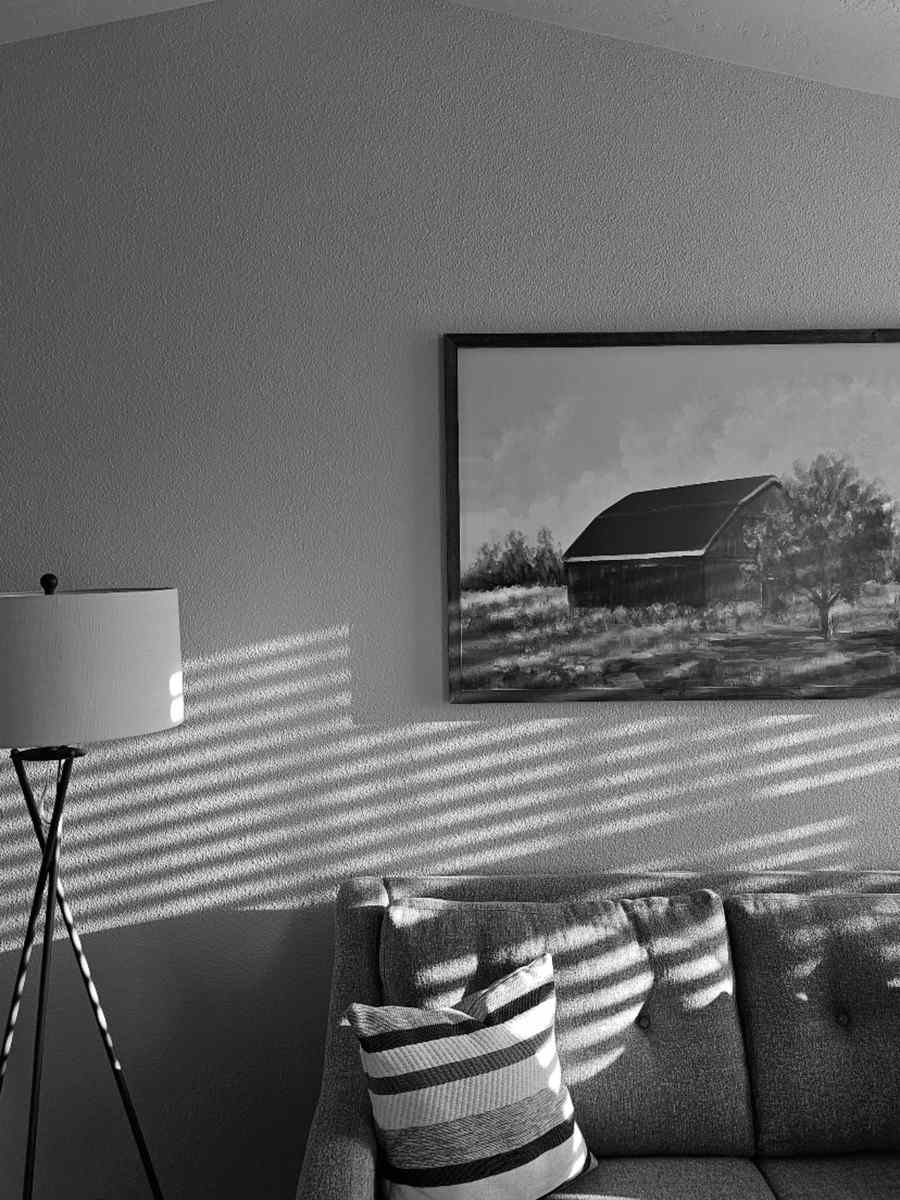
Measure the wall and note its interruptions. A long, unbroken wall above a sofa is the statement piece’s home ground, because a single wide image answers its shape; categories like large and oversized exist for exactly this furniture-led geometry — the geometry large-wall decorating works through, from one oversized anchor to grouped arrangements and the breathing room between them. A wall broken by doors, windows, a radiator, or a television often suits a gallery better, because a collection can flow around obstacles that would strand one big piece off-center. Shape matters too: a squarish stretch of wall takes either answer, while a tall, narrow slice beside a bookcase takes a small vertical gallery or nothing — a single square piece there tends to look like a pothole. Ceiling height is the quiet factor: galleries climb happily in tall rooms, while in low rooms a single horizontal statement keeps the eye wide rather than up.
Question two: your art
Inventory what you actually own or genuinely want, because the two formats consume art differently. A gallery wall needs quantity with some connective thread — a stack of family photographs, postcards, small prints, and one or two real pieces is a gallery waiting to happen. A statement wall needs the opposite: one image strong enough to hold a room at scale, which usually means choosing it on purpose rather than promoting the largest thing you happen to own. Be honest about the direction of your collecting. People who bring home small things constantly — prints from trips, photographs, finds — are gallery people whether or not they have admitted it; people who fall for one big image every few years are statement people. Decorating against your own collecting habits is a fight you will lose slowly, in public, on your own wall.
Question three: your patience
The formats differ most in the labor they demand, before and after hanging. A statement piece is one decision and one hanging: tape the outline, check it from the seat, commit. A gallery wall is a project — laying out, taping, spacing, hanging in sequence, then adjusting over the following weeks as pieces settle, get swapped, and occasionally get voted off. None of this is a flaw; for many people the arranging is the pleasure. But temperament is data. If you rearrange rooms for fun, a gallery gives you a wall that welcomes editing forever. If finishing a room and being done is your idea of peace, or if you move often and rehang everything each time, the statement piece respects that. Renters lean gallery more often than expected — many small holes are easier to forgive than one heroic anchor — but only if the patience answer is also yes.
Effort and cost, honestly counted
People misjudge the economics in both directions, so count honestly — in effort as much as in money. A gallery wall looks like the thrifty option because each piece is small, but its costs hide in the plural: every piece is its own framing decision, its own hardware, its own position in the layout, and the wall is not finished until the last of them is hung and re-hung. A statement piece concentrates everything into one purchase and one hanging, which makes it the more predictable project even when the single piece is the larger outlay. The reverse trap is upgrading: replacing one statement piece means replacing the wall’s whole effect at once, while a gallery absorbs change gracefully — one piece swapped, the wall intact. Think in cost per year of happiness and in hours of arranging you will actually enjoy, and the honest numbers usually agree with the patience answer you gave above.
The second-wall problem
The choice also echoes, because rooms have more than one wall and homes have more than one room. A house where every main wall is a gallery is exhausting — the eye never rests, and each collection devalues the others. A house where every wall is a single statement can feel like a series of hotel lobbies: impressive, unrelated, oddly impersonal. The comfortable pattern most homes settle into is one gallery moment per room at most, usually where people gather or pass slowly, with statement pieces or deliberate emptiness doing the quiet work elsewhere. Decide the featured wall as part of a whole-home rhythm, not as a duel each wall fights alone, and both formats stop competing — they take turns.
The room’s job breaks ties
When the three questions split, let the room arbitrate. Restful rooms — bedrooms, reading corners, the wall you face from a bath — usually want the statement’s calm: one image, low incident, nothing to catalog. Social and transitional rooms — living rooms, dining rooms, hallways, stairs — carry galleries beautifully, because people linger or pass slowly there and the collection gets its audience. The television wall is its own case: a busy gallery around a screen multiplies visual noise, so either a single quiet piece offset from the screen or a gallery on the facing wall tends to age better.
Statement art vs gallery wall: the hybrid
The honest answer for most walls is a composition with one anchor and a supporting cast: a single substantial piece holding the center or the main sightline, with a small, tight cluster — two to four related pieces — beside or beneath it, clearly subordinate in scale. The anchor gives the room its focal point and calm; the cluster gives it the personal, collected feeling people want from a gallery, without the gallery’s planning burden or visual chatter. A close relative is the strict grid: six or nine identical frames in even ranks, which reads from a distance as one large statement and up close as a collection — the hybrid wearing a uniform, and one of the the gallery-wall layouts — grids, salon, and asymmetric arrangements — that hold a collection together. Both hybrids scale gracefully: the cluster can grow a piece a year, and the anchor never has to move.
The hybrid also changes how mistakes feel, which matters more than decorators admit. A statement piece that turns out wrong is wrong at full scale, in the room’s main sightline, every day — the hesitation people feel before buying one is rational. A hybrid’s anchor can be chosen a degree safer precisely because the cluster carries the personality: a calm landscape or a quiet abstract as the anchor, with the family photographs, the odd find, and the brave small piece doing the talking beside it. If the cluster fails, you rearrange a Saturday afternoon. If the anchor fails, you still have a wall that works while you rethink it. Color is part of that safety call, too: deciding how art colors relate to a room — matching, echoing, or contrasting the room — applies to an anchor exactly as it does to a cluster. Risk, distributed, is the hybrid’s quietest advantage.
Whichever way you land, run the tape test before buying anything: outline the statement’s full footprint, or the gallery’s outer boundary, and live with the tape for a day. Walls confess quickly at full scale. If you are shopping the statement route, start from the shop’s large formats and work down; if the gallery route, buy the anchor piece first and let the rest accumulate. The statement art vs gallery wall fork was never really about which is better. It is about which wall, whose art, and how much arranging sounds like fun — and most homes, answered honestly, land somewhere happily in between.
More in Color & Decorating Fundamentals



Continue exploring: Color & Decorating Fundamentals guides · All guides