

Bathroom Artwork That Handles Humidity
A powder room and a daily-shower bathroom are different climates. Which one you have decides whether paper, canvas or sealed metal belongs there.
Key Takeaways
- First judge your room's steam cycle: a powder room with no shower can take almost any hallway format, while a full bathroom's repeated soak-and-dry cycle damages paper, canvas and wood over time.
- Metal prints are the closest to hang-and-forget in a steamy bathroom, with acrylic a close second — both are sealed and wipe clean, while unglazed paper can cockle and canvas can slacken or mildew.
- Hang above the toilet, beside the vanity or opposite the door, and keep art out of the shower's splash radius, away from the shower-head wall and not directly above a bath.
- Keep scale modest — one well-placed 12- to 24-inch piece usually beats a grouping — and favour lighter palettes in rooms short on natural light.
- Check what the mirror reflects before committing, and run the fan during showers and for twenty minutes after to protect the art.
Bathroom artwork has a public-relations problem: people assume the room is simply too wet for art, so the walls stay bare and the smallest room in the house becomes the bleakest. The assumption is half right. A bathroom is a genuinely hostile environment for some formats — but it is a fine home for others, and a well-chosen piece transforms the room from purely functional to deliberately calm. For the browse view, see bathroom wall art; this guide covers which formats survive the steam, where to hang them, and what to keep out of the splash zone.
First, know which bathroom you have
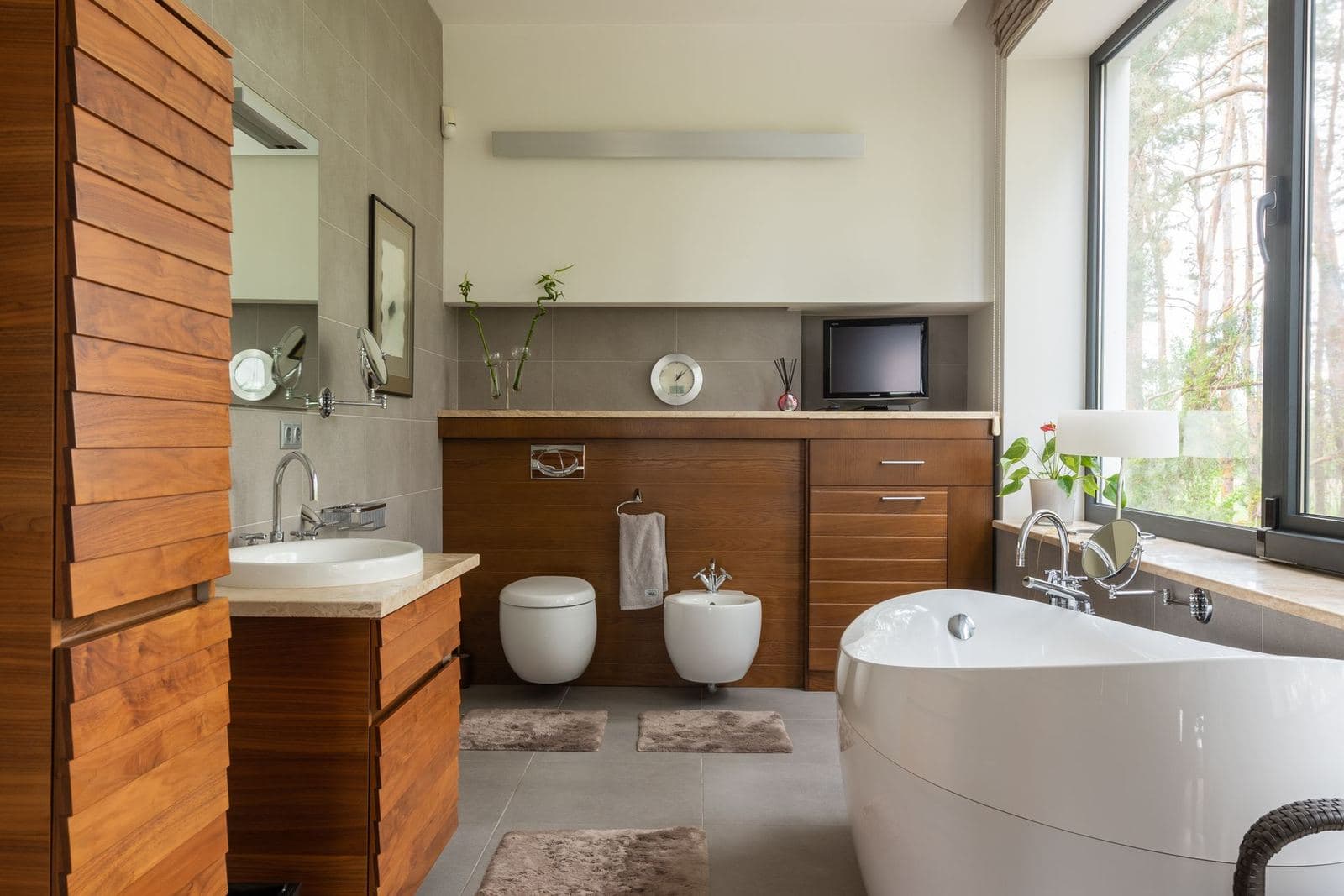
Everything in this guide turns on one distinction. A powder room — toilet, sink, no shower or bath — is barely a wet room at all. Its humidity is a hand wash and a kettle’s worth of steam; almost any format that works in a hallway works there, including paper under glass. A full bathroom is a different climate: a daily hot shower can push a small, under-ventilated room to tropical humidity and back within the hour, and it is that repeated cycle — soak, dry, soak — that damages art. Judge every choice below against your room’s actual cycle, and be honest about the fan: a bathroom whose mirror stays fogged for twenty minutes is a steamy bathroom whatever the fixtures promise.
The powder room: fewer rules, more personality
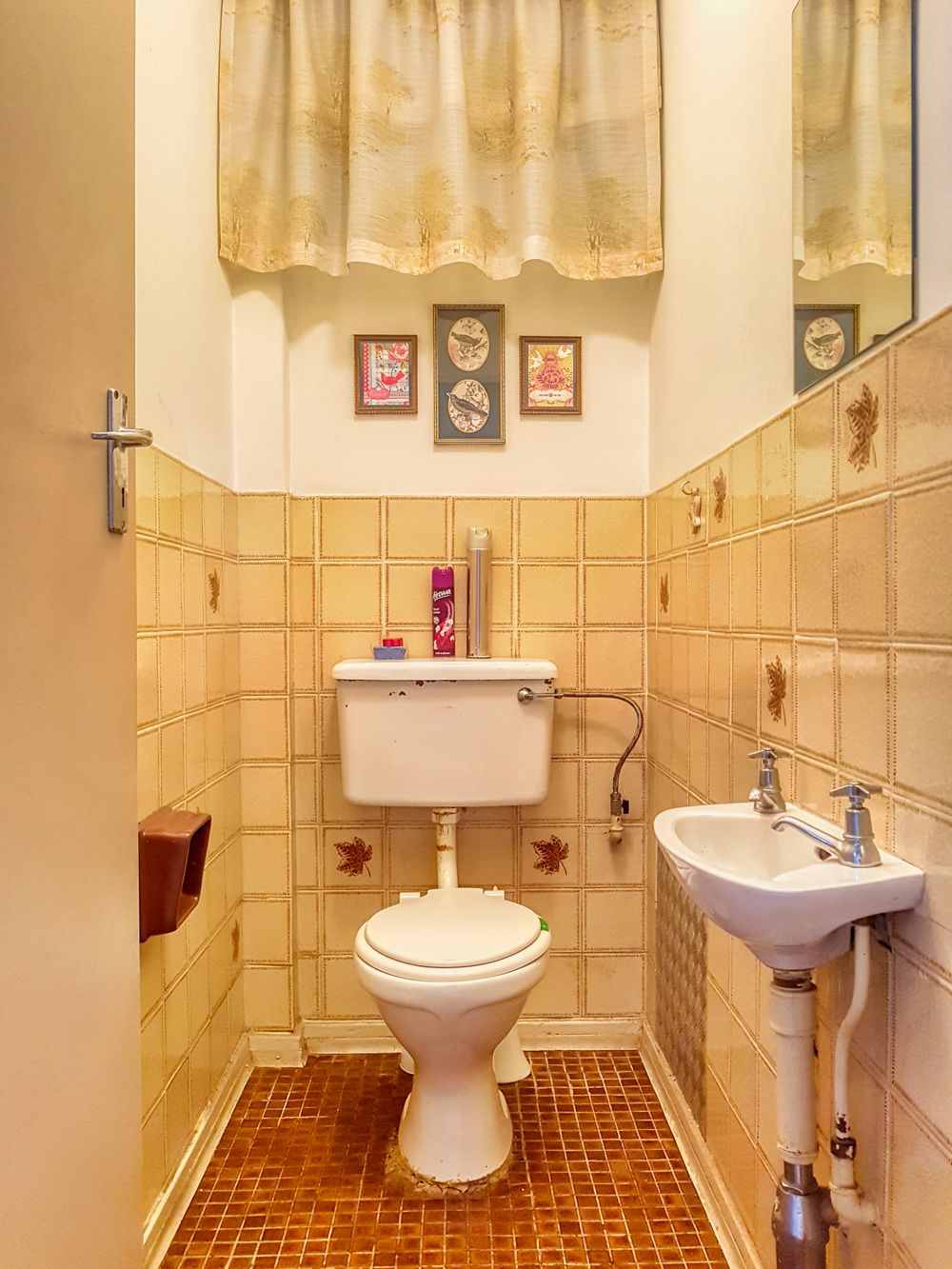
Because a powder room barely steams, it is where bathroom art can have some fun. This is the one small room guests see up close and alone, and it rewards a piece with a little wit or drama that would shout in a hallway: a bold botanical, a vintage poster, a single striking portrait. Scale bravely — powder rooms are tiny, and one confident piece at close range delights where three timid ones clutter. Paper under glass, gilt frames, even a small canvas all live happily here. Keep the one real powder-room caution in view: the wall behind and beside the sink takes hand-washing splashes, so hang the piece clear of the faucet’s range, or choose a wipeable face for that spot.
Guest bathrooms sit between the two climates: steamy when occupied, dry for the weeks between visitors. The intermittency is kinder to art than daily cycling, and a framed piece will usually fare well — but hang it knowing the room’s worst week, not its average one, and if the piece matters to you, move it out during a long stay of shower-heavy guests rather than discovering its limits by experiment.
What steam actually does to art
Moisture attacks in predictable ways. Unglazed paper absorbs humidity and cockles — the gentle waviness that never quite flattens again — and paper sealed badly in a frame can grow mold on its back, hidden until the spots show through. Canvas is fabric: in a steamy room it can slacken on its stretcher, hold moisture against the wall, and develop mildew in the gap behind it. Wood swells and shrinks with the cycle, working joints and finishes loose over years. None of this happens in a week; it is the accumulation of a thousand showers. Which is why format choice, not bravery, is the whole game in a full bathroom.
Bathroom artwork formats that shrug off humidity
Two formats are built for this room. Metal prints — dye infused into coated aluminum — have no fibers to swell and no paper to cockle; the surface is sealed, wipes clean with a damp cloth, and does not care about steam. In a small full bathroom, metal is the closest thing to a hang-it-and-forget- it choice. Acrylic prints run a close second: the image sits behind or within a solid sheet, the face is fully sealed and wipeable, and the edges are closed against the room’s air. Both surfaces are also at home with the bathroom’s light problem — these rooms are bright and tiled, and while acrylic can reflect a window, its gloss suits the room’s existing reflections rather than fighting them — a surface explored further in metal prints for photographs and bold color.
Where do the softer formats stand? Framed paper belongs in powder rooms, or in full bathrooms that are large and genuinely well ventilated — and even there, choose frames sealed at the back and check behind them yearly. Canvas is the judgment call: in a big, airy bathroom with a strong fan and a door left open after showers, a canvas away from the wettest wall will usually fare fine; in a small windowless ensuite, it is being asked to live in a steam cabinet, and it will eventually show it — that trade-off is the heart of canvas vs acrylic prints: soft matte or glassy depth.
Where to hang it, and where not to
Placement in a bathroom is about splash first and steam second. The reliable walls: the wall above the toilet, which is dry, visible, and usually exactly the size of a modest piece; the wall beside the vanity mirror, where a vertical piece keeps company with the mirror’s shape; and any free wall opposite the door, which is the view that greets you. The forbidden zones: inside the shower’s splash radius, on the wall the shower head fires at, and directly above a bath where it will be reached for, knocked, and soaked by rising steam at closest range.
Size modestly. Bathrooms are small rooms viewed from close up; a piece that would be a statement in a hallway is a crowd in a bathroom. One well-placed piece in the 12-to-24-inch range does more than a grouping, and verticals make use of the tall, narrow walls bathrooms specialize in. Hang at standing eye level — bathrooms are used on foot — and if the piece sits above the toilet, leave enough clearance that a lifted lid and a leaning guest never meet it.
Subjects for bathroom artwork in a small, steamy room
The bathroom’s classic subjects earned their place honestly. Coastal scenes and seascapes extend the room’s water theme without a single literal shell motif. Botanical studies — ferns, eucalyptus, leaves — bring the spa register and forgive the room’s humidity visually as well as physically. Abstract washes in blue-green and stone palettes keep the calm while asking nothing of the viewer, which suits a room used at the day’s two ends. Whatever the subject, favor lighter palettes: bathrooms are short on natural light more often than not, and a dark, heavy piece in a small tiled room closes in.
Art and the mirror
Every bathroom already has one large reflective artwork: the mirror. Hang with it, not against it. A piece on the wall beside the vanity should leave the mirror its breathing room — crowding a frame against the mirror’s edge makes both look accidental. Consider what the mirror will double: a piece on the wall opposite the mirror appears twice, once directly and once reflected, which can be a gift (a small piece gains presence) or a trap (a busy piece becomes two busy pieces). Stand at the sink and check the reflection before you commit to a height; the mirror’s sightline is the bathroom’s second viewing position, and it is the one people actually use while washing, shaving, and brushing teeth.
The same check catches reflections you do not want. A glossy acrylic opposite a frosted window may show a pleasant wash of light or a perfect glare, depending on the hour. Two minutes of standing and looking, at the time of day the room is busiest, settles questions that no amount of measuring can.
Care: two minutes a month
Bathroom art asks little but not nothing. Run the fan during showers and for twenty minutes after — it is the single cheapest art-preservation device in the house. Wipe metal and acrylic faces with a soft damp cloth when you clean the mirror. Once or twice a year, lift each piece and look behind it: any dark spotting on the wall or the piece’s back is the room telling you the format needs to change or the ventilation does. Caught at that stage, it is a redecorating decision, not a loss.
Choose bathroom artwork for the climate, hang it clear of the splash, keep the scale modest and the palette light, and the bathroom stops being the room art forgot — and starts being the room guests quietly admire. The laundry room makes the same humidity demands in an even smaller space; its guide covers laundry room wall art with a light touch.
More in Room Guides
Continue exploring: Room Guides guides · All guides